
Sada. Carlos Maside Museum. Sargadelos
About this heritage
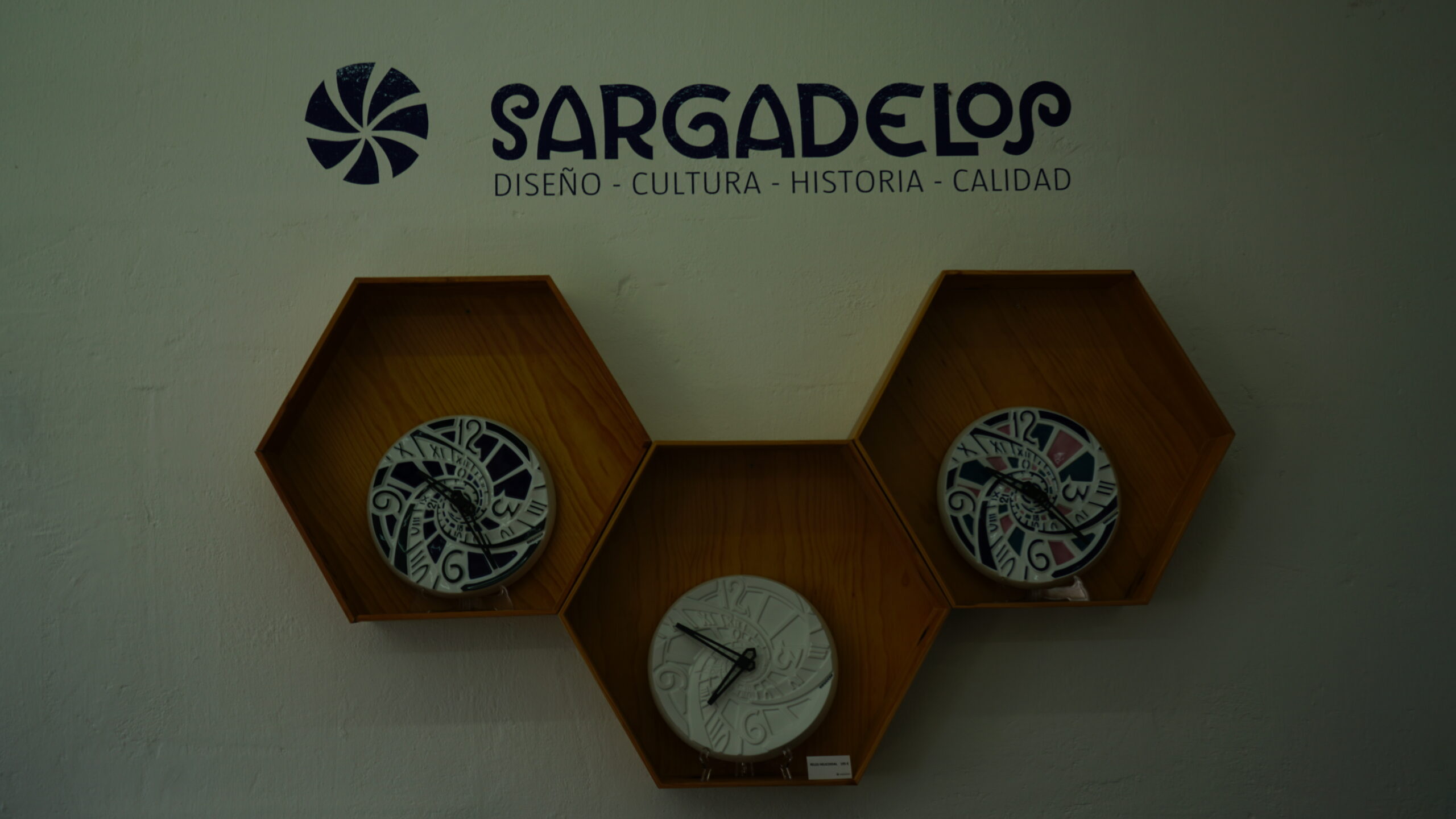
Sargadelos ceramics was born with the inauguration of a pottery factory by Antonio Raimundo Ibáñez enlightened initiative in the early 19th century, more specifically in 1806, in the parish of Santiago de Sargadelos in Cervo town in the Lugo Province.
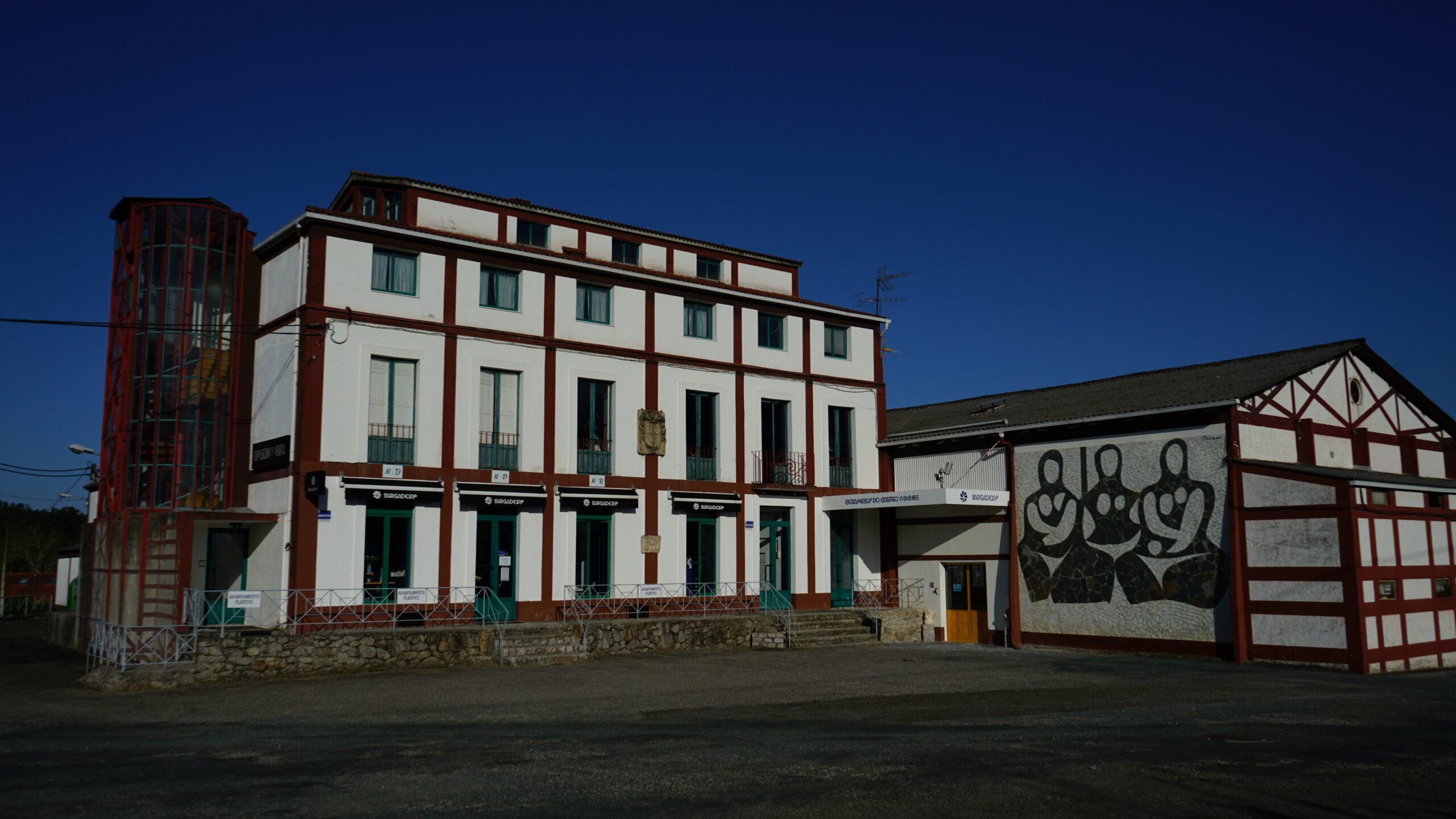
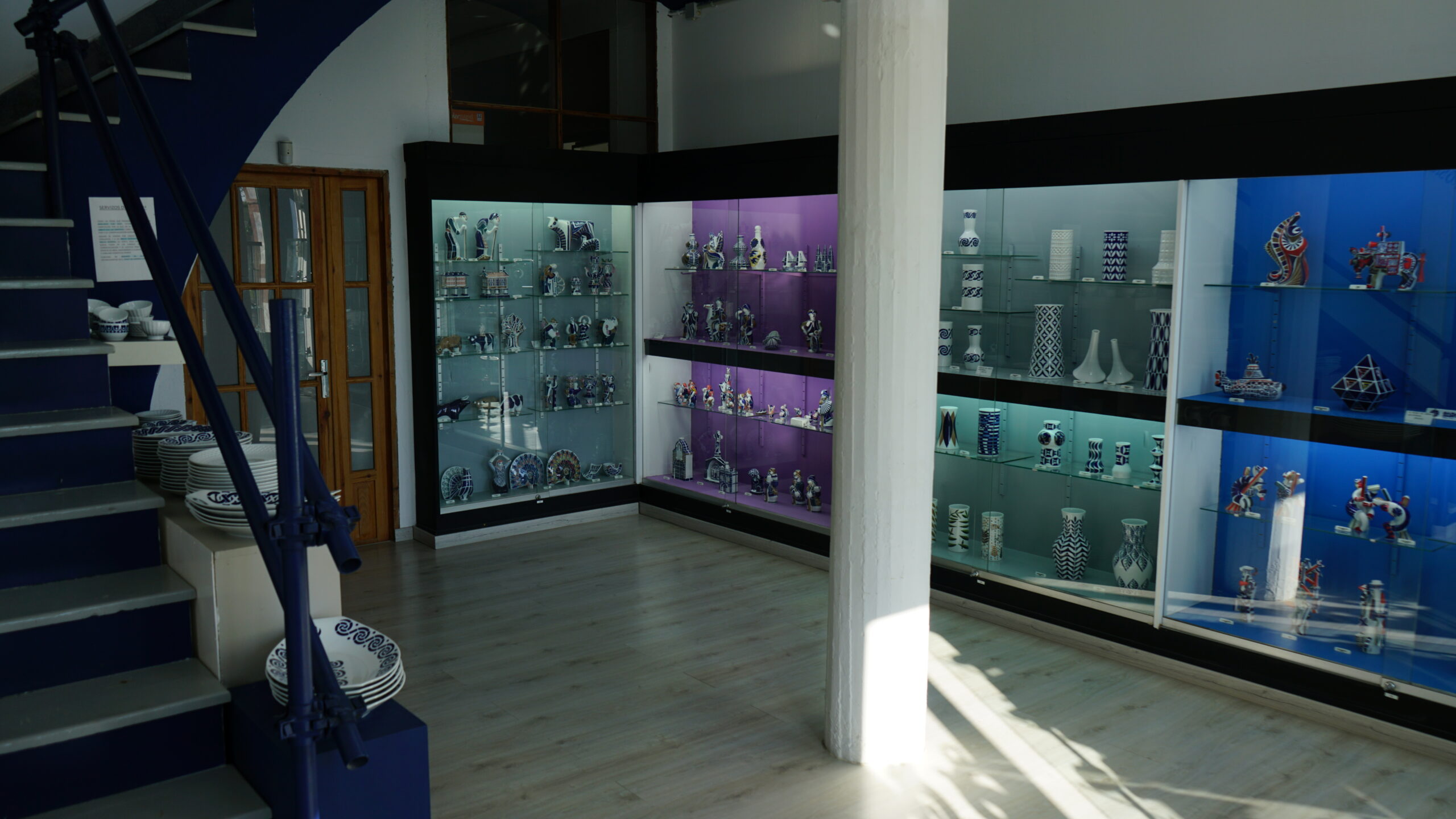
Nine years after the new Sargadelos had opened in 1970 in Cervo in the Lugo Province, Isaac Díaz Pardo started a ceramic workshop close to a Celtic Fortress (Castro) in Saga in the A Coruña Province. Eventually, this place became the industrial complex of the Pottery of the Castro.
Their objective for this new stage was to restore the entrepreneurial spirit of the old Sargadelos, connecting it with a revisionist cultural conception of what Galicia represented by combining design and quality with history and turning the Sargadelos brand into an iconic reference of Galicia.
Since then, Sada has had the enormous privilege of hosting one of the most significant Galian pottery factories.
Díaz Pardo and Seoane led this Sargadelos project to revive the Galician economy and culture, making this brand much more than a simple company.
Additionally, in 1970, the Carlos Maside Galician Museum of Contemporary Art opened its doors in Castro, Sada, gathering works and documentation of the artists from the '30s generation, later expanding its aspirations as a testimony of the Galician contemporary artistic creation. The location of this institution is next to the facilities of the Galician Laboratory of Forms (Laboratorio de Formas de Galicia) and the Pottery Factory of Castro (Cerámicas Castro). Its three floors house the works of many Galician artists, among others, Castelao, Maside, Colmeiro, Lugrís, Seoane, Souto, along with other works by singular figures, such as Eugenio Granell and Urbano Lugrís, dedicating the top floor to humorous drawing.
They named the museum "Carlos Maside" after Rafael Dieste's proposal, not only because it kept a considerable collection of his works but also because of Maside's conceptual purity and methodical, orderly, and experimental character, as well as for his ideas about art and the purpose this should fulfill.
To learn more
The museum is in the architectural complex ceded by Pottery Factory of Castro (Cerámicas Castro), after an agreement reached by this company and the Galician Laboratory of Forms (Laboratorio de Formas de Galicia). The latter was an entity created in Argentina by Luis Seoane and Isaac Díaz Prado, whose intention was to change the situation of oblivion suffered by the arts in Galicia. It is a building dedicated to ceramic samples, research, design, and publishing with a temporary exhibition hall and a bookstore.
The Museum's building is the most characteristic element of the complex, designed and built by the architect Andrés Fernández-Albalat, consisting of three floors with twelve exhibit halls and an auditorium designed by Díaz Pardo. It comprises a cluster of hexagonal modules distributed around a large central hexagonal one. Throughout the three floors, the exhibition houses a collection of 2100 works, of which 500 are on permanent display. In the first two floors, visitors can observe art pieces by Castelao, the seed of the Renovation Movement, and works by artists, like Maruja Mallo, Francisco Lloréns, Xesús Corredoira, Francisco Asorey, Arturo Souto, among others. It also holds pieces by other Renovators, such as Laxeiro, Colmeiro, Maside, or Luis Seoane, accompanied by works from unique personalities, such as Eugenio Granell and Urbano Lugrís, and Avant-garde artworks by artists of the Atlántica Group. In contrast, the top floor focuses entirely on humorous drawing and comics.
This museum serves as a testimony of the significance of the renovating movement of Galician art since Castelao. It collects our closest artistic past allowing us to associate it with our present without prejudice to observe solely and simply the Galician artistic evolution.
To know it better
In the A Coruña Province, specifically in O Castro, we have a cultural activity of interest, the Museum of Contemporary Art "Carlos Maside."
This project arose in the seventies from intellectuals and artists fighting to recover the Galician culture to remain over time. Finished in 1986, the museum building, dedicated to Carlos Maside, is the most modern of the complex, capturing the visitor's attention for its hexagonal shapes.
The political history of the time and the need to go into exile paralyzed his life, as was the case for many other artists, paralyzing his work until after the war, when he resumed painting. On the three stories of this museum, visitors can enjoy Carlos Maside's artworks and discover paintings by Castelao, Seoane, Laxeiro, Maside, among other artists. This project has brought together present and future generations, allowing them to know and enjoy these artists and their works.
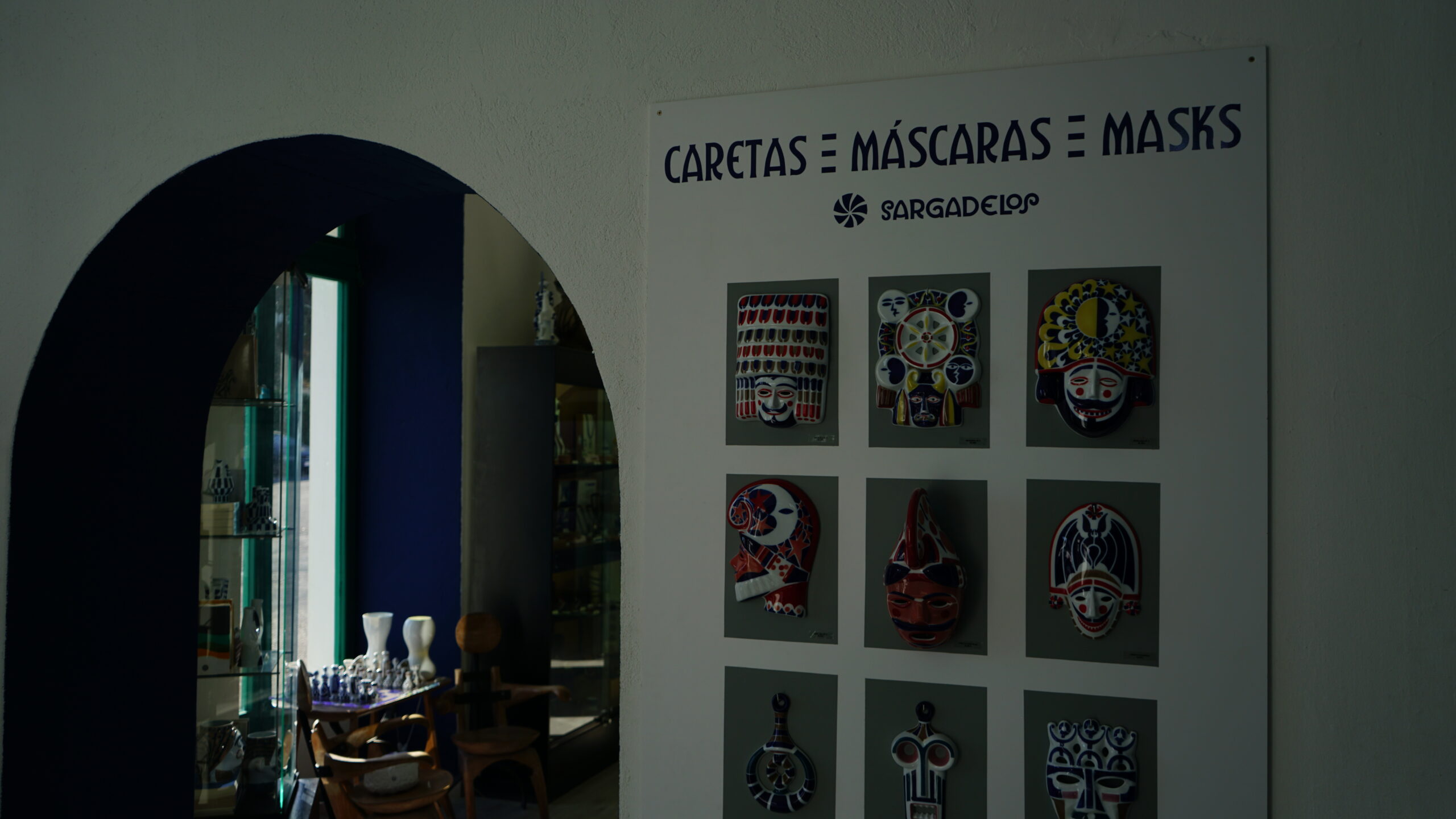
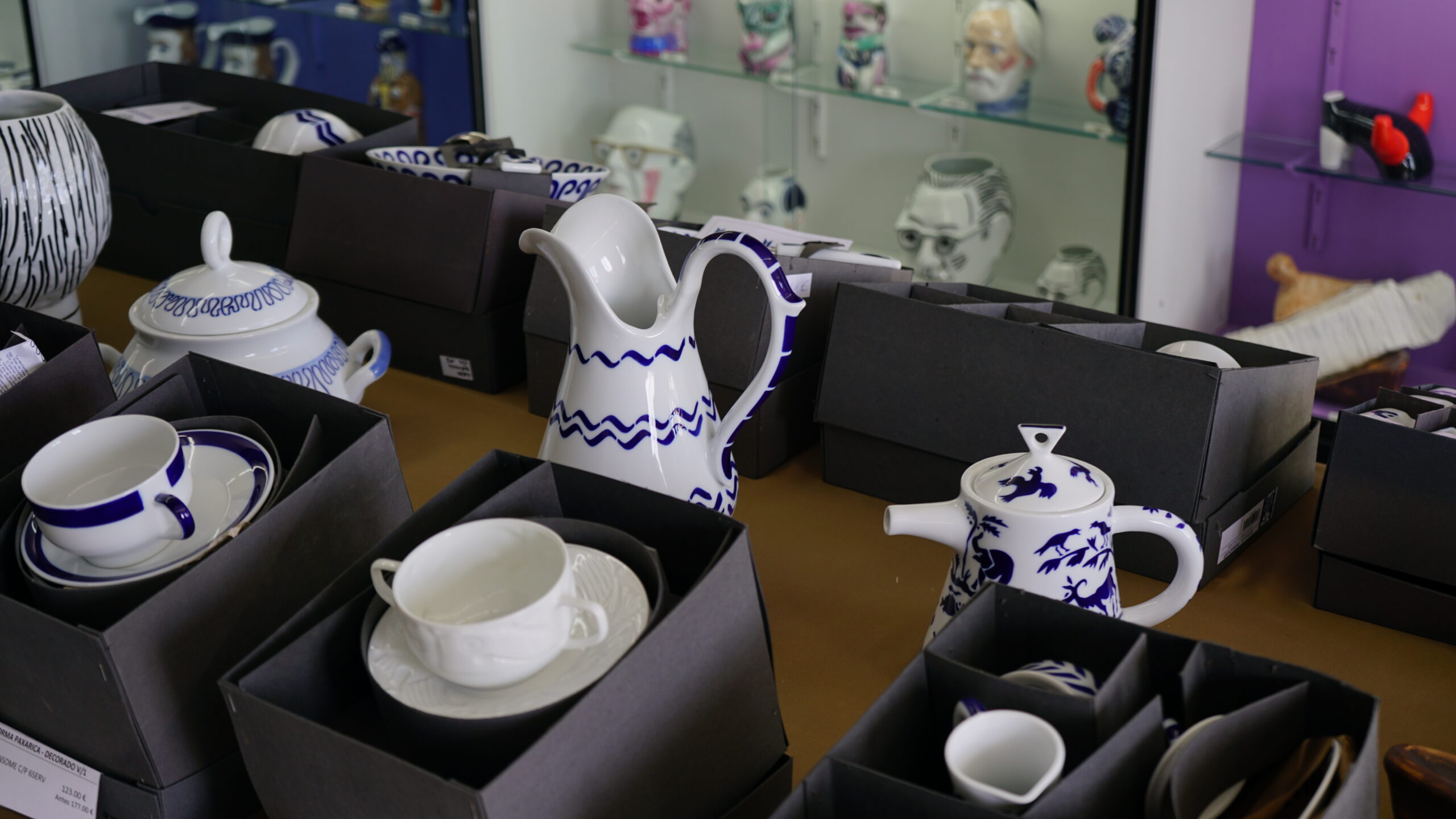
The original Sargadelos factory is in Lugo; its name comes from the municipality of the same name. The characteristic signature of its pottery is in the colors detailed in white with blue or red, which gave it national and international fame.
Galería
Location
- Locality
- O Castro
- Municipality
- Sada
- Province
- A Coruña
- Country
- Spain
The asset
- Type
- Museum
- Eco-destination
- Rías de Ares y Betanzos
- Environment
- Rural
- Relevance
- Regional
How to get there
- Access
- By land
- Distance
- 3,5 km
The visit
- Schedule
- By appointment only, reservation at: +34 982 557 841 Less than 12 years free
- Visitable
- Yes
- Accessible
- No
- Parking
- Sí
- Signposted
- Yes
Coordinates
- Latitud
- 43.33991571856745
- Longitud
- -8.271051204544522