
San Simón island. San Simón´s museum and history.
About this heritage
San Simón Island is located in San Simón´s bay, in Vigo´s estuary. It is a group formed by two main islands: San Simón and San Antón, and the islets of San Bartolomé and San Norberto. This place lived important episodes of the Galician and Spanish history.
On San Simón island there have been centuries of history that can be divided into four stages. The first would be from the 12th to the 19th century when it was used by various religious orders suffering multiple naval raids.
Afterwards, a lazaretto was built, which was in operation from 1838 to 1927. The complex was built so that sailors and passengers would be quarantined when returning from their trips to the Americas on suspicion of contagious disease.
In 1936 it was converted into a concentration camp for Republicans and came to house more than 4000 political prisoners. After the civil war, in 1948 the island is destined to be a shelter for “Guarda de Franco” (military of the national side), 43 officers who were returning to the island after playing a football match on Cesantes beach died in a shipwreck near Corveiro Island.
Finally, from 1955 to 1963 it was converted into an orphanage for the sailors´ children, where they learned about the sea-trade. In the 1990s, the area declared to be a Site of Cultural Interest was restored.
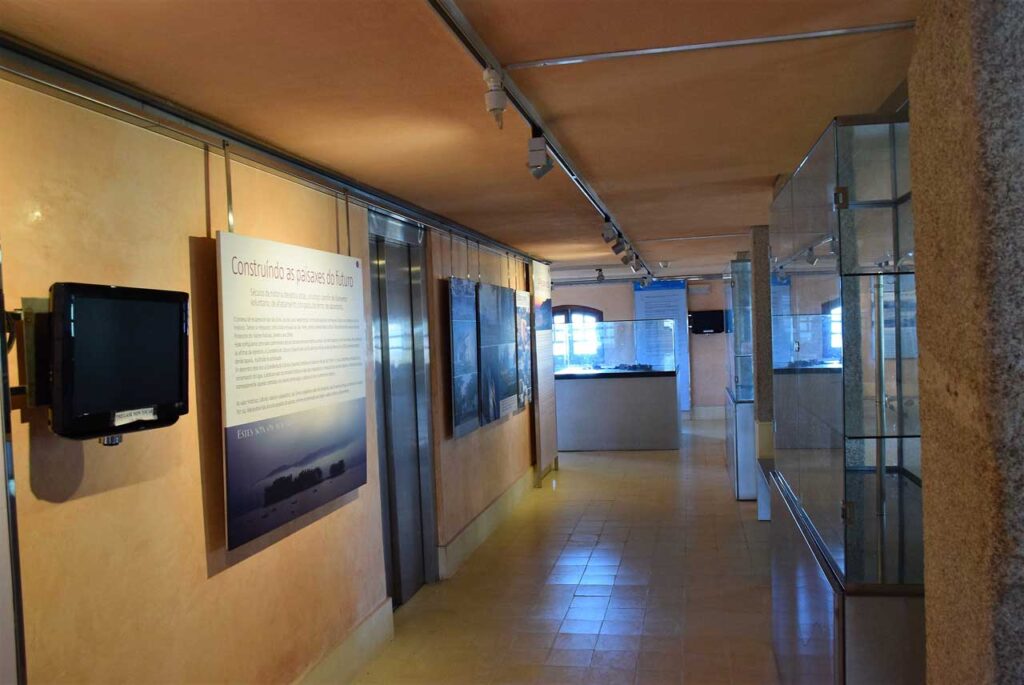
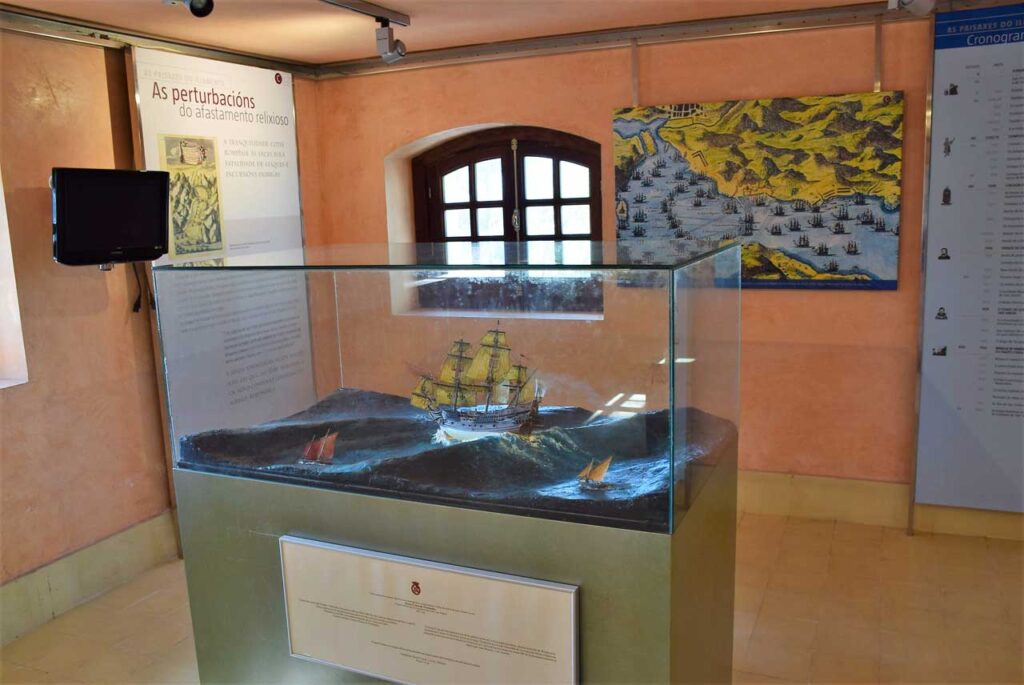
Located in the area of the “lazareto sucio” (Dirty Lazaretto), on the island of San Anton, is the Interpretation and Documentation Centre which has a library. It has a permanent exhibition with panels and models focused on the history of the place, the historical memory and the sea´s culture.
To learn more
The Roman road known as “per loca marítima" passed through Redondela, and this island was known as Búrbida. During the Middle Ages, the emergence of monastic life made it possible for people to make a contemplative retreat in remote places. The islands were used for this purpose and so, a primitive monastic centre was built, even though it was razed to the ground by the Saracens.
In the last years of the 12th century, the town of Redondela belonged to the Military Order of the Knights Templar, who at that time inhabited the island and where they built a church that they called “San Simón Apóstol”. The islands were a source of inspiration for the famous “cantigas” (medieval monophonic song, characteristic of the Galician-Portuguese lyric) of the troubadours such as Martín Códax, Xohán de Cangas, Nuno Pérez and Mendinho, of which one cantiga that names the island's chapel still remain.
Until the 19th century it was used by various religious orders suffering from multiple naval incursions. It was the scene of the struggle between the troops of the Archbishop of Compostela and the house of Soutomaior and a refuge from the plague that devastated the territory.
During the Modern Age the island was plundered by Sir Francis Drake, a corsair who worked for the English crown. Drake took over Baiona and attacked the town of Vigo, which was defended by Commander Pedro Bermúdez and won thanks to the help of the Lord of Gondomar, Diego Sarmiento de Acuña, forcing the English to reship.
In the 18th century the island was both witness to and victim of the Battle of Rande, as the Anglo-Dutch took advantage of it to attack the Franciscan congregation there, looting and burning their convent.
Afterwards, a lazaretto was built, which was in operation from 1838 to 1927. Most of the buildings that are preserved today come from this period. As there are two of the largest islands, the lazaretto could have had several spaces. So it was divided between the clean lazaretto, located on the island of San Simón and the dirty lazaretto, where people with infectious diseases stayed, on the island of San Antón. Both islands are connected by a bridge that had two gates to avoid contact.
Due to several cholera episodes experienced in the city of Vigo, it was thought of isolating crews and passengers arriving at national coasts. The complex was built so that sailors and passengers would be quarantined when returning from their trips to the Americas on suspicion of contagious disease.
Later, in 1936, the island went through one of the saddest and most moving periods, this space was reconverted into a concentration camp for Republicans and came to house more than 4000 political prisoners. The prisoners lived in very bad conditions, they were cold, hungry and afraid. The military let them shell-fishing at low tide, which causes many diarrhoea and infections due to poor management of faecal water. They had no running water and unsanitary conditions afflicted prisoners with diseases.
San Simon was not a prison intended to carry out executions. At least it had not been designed for that purpose, so it did not have an adequate infrastructure, and the transport of a lifeless body meant a greater effort. However, some shooting took place there.
As the date for the interrogation approached, the prisoners were taken from the island to the provincial prison, and there defended at the Council of War by officers chosen by the inmates themselves from a dedicated relationship. The defenders only fulfilled the routine role assigned to them, as the sentences were already assigned in advance. If the ruling was the death penalty, the execution was immediate.
At first, the prisoners destined to this island were from Galician lands but given its good facilities it was decided to transfer all the old prisoners who were filling the prisons in Spain and the result was disastrous. The space was insufficient for everyone, the elderly coming from warm areas and separated from their families, came to suffer the hardest stage of their captivity. And that's how the island was framed by macabre scenes. Many of the prisoners ended their lives by hanging from trees and others, in order to appease their hunger, fed on the rats that were abundant in the area.
After the civil war, in 1948, the island was destined to be the lodging of the “Guarda de Franco” (military of the National side), where they spent vacation periods. The most tragic event was the shipwreck near Corveiro Island where 43 officers died. They were returning after playing a friendly football match with C. F Redondela, their boat called “Monchita" was carrying 66 people on board and it overturned due to a sudden movement made by the passengers to avoid the splashes. Despite the closeness of the island and the placid state of the sea, the bay currents and the inability of the wardens to swim played a trick on them. The action of Carmen Almoina Cabaleiro, who managed to rescue four castaways with her small boat, was heroic.
Finally, from 1955 to 1963 the island was destined as an orphanage “Hogar Méndez Núñez"; for the sailors´ children where they learned the trade of the sea. In the 1990s, the area declared to be a Site of Cultural Interest was restored.
To know it better
Near Redondela, there is the Rande bridge that links the municipalities of Redondela and Moaña. In Vigo´s estuary, we find San Simón island, which belongs to the parish of Cesantes, in the municipality of Redondela and is currently uninhabited.
The island has a building that is still preserved. At first it was a monastery, but it was abandoned by the monks. Later, it was a hospital or a lazaretto. It admitted people suffering from infectious diseases for observation and treatment. From there, an infirmary, a chapel, a residential building for first class passengers, another for second class passengers and another for third class passengers are built.
Today, the island of San Simón is a public space for the cultural development of Galicia. In 1999, it was declared of Cultural Interest by the Xunta de Galicia and nowadays, it is part of the Natura Network 2000 as a protected European natural habitat. In addition, the Museo do Mar and the Fundación Illa de San Simón usually organize guided tours of the island where you can learn a lot of interesting things.
Gallery
Location
- Town
- Cesantes
- Municipality
- Redondela
- Province
- Pontevedra
- Country
- Spain
The asset
- Type
- Museum
- Eco-destination
- Ría de Vigo
- Environment
- Natural
- Relevance
- International
How to get there
- Access
- By sea By land
- Distance
- 0 km
The visit
- Visitable
- Yes
- Accessible
- Sí
- Parking
- No
Coordinates
- Latitud
- 42.30963900
- Longitud
- -8.62961500