


San Tomé Fishing Quarter and San Sadurniño Tower
About this heritage
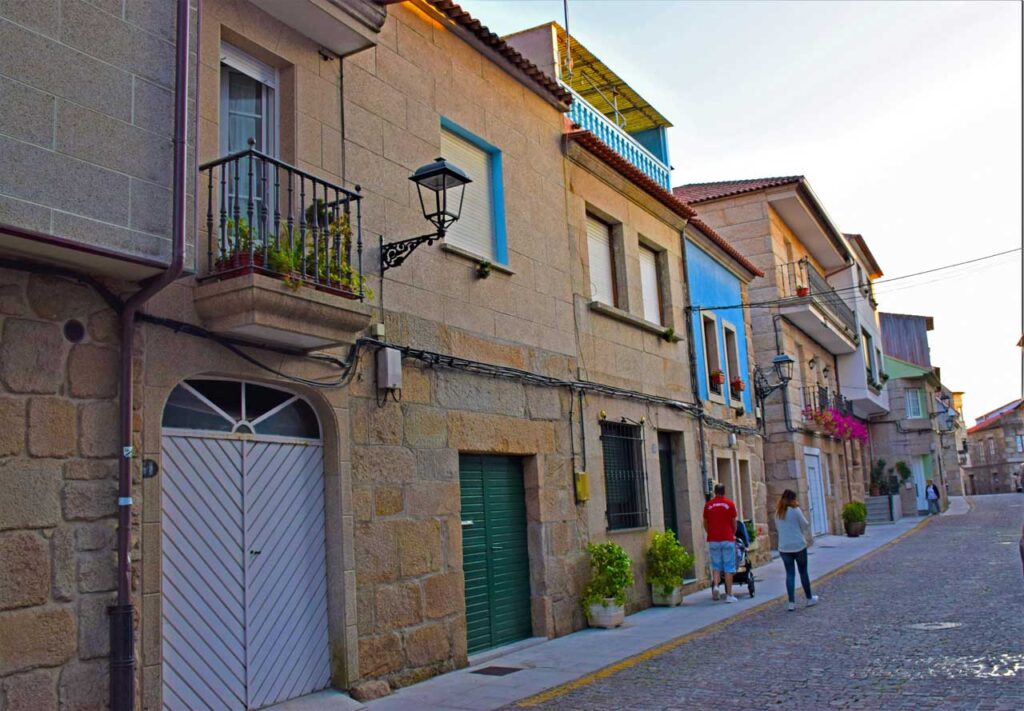
The traditionally maritime neighborhood of San Tomé retains its old-world charm. Very close by is the Torre de San Sadurniño, which makes it an even more magical place. Additionally, in this neighborhood is the Pazo de Montesacro, a Baroque construction of great tourist and architectural interest. The historical importance of the town of Cambados is once again present in the fantastic secular architecture preserved in its streets and most notable buildings. Without a doubt, the historic center of San Tomé is a testament to this, being one of the most beautiful in the entire community.
Nearby, we find the remains of the fascinating church of Santa Mariña de Dozo. Along the coast, a small islet with what remains of the Torre de San Sadurniño, connected by a bridge from the early 21st century; to the endearing fishing neighborhood of San Tomé do Mar. Its existence probably arose due to the proximity of the defensive Torre de San Sadurniño in the 12th century, a geolocation that later formed the town of Cambados, along with Santa Mariña and Fefiñáns. Before this, in the 18th century, the fishing neighborhood was sold to the Marqués de Montesacro who built the pazo that we can see today near its historic center.
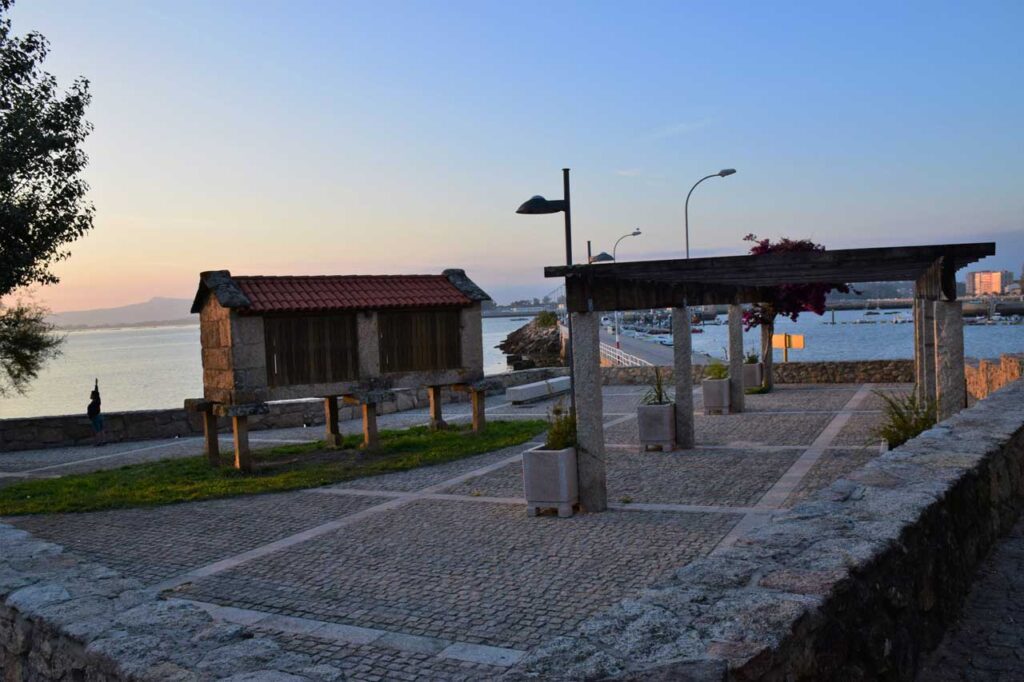
Currently, the San Tomé neighborhood is partially rehabilitated and efforts have been made to integrate maritime architecture into the landscape. A short walk through its narrow streets and the island of A Figueira is worthwhile. Another attraction is the Museo Casa do Pescador, located in the building called Casa Jovita. Possibly the oldest core of Cambados, known as Vila Vella. The port and the promenade are dominated by the 18th-century Pazo de Montesacro. Likewise, skirting the town, one reaches the islet of A Figueira and what remains of the Torre de San Sadurniño, which was part of the 10th-century alert systems to protect the estuary from Norman incursions.
To learn more
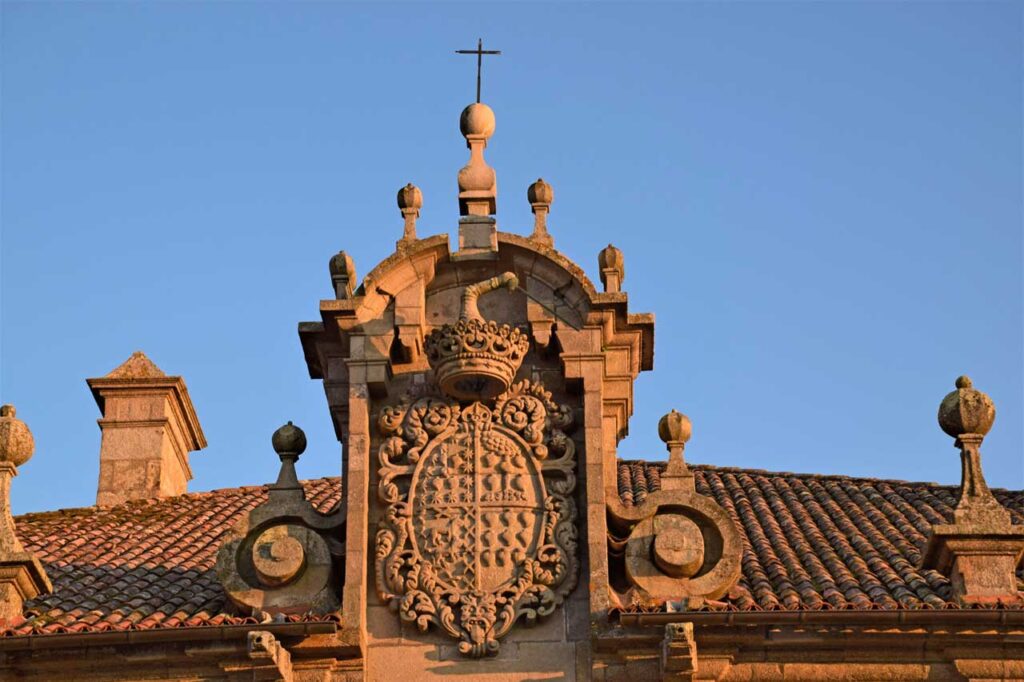
In the 18th century, by decree of Felipe V, Don Diego de Zárate y Murga, 1st Marqués de Montesacro, built the Pazo de Montesacro, where the Marqués's coat of arms stands out, featuring a crown from which a hand wielding a sword emerges. Attached to the building and constructed in the same period is a simple chapel, where the Marqueses traditionally venerate the Virgin of Valbanera from La Rioja, present both on its façade and in the splendid Baroque altar. A stroll through the narrow streets of the town, lined with old houses of the seafaring people (some very well restored), creates a full sensory experience blending beach shells, scents of the sea and traditional cuisine, the sound of the sea, and the feel of stone.
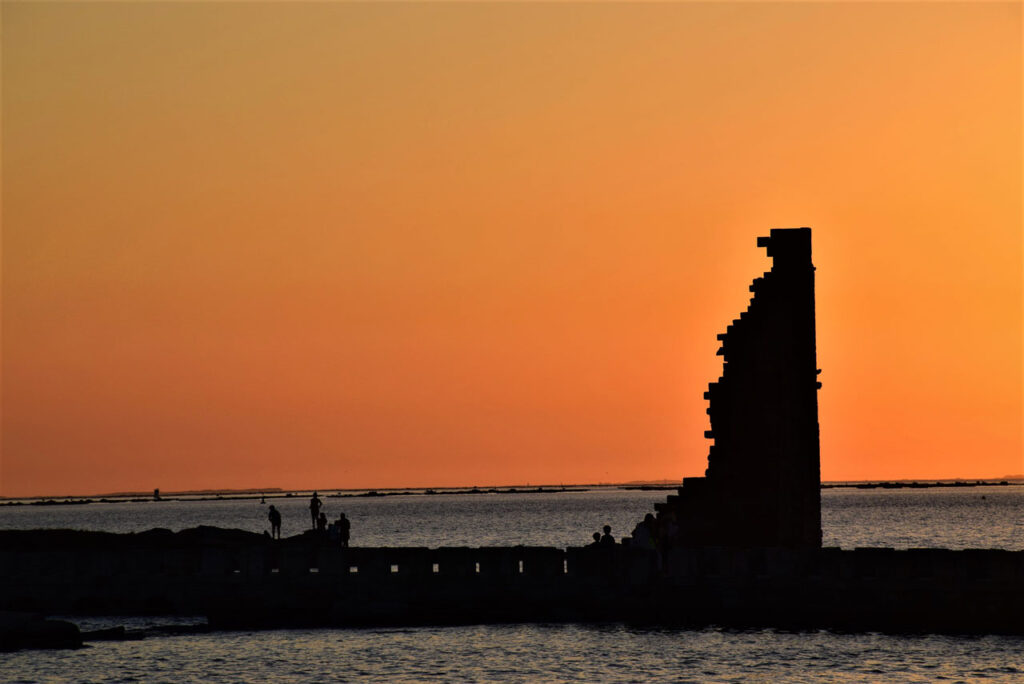
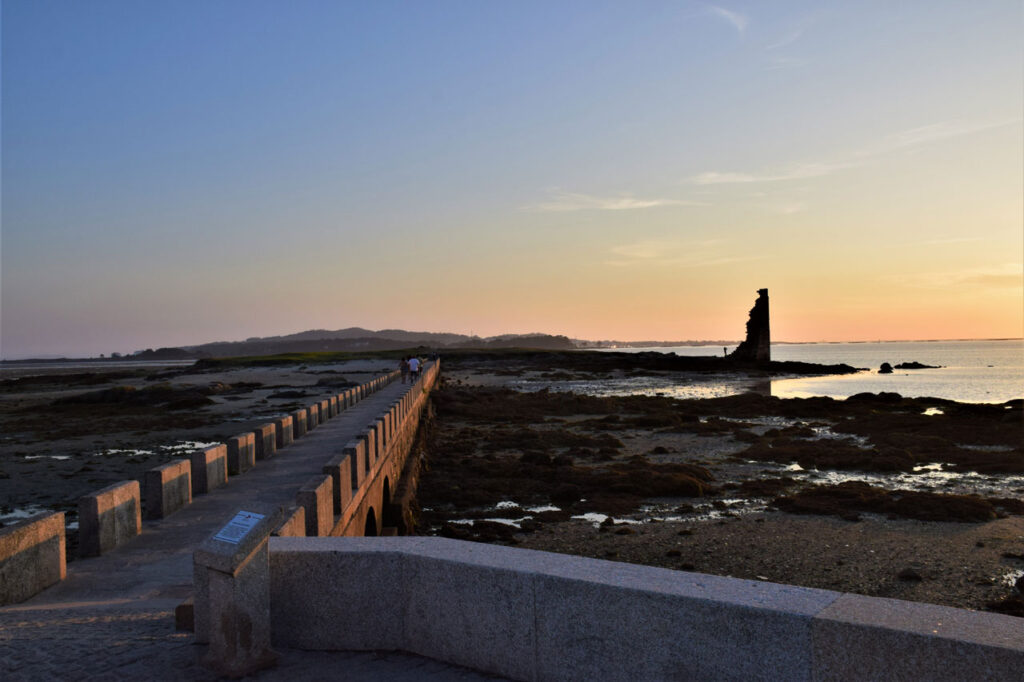
On the island of A Figueira emerge the remains of a fortress that once had a large wall; a defensive tower on one side, and a chapel in the center. This is the Torre de San Sadurniño. Due to its strategic position, the Archbishop of Santiago, Don Diego Gelmírez, decided in the 11th century to rebuild the fortress to monitor Norman and Viking incursions. By lighting a large bonfire at the top, populations were warned of possible attacks. The smoke from the Torre de A lanzada sent the alert signal to this tower, which in turn relayed it to the Torre de Cálago in Vilanova de Arousa. Thus, the warning was passed on to the Torres del Oeste in Catoira; so that nearby inhabitants and those from Compostela lands could defend and safeguard both their lives and belongings.
This defense earned the town the title of "Muy Leal Villa" by King Fernando II in the 12th century, initiating a period of prosperity reflected in its heritage. Access to the island is from the beach of A Mouta via a narrow bridge. No remains of the chapel exist, and from the three-story tower, parts of two walls can be admired, hanging a beautiful chimney. Observing its lovely silhouette, one imagines the warning fire atop the towers and its hurried, fearful people trying to defend themselves from the threat.
In 1467, as happened with most Galician fortresses, it was demolished during the Irmandiño uprising, being rebuilt years later by Suero Gómez de Soutomaior, half-brother of the famous Pedro Madruga, passing in the 18th century from the descendants of Chariño to the hands of the 1st Marqués de Montesacro.
In 1755, the great Lisbon earthquake partially destroyed the fortress and the façade of a chapel next to the Tower, where until about a century ago the images (now in the chapel of Valvanera) of San Tomé, who gave his name to the Burgo, were venerated.
To know it better
as well as another of San Sadurniño, who gave his name to the Tower.
The Casa do Pescador or Casa Jovita is another of the old maritime houses, now converted into a museum, where we can observe the lifestyle and customs of the area's inhabitants, whose livelihood was and is the sea.
Gallery
Location
- Municipality
- Cambados
- Province
- Pontevedra
- Country
- Spain
The asset
- Type
- Fishing neighborhood
- Eco-destination
- Ría de Arousa
- Environment
- Santo Tomé stands out as a fishing neighborhood, with houses covered in shells, balconies, galleries, and the smell of the sea accompanies you on every walk through this neighborhood. Additionally, we can also find an 18th-century Baroque building, the Pazo de Montesacro, and the chapel of Valvanera, also known as the chapel of Nuestra Señora de Valvanera. On the seaside promenade, we can find the islet of A Figueira, which contains the Torre de San Sadurniño, built in the 8th or 9th century AD. However, according to research, there was an even older construction that may have been made by Phoenicians or Romans. This tower has witnessed many battles and was rebuilt during the 12th century by decision of Diego Gelmírez, archbishop of Santiago de Compostela. In the 15th century, there were various revolts in Galicia and the tower was destroyed, but Pedro Madruga rebuilt it. From that moment on, the tower gained much fame and it was from the 20th century when it became public property. The town of Santo Tomé is an area that joined the towns of Cambados and Fefiñáns, in the province of Pontevedra. In fact, if you are in the center of Cambados, you can reach Santo Tomé through Hospital street.
- Relevance
- Fishing neighborhood of San Tomé
How to get there
- Access
- By sea By land
- Distance
- A pié a menos de 20 minutos
The visit
- Interpretation
- Information panels at Torre San Sadurniño
- Accessible
- No
- Parking
- No
Coordinates
- Latitud
- 42.50708300
- Longitud
- -8.82138500