
The beaches of the Rande Point. Galleons from the Rande Batle
About this heritage
A small beach with calm waters extends protected by the Rande Strait. It is a 100-meter long and 15-meter wide sandy area, from which one can see the mollusk-rafts running along the estuary.
Protected from the open sea, the types of bottoms found in the Vigo Estuary are in a privileged area, subjected to the combined action of the mouth of the river within the estuary and the dominant currents, especially in summer and in the north-south direction. The outcropping taking place in the estuaries along with the coastal boundary, constitute an excellent habitat for a diverse amount of marine organisms.
In the underwater part, there are European lobsters (Homarus gammarus), spiny spider crabs (Maja squinado), octopuses (Octopus vulgaris), Mediterranean mussels (Mytilus galloprovincialis), both on the rocks and breeding in rafts, and other mollusks, such as clams, cockles, and cuttlefish (Sepia officinalis), among others.
On the most protected beaches, there is a multitude of bivalve mollusks, as well as sand soles (Solea lascaris), turbot (Psetta maxima), European congers (Conger conger), and whiting-pouts (Trisopterus luscus).
Sometimes, marine mammals, such as common bottlenose dolphins (Tursiops truncatus) or short-beak common dolphins (Delphinus delphis), visit this area of the estuary.
Other treasures are archaeological remains from former times, such as the remains of the Battle of Rande. Although they covered by sediments in the heart of the Vigo estuary, most of the ships from this epic battle still resting there, from Spanish galleons and to French vessels, since their admirals set them on fire when losing the battle.
To learn more
The seabed of Saint Simon Cove hides other secrets. This estuary witnessed the Battle of Rande, which was one of the most talked-about historical episodes and fought on October 23, 1702, between the Anglo-Dutch and Spanish-French alliances, during the War of the Spanish Succession.
The battle, which lasted barely ten hours, resulted in the sinking of several ships from both sides. On seeing themselves surrounded, the admirals of the Spanish-French fleet, Manuel Velasco Tejada and the Frenchman Chateau-Renault, decided to burn their vessels; therefore, the enemies could not take the goods. As a result, some of the galleons looted and sunk by Admiral Sir George Rooke at the command of the Anglo-Dutch squadron and other structures leftover from the burning of the Spanish ships, such as cannonballs and other non-perishable materials, were found in excellent condition within the estuary.
The wrecks are at an approximate depth of between three and twenty-six meters, where one can distinguish six sunken-ships related to this naval combat.
The galleon was a 16th and 17th-century ship-like and the most used in Hispanic journeys overseas. An evolution of the "Naos" and "Carracks," the galleons aimed to combine maneuverability and higher load capacity. Moreover, it needed to be well-armed, for the protection of the convoys when traveling to the Indians, since they were subject to constant pirate attacks.
Built with dimensions of length, beam, and molded depth of 4-2-1, respectively, galleons could carry loads between three hundred tons and more than a thousand.
Although the keel and the keel block were appropriate to its length, the structure of the hull was weak because the frames embedded between them were too separated, besides they had a single lining reinforced only by belts at the height of the decks. The word castle began to be applied to warships when the builders fortified their front and rear parts to mimic land forts for solidity at the time of boarding, which was the most common way of naval confrontation. The middle section of the deck was thinner, approximately, forty meters long, making the galleons to have a rounded appearance that gave them a compact and heavy image.
To know it better
Redondela County in the Pontevedra province has been inhabited since ancient times, proven by findings of various remains of dolmens, petroglyphs, and rock engravings on Penide Mount, Mirallo Mount, and Ventosela.
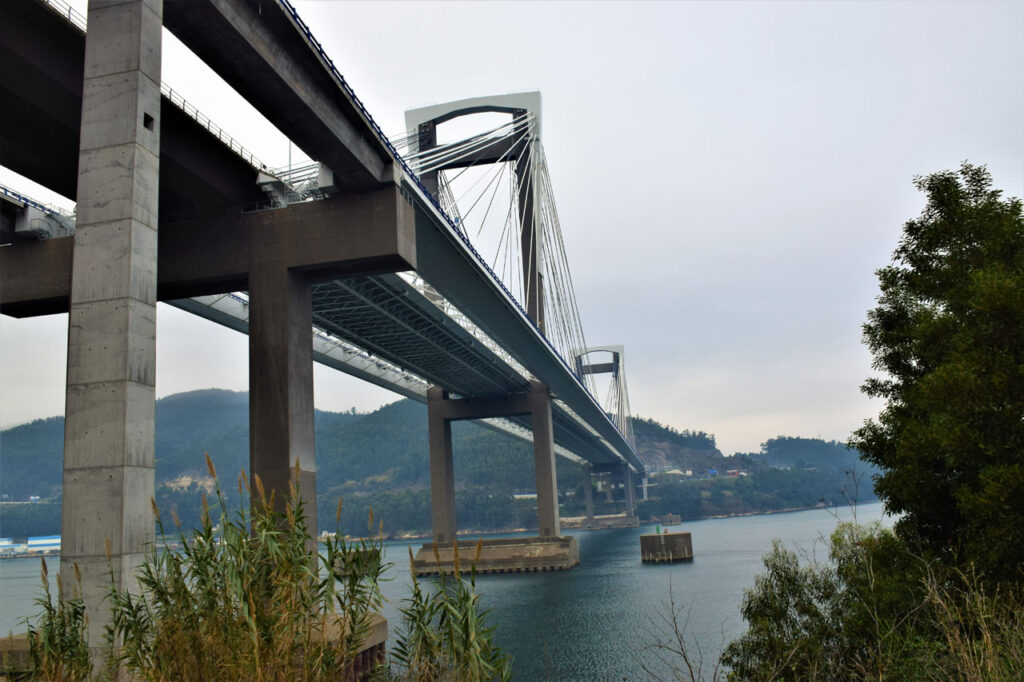
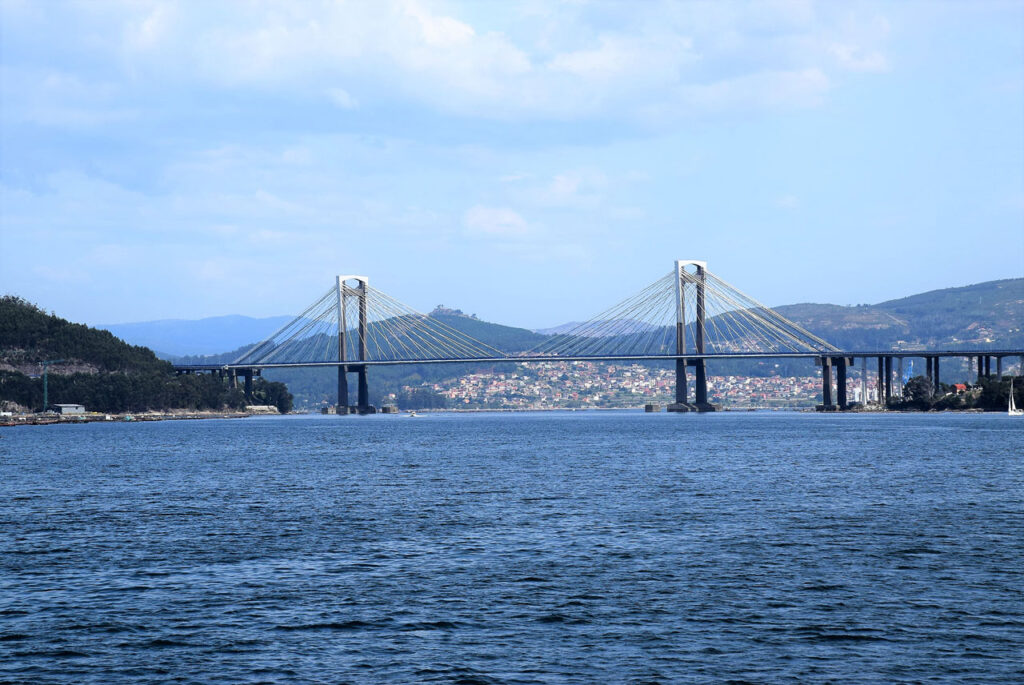
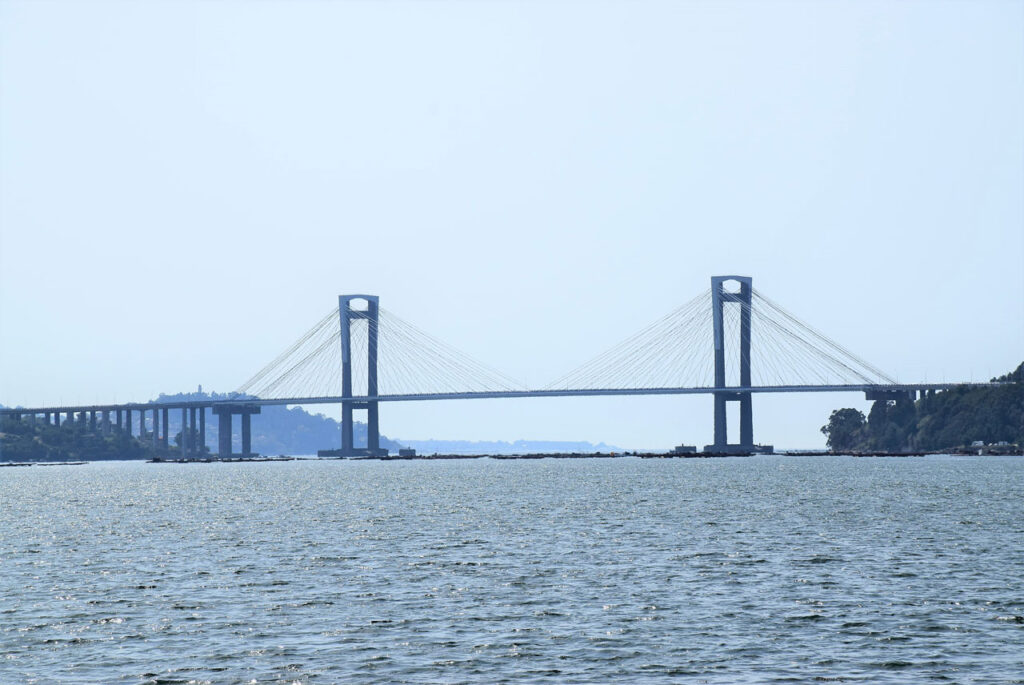
Near Redondela, the Rande Bridge links the Redondela and Moaña counties, where long ago, the so-called "Battle of Rande" occurred. On October 23, 1702, this significant naval battle took place in the Rande Strait between Besta Point and Rande Point in the widest section of the Vigo Estuary.
"A punta" beach, known as "Punta Areiño," is only noticeable when the tide is low, characterized by its transparent waters and its large shoal for shellfishing. Rande beach is almost under the bridge with incredible views of the Vigo Estuary and Saint Simon Island.
From the different battles that took place, the Vigo Estuary holds resources and treasures left in the depths. The search for sunken galleons and their treasures continues even today.
Gallery
Location
- Locality
- Cedeira
- Municipality
- Redondela
- Province
- Pontevedra
- Country
- Spain
The asset
- Type
- Beach
- Eco-destination
- Ría de Vigo
- Environment
- Maritime
- Relevance
- International
How to get there
- Access
- By sea By land
- Distance
- 3,700 km
The visit
- Accessible
- Sí
- Parking
- No
Coordinates
- Latitud
- 42.28434200
- Longitud
- -8.65744300