
The mine of Las Mercedes lagoon
About this heritage
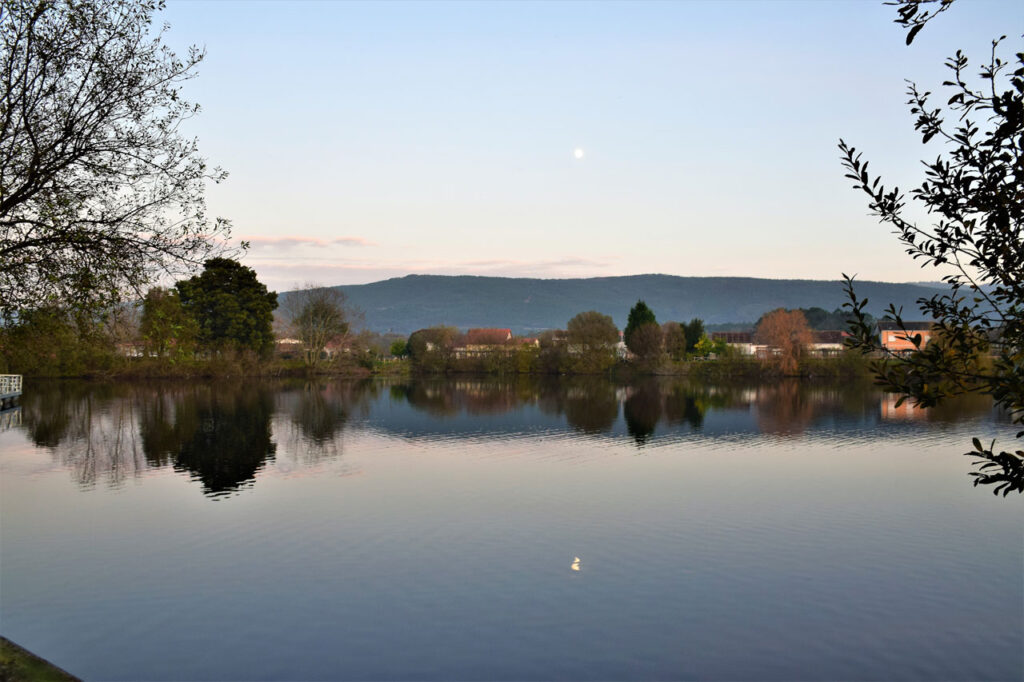
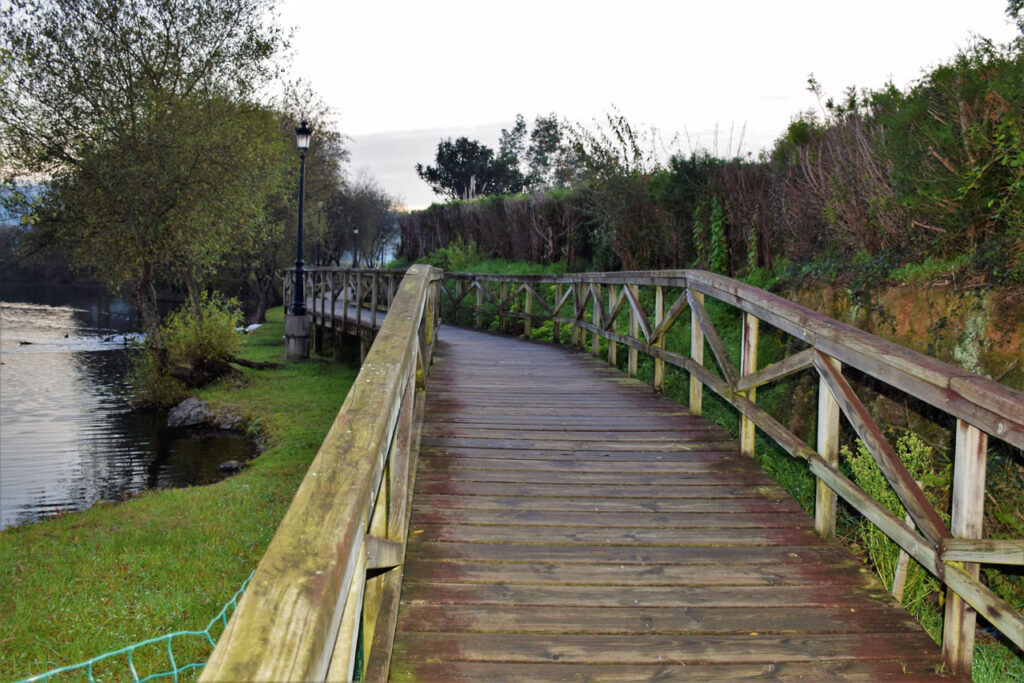
The mine of Las Mercedes lagoon was originally an open-air clay mine for brick production. It covers an area of 30,000 m2 and makes it the largest lagoon in the Pontevedra province. It is almost 20 meters deep in its central section. It has a promenade around 900 meters surrounded by trees and equipped with lighting, rest areas, and viewpoints.
It is close to the regional road that connects Pontecesures with Vilagarcía and visible even from that road. It is a charming spot and one of the most striking in the surroundings of Valga as well as ideal for relaxing and appreciate the passage of time. Its extension and terrain allow visitors to walk without difficulty, enjoy the landscape, and find fascinating of nature's gifts.
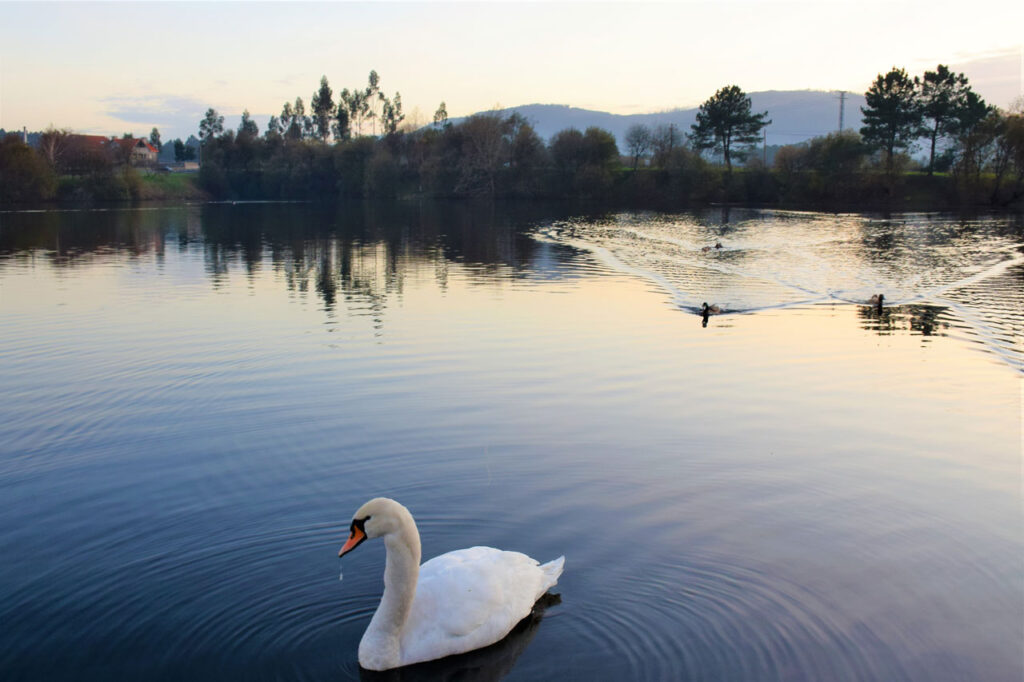
As it was an old mine, this pond was gradually recolonized with plants from marshy areas, animals, and introduced species. Often, migratory birds stop at this lake to rest.
The clay extracted from this mine as well as the ceramic materials produced in the factory were transported by a cable car that linked the enclosure to the Ulla River Port. The "Novo y Sierra" company was in charge of this activity. Currently, from the old port, there are still the remains of the deck and the turrets that supported the line of wagons.
Valga has several natural spaces, grouping them in a concept called the Ecomuseum, which consists of a network of natural interest enclaves. The relationship between these sights is the water, which participates in the formation of various ecosystems. Nowadays, this network conveys four places of importance: the waterfalls of the Valga River, the mine of Las Mercedes lagoon, Mount Beiro, and the fluvial beach of Vilarello.
To learn more
The mine of Las Mercedes lagoon was originally an open-air clay mine for brick production, later use in construction.
Clay is a mineral of the group of the phyllosilicates. It is composed of hydrated aluminum silicates or feldspars from igneous, metamorphic, and sedimentary rocks, decomposed by weathering or hydrothermal alteration. Although in its pure state it is white, it can be of other shades, such as coppery and reddish.
This mineral is formed by tiny particles (0.002mm) that give it various characteristics. It is a colloid with a tendency to group in a pasty-like fluid and widely adherent, creating impermeable surfaces. When mixed with water, it acquires plasticity, making it pliable. It is extremely resistant to high temperatures.
The clay veins are regularly found grouped. Because of the characteristics previously mentioned and like in any other mining operations, a large hole forms when removing the material. Later, when it rains, it fills up with water, which creates a large pond that will recolonize with animals of typical aquatic areas over the years, and if the pH of the water allows it.
To know it better
The mine Las Mercedes is in Campaña parish within the Pontevedra Valga County, one of the most popular tourist attractions. It is the largest natural lake in the province with a 900-meter long promenade surrounded by trees and viewpoints. Formerly, it was a clay exploitation, and throughout the years, it naturally became this great lagoon.
It is a space where tourists and locals can enjoy nature and tranquility as well as observe a variety of bird species typical of these lagoons, such as coots.
Valga County within the Pontevedra province has less than seven thousand inhabitants. Its territory borders with the Dodro and Pontecesures counties to the north and Catoira and Caldas de Reis to the south.
Gallery
Location
- Town
- Valga
- Municipality
- Valga
- Province
- Pontevedra
- Country
- Spain
The asset
- Type
- Lagoon
- Eco-destination
- Ría de Arousa
- Environment
- Rural
- Relevance
- Regional
How to get there
- Access
- By land
- Distance
- Distancia 3,4 Km / 5 minutos en coche
The visit
- Accessible
- No
- Parking
- No
Coordinates
- Latitud
- 42.70480000
- Longitud
- -8.66689500