


The Pontevedra Museum
About this heritage
Among other archaeological collections, the Museum of Pontevedra houses a collection of Bronze Age metal creations, pertaining to the mid-third millennium B.C., era in which the first bronze objects originated, discovered in Monte das Cabras (Ribeira, A Coruña), as well as objects of Mediterranean and Atlantic origin, which confirm the commercial relations between the Galician communities and northern and southern villages.
This section also showcases an important selection of ancient goldsmithing, including the famous "Caldas Treasure", which includes a comb, three cups, twenty-eight solid annular ingots, three gold bars and six gold foil fragments. This is the largest accumulation of gold known in Prehistoric European; 25 original items, weighing a total of 14.9 kg. The treasure was found by a resident of "Veiga das Silgadas", in the town of Caldas de Reis in the province of Pontevedra, whilst he was installing vineyard posts.
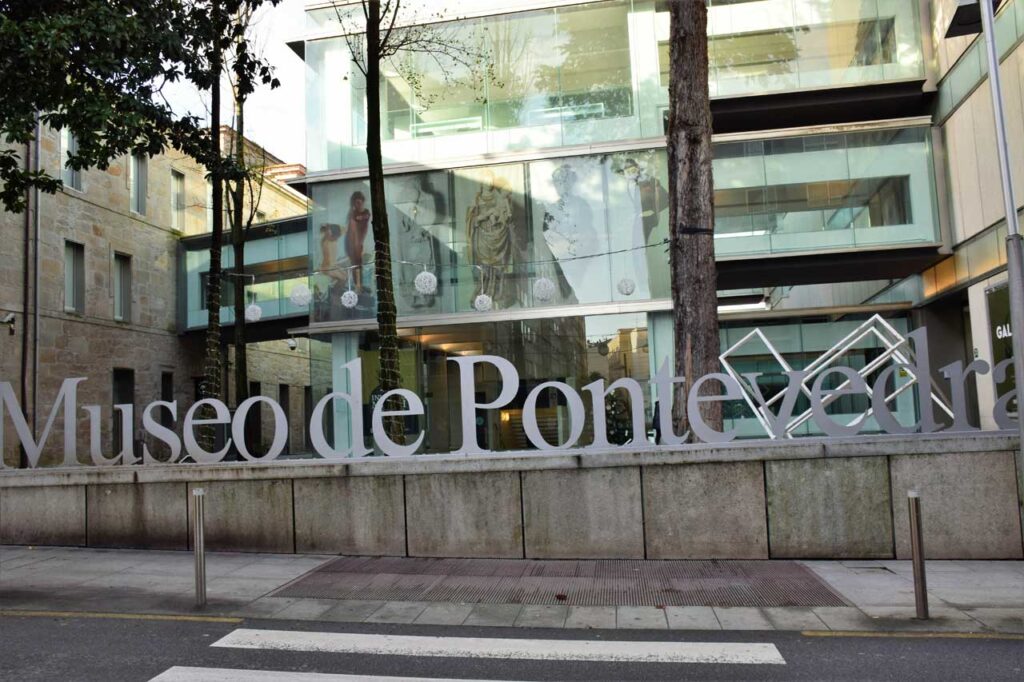
The Museum of Pontevedra was established by the Provincial Council in 1927, to develop on the work carried out by the Archaeological Society of Pontevedra, from which it took over after it ceased to exist in 1937, and from which it received an extraordinary collection of archeological undertakings, documents, books and photographs. The museum currently comprises six buildings, five of which are located in the northeastern zone of the historical city centre, in Pasantería Street, and the sixth building can be found on the outskirts of the city, although not too far out.
To learn more
The Phoenicians were polytheists and each city had its own pantheon, with the omnipresence of female deities such as Astarte or Tanit, who embodied the principles of fertility and prosperity, well established in Mediterranean culture through the figure of the Great Mother Goddess. The interchangeable character of the goddesses also extends to the names of the masculine gods such as Baal (in masculine) and Baalat (in feminine), which also means "lord" and "lord", respectively. Baal is revered as the god of mountains and high places, storms, springs and rivers.
When the Phoenicians chose a promontory, a peninsula or an island to locate the port and the zone of commercial trade, they consulted the oracle, building a temple in the zone to sanctify it. This was necessary to carry out the relevant oaths in any commercial exchange and to be able to carry out rituals and offerings to ask for protection along the journeys. These also served as a neutral space for transactions.
The alphabet is the most important cultural contribution of the Phoenicians. The excavations at Ra's Samra have revealed the existence of an alphabet that used cuneiform signs, of Mesopotamian origin, to write in Semitic language, a direct and immediate precedent of the Phoenician of the classical period. The inscription of King Ahiram of Byblos shows that in the 13th century B.C., Phoenician writing had already reached its almost definitive form and in the first centuries of the first millennium there are several evidences of inscriptions with the complete system of 22 symbols. This alphabet was later adopted by the Greeks, with adjustments, and from these it passed to the Romans.
To know it better
The Museum of Pontevedra, established in 1927 by the provincial Council, was previously known as the Provincial Museum of Pontevedra. Aside from being one of the stops along the Portuguese St. James Way, it is where we can acquire an understanding of the different eras, with a focus on our Galician autonomous community.
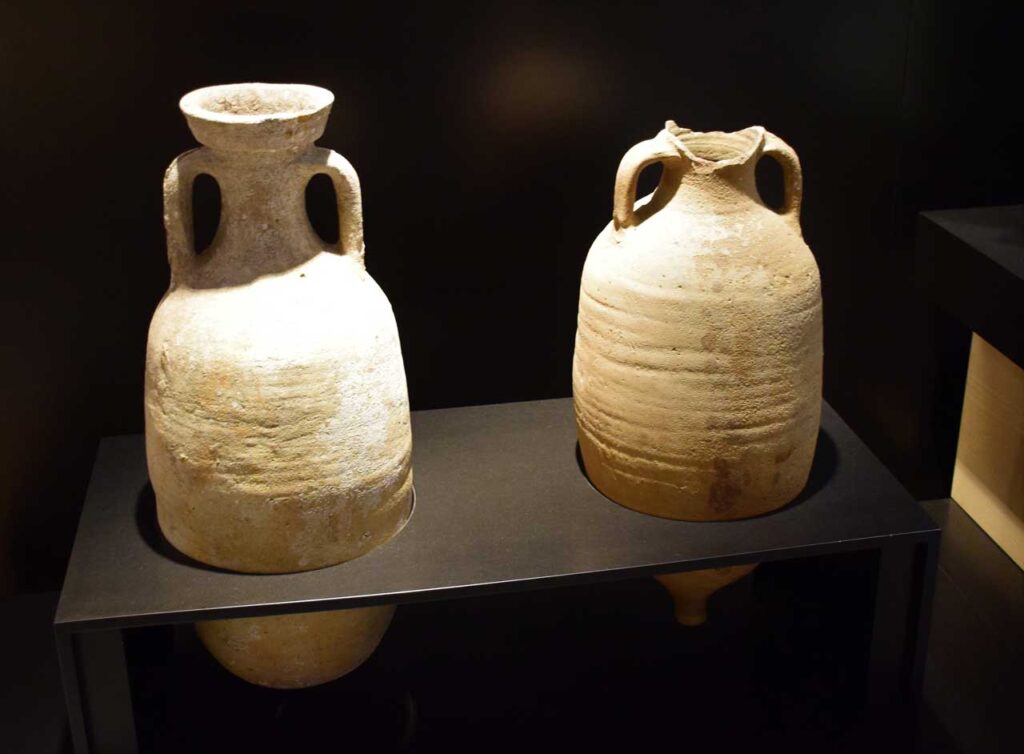
It currently has six properties. The first one, the 18th century building Castro Monteagudo, exhibits archaeology, jewellery (i.e., artistic objects made of silver and other precious metals), from the pre-Roman and Roman, general and civil periods. It also has Spanish, Italian and Flamenco paintings from the late Middle Ages (15th century) to Modern Age (18th).
The second building, attached to the previous one, is the García Flórez, from the 18th century. It has engravings, religious sculpture, Sargadelos's ceramics, the office of Admiral Méndez Núñez (Spanish sailor and soldier) and a reproduction of a camera of the frigate Numancia the military ship.
The third, in the same square as the previous two, is the Fernández López building. It currently hosts the administrative headquarters and research centre of the museum.
The fourth building is located next to the church of San Bartolomeu, while the 5th is the ruins of the Convent of Santo Domingo. Finally, the sixth building, recently built, has permanent and temporary exhibitions.
Gallery
Location
- Town
- Pontevedra
- Municipality
- Pontevedra
- Province
- Pontevedra
- Country
- Spain
The asset
- Type
- Museum
- Eco-destination
- Ría de Pontevedra
- Environment
- Urban
- Relevance
- International
How to get there
- Access
- By land
- Distance
- 700 m / 9 minutos andando
The visit
- Visitable
- Yes
- Interpretation
- Yes
- Accessible
- No
- Parking
- No
Coordinates
- Latitud
- 42.43353400
- Longitud
- -8.64188900