
THE PORTUGUESE WAY ALONG THE COAST
About this heritage
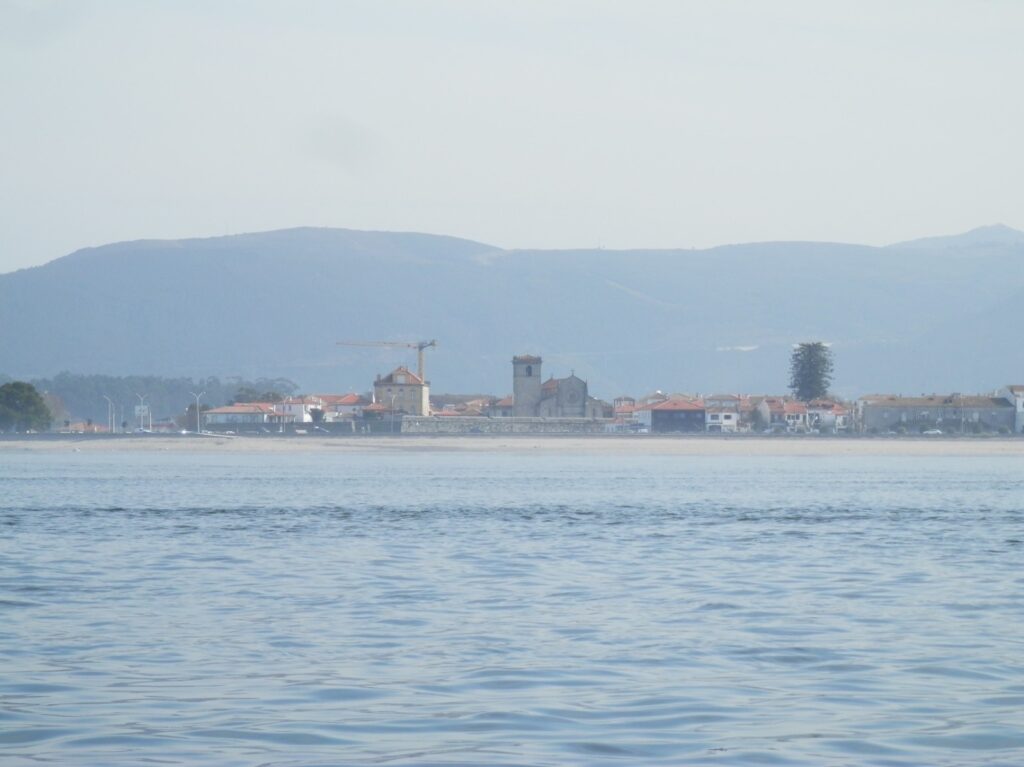
We are in A Pasaxe, where we can see the stone monolith in the shape of a sea wave, marking it as a Jacobean port. This is the entry point into Galicia for the Portuguese Coastal Way. Here we tell you how it all began...
The Portuguese Coastal Way, which begins in Porto, was made official in 2016 and crosses the River Minho from Caminha to A Guarda. In its medieval origins, as early as the 12th century, pilgrims already used this coastal route as an alternative to the path through Tui. One of the most notable pilgrimages was that of the Archbishop of Canterbury, Saint Thomas Becket. According to available accounts, the cleric used the Monastery of Oia as a hostel during his pilgrimage to Santiago de Compostela.
The popularity of the route was promoted by the Portuguese crown and the clergy, as part of cultural and religious identity, and it is also supported by ancient Roman roads such as the Via XX (per loca maritima). There are also writings that place the origin of the emblematic scallop shell of the Camino de Santiago on the coast between Porto and Vigo. This also suggests that the Portuguese Coastal Way has a much older tradition than one might assume.
According to legend, the waters of the Atlantic along which the Portuguese Coastal Way runs were the very ones that gave rise to the origin of the scallop shell of the Camino de Santiago. The story goes that when the Apostle’s remains reached the area of the Cíes Islands, the pilgrims observed that a wedding was taking place on the shore, where horsemen were playing a game: they would toss a lance into the air and try to catch it before it hit the ground. When it was the groom’s turn, he threw the lance, but it veered into the sea. The groom, trying to retrieve it, rode headlong into the ocean with his horse. Before everyone’s eyes, the groom, the horse, and the lance sank beneath the waves, but suddenly they reappeared next to the boat that was carrying the Apostle’s remains. The astonishing part of the story is that when the groom resurfaced beside the vessel, he was completely covered in scallop shells, from head to toe. The disciples interpreted this as a miracle, and this extraordinary event gave rise to the tradition of the scallop shell of Santiago.
Gallery
Location
- Country
- Spain
The asset
- Type
- Xacobean Route
- Eco-destination
- Río Miño
How to get there
- Access
- By sea