


Ulla-Deza area. Fauna and flora. General Natura Network
About this heritage
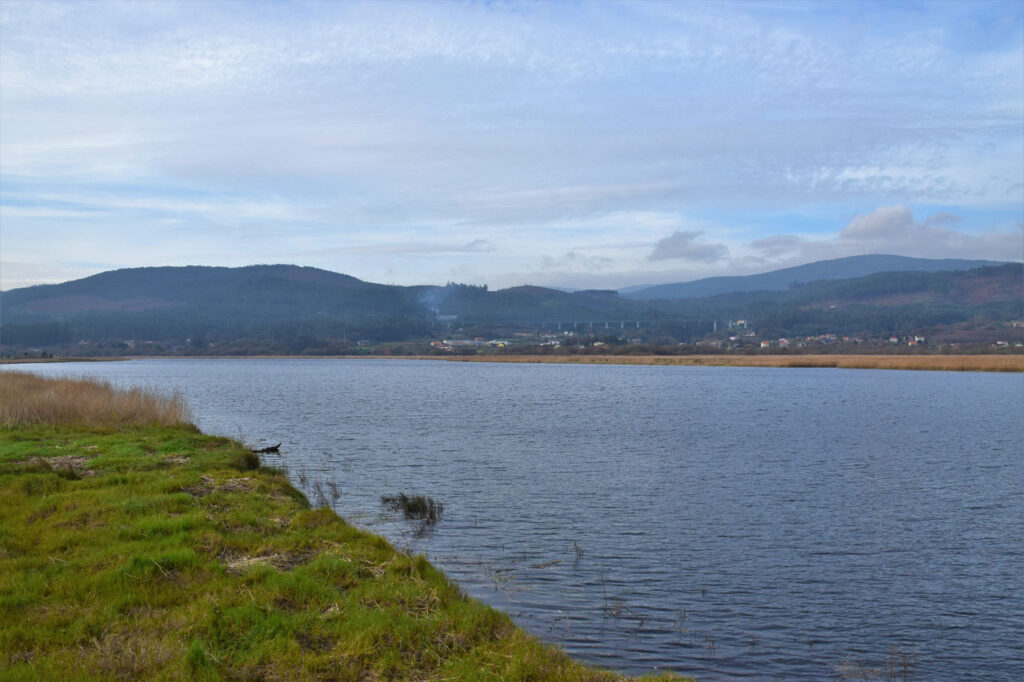
This space is part of the Natura Network 2000, it has 1.633 hectares that cover an important hydrographic network around the Ulla river. It has been declared a Special Conservation Area (ZEC). The Ulla-Deza fluvial system runs through the municipalities of Touro, Boqueixón, Vedra, Teo, Ames, Brión, Rois, Padrón, Dodro and Rianxo in the province of A Coruña and the municipalities of Catoira, A Estrada, Pontecesures, Silleda, Valga and Vila de Cruces in the province of Pontevedra.
The main river is the Ulla, which has its source in the Lugo region of A Ulloa, and flows to its mouth in the Arousa estuary, about 130 kilometres away, it is the third most important Galician river, after the Miño and Sil. It serves as a provincial boundary between A Coruña and Pontevedra and receives contributions from multiples tributaries on both banks, thus forming an extensive river network. It takes water from the Sar - Santiago de Compostela´s river-, and also in the other side, from the Deza, which gives its name to one of the strongest cattle-tradition regions.
The territory covered by this natural space includes urban and industrial areas, inland wetland and marine habitats. There are coastal habitats with halophytic vegetation, natural and semi-natural grassy formations and small extensions of forest in small-leaved linden and cork oak ravines (Quercus suber) of scarce distribution in the set of wetlands and river corridors.
Among the most outstanding species are amphibians such as the Gold-Striped Salamander (Chioglossa lusitánica), the Iberian Painted Frog (Discoglossus galganoi), reptiles such as the Iberian Emerald Lizard (Lacerta schreiberi) and interesting fish species such as the Allis Shad (Alosa alosa), “Bermejuela” (Chondrostoma arcasii), the Northern Straight-Mouth Nase (Chondrostoma dueriense), Lampreys (Petromyzon marinus) and the Salmon (Salmo salar).
To learn more
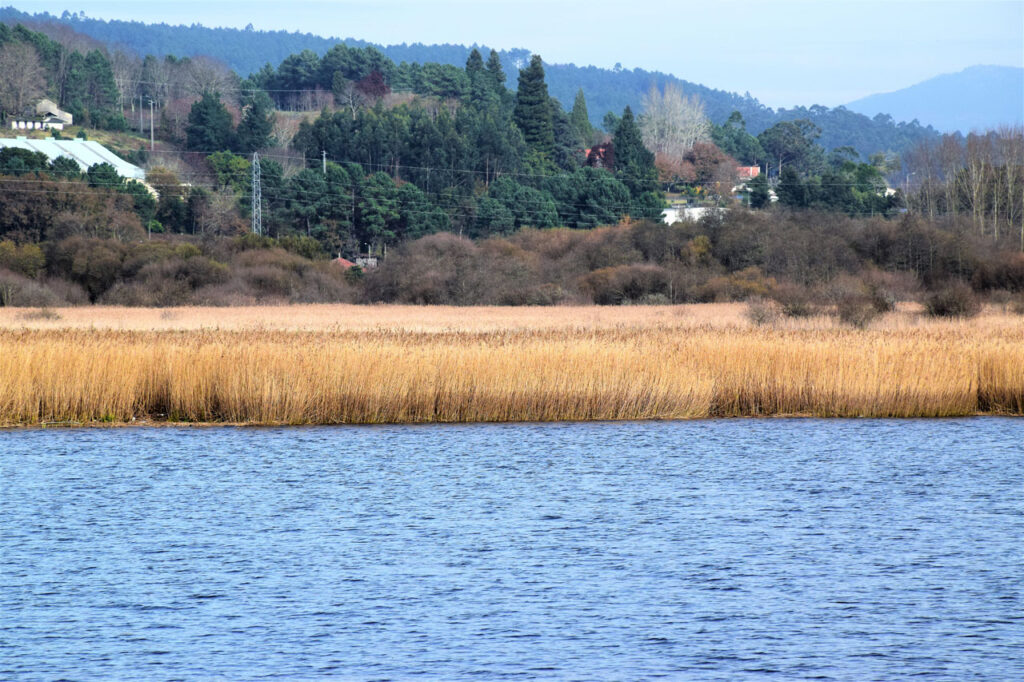
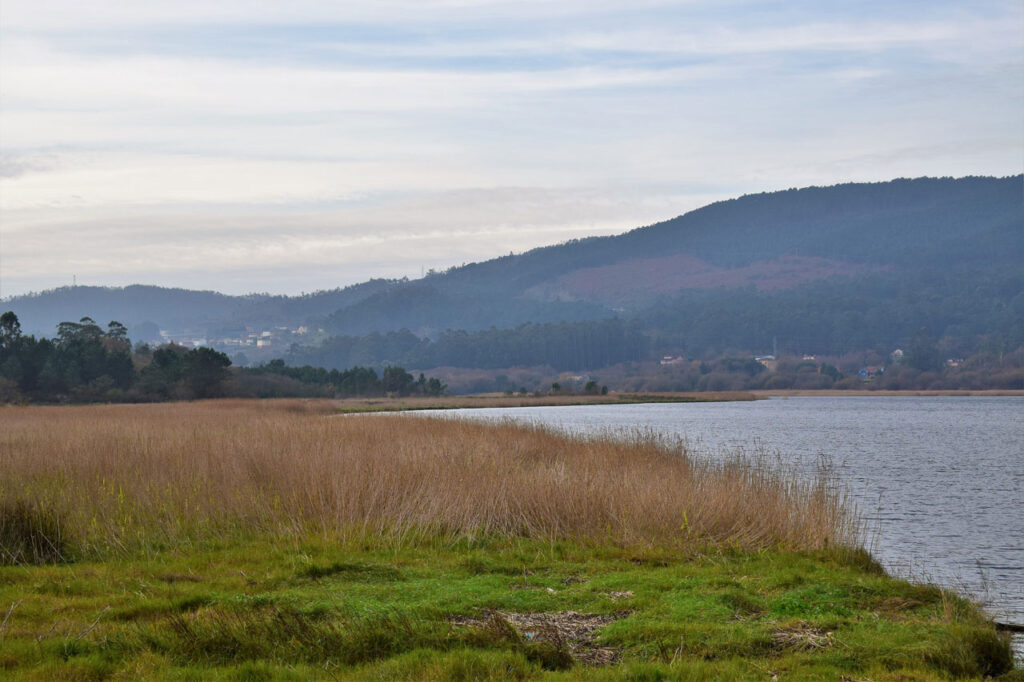
Along the route of this Ulla-Deza river´s system, the landscape is shaped by the human activity with industrial areas and farmlands, riverside woodland and meadows, and water-linked species such as amphibians and fish.
However, sometimes the river´s nature calls for its bravery in high-flying waterfalls. The most famous is the one in the Toxa river - a tributary of the Deza river- because of its 25-meter drop. Beautiful trails lead to it and communicate it with the surroundings of the Carboeiro monastery which is another of the attractions of the area.
Regarding the flora, the oak (Quercus robur) is the dominant tree in the Ulla basin, although due to human action it is strongly reduced to small patches that are mainly located on the river banks and in the most inaccessible escarpments. Gorse-Heather is the most common bush formation on treeless slopes and its chromatic variety is a scenic attraction in almost all year. The riverbank forest consists of Common Alder (Alnus glutinosa), ash (Fraxinus spp.), birch (Betula alba) y willows (Salix SPP.).
You can still find Salmon (Salmo Salar) looking for places to spawn, being the Ulla-Deza basin one of the best places for salmon in Galicia. Trout (Salmo truta), Lamprey (Petromyzon marinus) or the eel (Anguilla Anguilla) are fish resources of enormous ecological and economic importance in this basin.
Birds and mammal species adapted to river´s life deserve special mention. The presence of the White-Throated Dipper (Cinclus cinclus), Kingfisher (Alcedo atthis), Grey Wagtail (Motacilla cinérea), Grey Heron (Ardea cinérea), Otters (Lutra lutra), Pyrenean desman (Galemys pyrenaicus) and the European Badger (Meles meles), is remarkable.
To know it better
Deza´s district, located in the centre of Galicia has the following municipalities: Lalín, Silleda, Vila de Cruces, Agolada, Rodeiro and Dozón. Deza river is one of the largest tributaries of the Ulla river, and both rivers are who serve to limit the provinces of A Coruña and Pontevedra.
The Ulla-Deza basin is an area where we can find huge salmon, trout, lampreys, European plaice or species such as the eel. In addition, we will be able to see different birds, such as the white-throated dipper, kingfisher, grey heron or otters, among others. The vegetation is also very relevant on the riverbanks, we can will find different bushes, such as gorse and trees like European alders, Fraxinus, birches and willows.
The Ulla-Deza river system – which also includes the municipality of Valga in Pontevedra- has been declared a Site of Community Importance in the Natura Network 2000 since 2004, and occupies approximately more than 1.100 hectares along the course of the Ulla and Deza rivers. The Natura Network 2000 is a European Ecological network that fights for the nature´s conservation.
Gallery
Location
- Town
- Cordeiro
- Municipality
- Valga
- Province
- Pontevedra
- Country
- Spain
The asset
- Type
- Intertidal complex
- Eco-destination
- Ría de Arousa
- Environment
- Natural
- Relevance
- International
How to get there
- Access
- By sea By land
- Distance
- 0 km
The visit
- Accessible
- No
- Parking
- No
Coordinates
- Latitud
- 42.70564000
- Longitud
- -8.70598900