
West Towers and Galician context
About this heritage
The fortress, built to protect Galicia from the Viking incursions, and which the West Towers formed part of, dates back to the castro period, with the so-called Castro das Torres, from the 2nd and 1st centuries B.C. The settlement size is less than two hectares, located on the narrowing part of the Ulla river, about 4 kilometres from the mouth of said river. The Ulla river ranks second to The Miño river in importance, inasmuch as entry access for importations to inland Galicia.
It was originally either an island or a peninsula. The West Towers are located outside the northern limit of the oppida area, making it an independent emporium in charge of channeling the Mediterranean imports and distributing these along the Ulla river. The largest northwest aquatic weapon deposit of the Final Bronze Age was found here.
To learn more
The communities that the Phoenicians found when they arrived in the northwest at the end of the 5th century. A.C. were in the process of change. Precisely this period marks the change between the First and Second Iron Age in the area. Until then, the northwest had been characterised by considerable cultural homogeneity: predominantly small fortifications (castros), with little monumental architecture of circular shape and fortifications with a predominance of terraces, ditches and embankments. The occupation of the territory was not very dense, and the settlements were located in elevated locations. From the end of the 5th century BC onwards, many of these settlements were abandoned and the number of settlements at the valley bed multiplied, with complex defense mechanisms and, at least on the coast, they were characterised by a monumental stone structure and a very dense occupation, although they remained small (2 hectares) at least until the 2nd century BC.
In contrast to the south of the peninsula, the northwest was in no way "Mediterranean". The Punics maintained trade relations, but without establishing colonies or permanent settlements. The closest thing to a permanent settlement were the worship spaces identified in Punta do Muiño do Vento and the island of Toralla (Vigo). However, there is evidence of influence in some Castro's settlements of the southern coast, where metallurgies and elements of religious culture were adopted due to possible ideological transfer through the Punic places of worship in the town.
The first emporiums with Punic presence were established in familiar places for the merchants coming from the south. These landscapes are similar to the Punic Mediterranean world and the area of the Strait of Gibraltar: islands close to the coast, capes flanking inlets, good natural harbours and river mouths that act as gateways to the interior. A first feature of this first Punic trade is its concentration on the coast. Apparently, the Emporiums monopolised the vast majority of imports and acted as intermediaries between inland metal producers and merchants on the coast, following the classical model that seems to be found in different parts of European protohistoric geography. The involvement of the Galicians in the Second Punic War as soldiers in the service of Carthage demonstrates that the interactions between the communities of the northwest and the Punic navigators had created close ties.
From the second half of the 2nd century B.C. and most strongly from the year 125 B.C. was when the exchange with the Mediterranean world reappears vigorously, as evidenced by the appearance of a large number of remains in numerous locations. It was in this late Punic period that the oppida appeared, large castros that became an asset to trade and particularly encouraged the importation of large amphorae, the contents of which were used for banquets sponsored by the large elites leading the oppida.
Wine plays a key role in the political economy of the oppida and undoubtedly acted as a boost for trade from the second century BC. Wine was one of the products traded by the Phoenicians, who planted vineyards in all their colonies and around their factories in North Africa, including Carthage, which later inherited all Phoenician power, as in the Iberian Peninsula, France and Italy.
To know it better
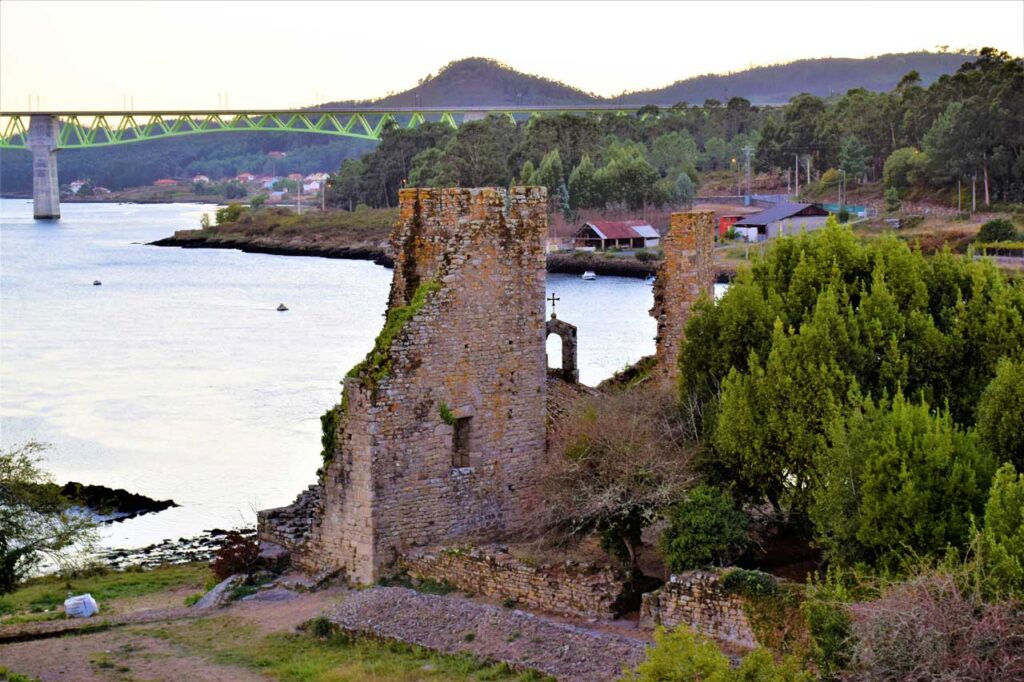
The West Towers, previously known as the ancient fortress Castellum Honesti, are located in the municipality of Catoira, in the West parish (Pontevedra). They were a set of defences reinforced according to the order of Archbishop Gelmirez (12th century) to protect Santiago de Compostela from Viking attacks and to block future invasions along the Arosa estuary.
Certain archaeological research has discovered that the fortress of these towers originated many years ago, dating back to the castro era of the 2nd and 1st century B.C. In fact, ceramic remains and bronze weapons have been found. Subsequently, in the Middle Ages, it became one of the most important fortresses in protecting Galician territory.
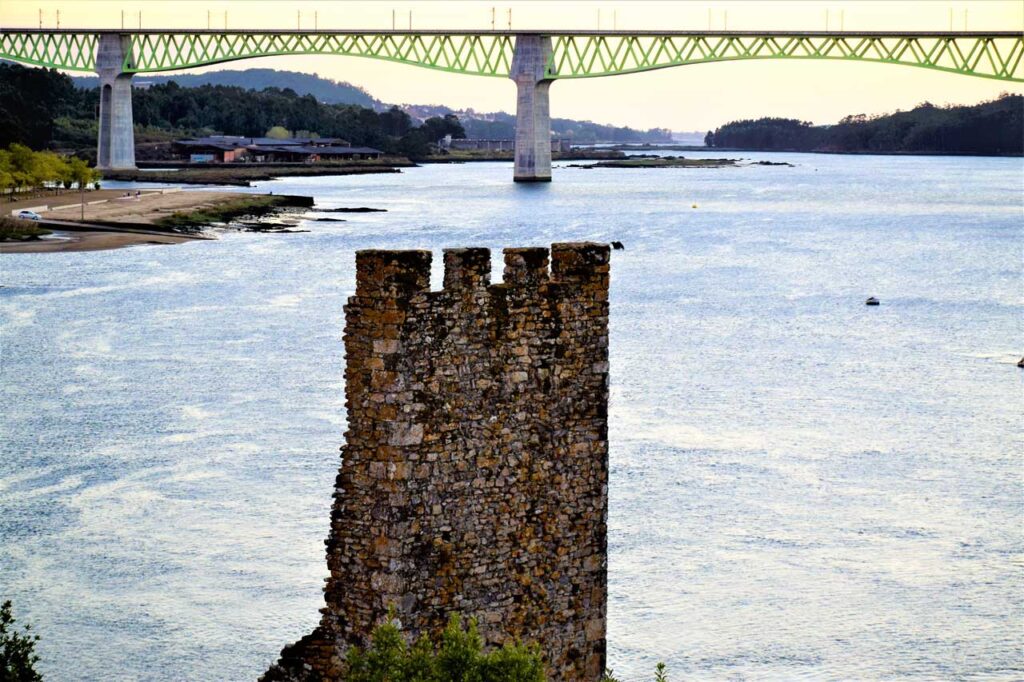
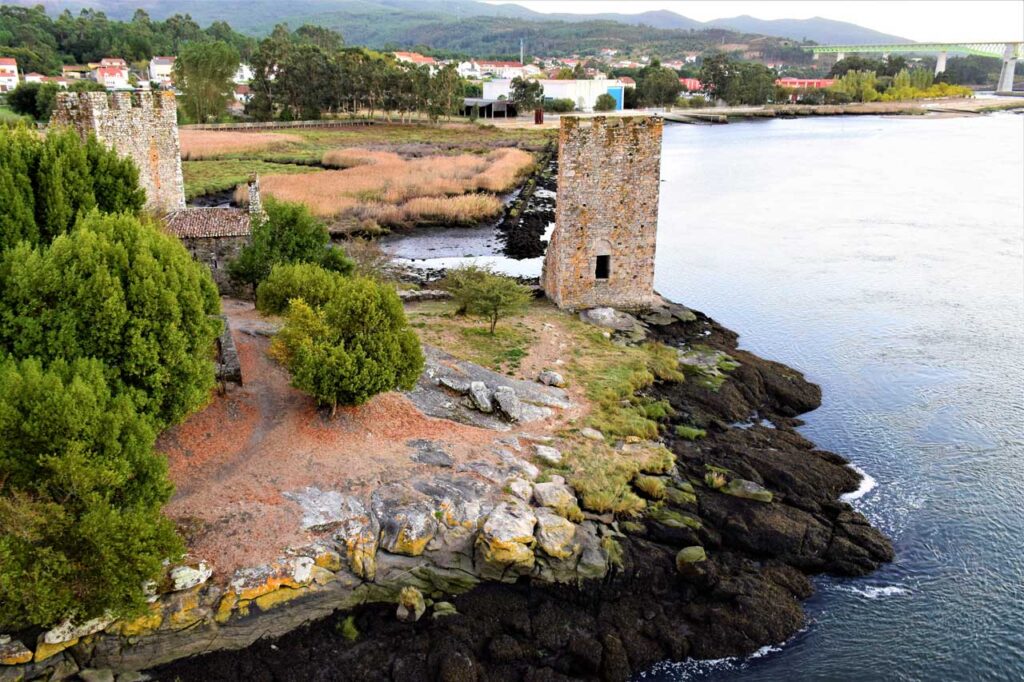
At present, the towers can be partially seen close to the shore of the Ulla river. Restoration of the towers began in 1960 and they are declared an Historic-Artistic Monument.
Galería
Location
- Locality
- Catoira
- Municipality
- Catoira
- Province
- Pontevedra
- Country
- Spain
The asset
- Type
- Tower
- Eco-destination
- Ría de Arousa
- Environment
- Rural
- Relevance
- International
How to get there
- Access
- By sea By land
- Distance
- 12 km / 14 minutos en coche
The visit
- Visitable
- Yes
- Accessible
- No
- Parking
- No
Coordinates
- Latitud
- 42.67658000
- Longitud
- -8.72368200