


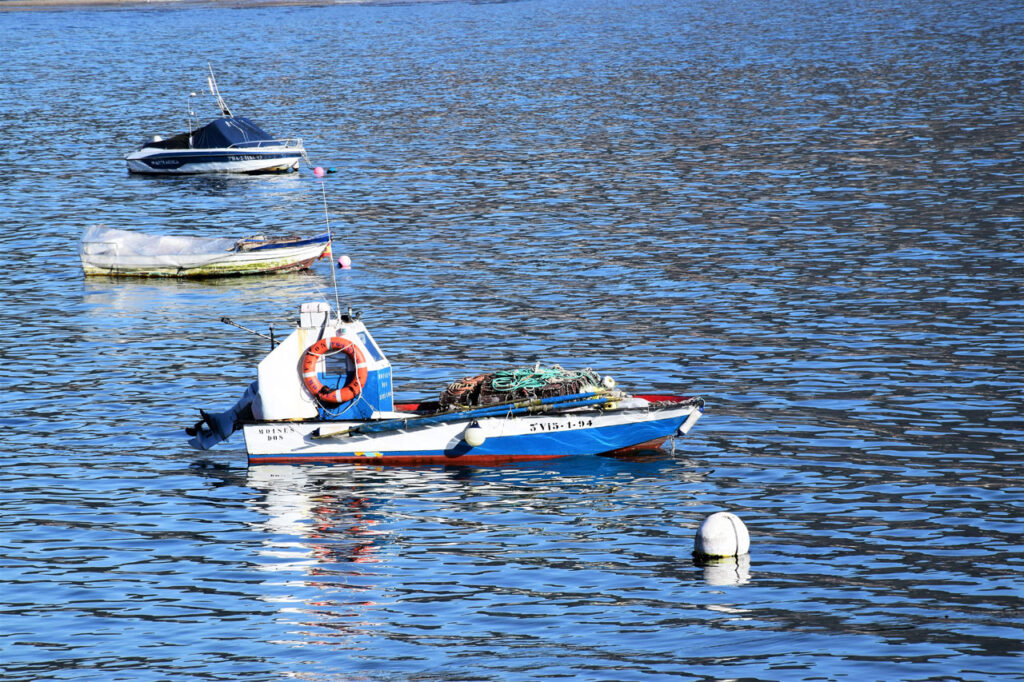
Product. Pilchard. Pilchard inshore boat
About this heritage
The pilchard (sardiña in Galician language) is an edible fish of 12 to 15 cm long, it is bluish black on the back, silver on the sides and belly, and gold on the head. It has a tasty and delicate flesh.
When they are consumed small they are known in Galicia as xoubas. It is a blue fish that is present in the markets all year round, although it has migratory habits. It gathers in large banks that, in spring and summer, like to get closer to the coast and to more superficial waters.
As a food, it has a high percentage of fat, a strong taste, and is rich in nutrients and vitamins. A tasty and abundant product of the sea.
As for its size, it usually measures between 11 and 20 cm and its weight ranges from 50 to 200 gr.
In Galicia, the pilchard is an unavoidable guest in many celebrations throughout the Galician geography in summer. As it could not be otherwise, besides being present in almost every party that is worthy, the pilchard has its own party. The Sardine Festival of Monte de A Guía, in San Salvador de Teis, in Vigo, has been celebrated since 1988.
Fishing in Galicia is an ancestral activity with a strong implantation in the Galician coast. Inshore fishing is understood as the fresh catch of the day, with the pilchard being one of the stars in the Galician fish markets.
To learn more
The pilchard has been one of the most accepted fish in our markets for centuries. In spite of being a fish of migratory customs, it is present all year round. The sardines form large banks called shoaling, and it is in spring and summer when they come very close to the coast and the surface.
This fish, with its very tasty and aromatic flesh, is, together with the anchovy, one of the healthiest and most popular fatty fishes in Galicia.
As for reproduction, each female lays between 50,000 and 60,000 eggs with a diameter of 1. 5 mm and they remain part of the plankton for one or two weeks, depending on the water´s temperature.
The pilchard is fished in all the Spanish coasts, the most habitual forms are the purse seine and the gill net that in Galician is called “xeito", this art of fishing is the one that makes the pilchard bleed to death in the sea, which gives very high quality to the product. It is marketed throughout the year, but it is in summer when there is a greater number of catches and it acquires a better flavour due to its high fat content.
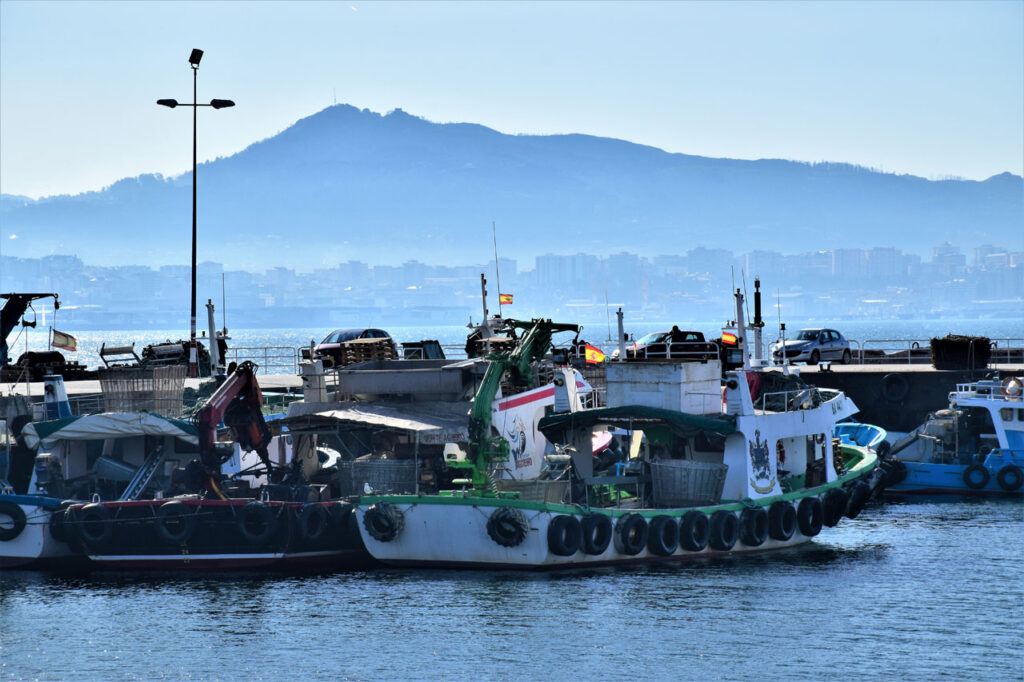
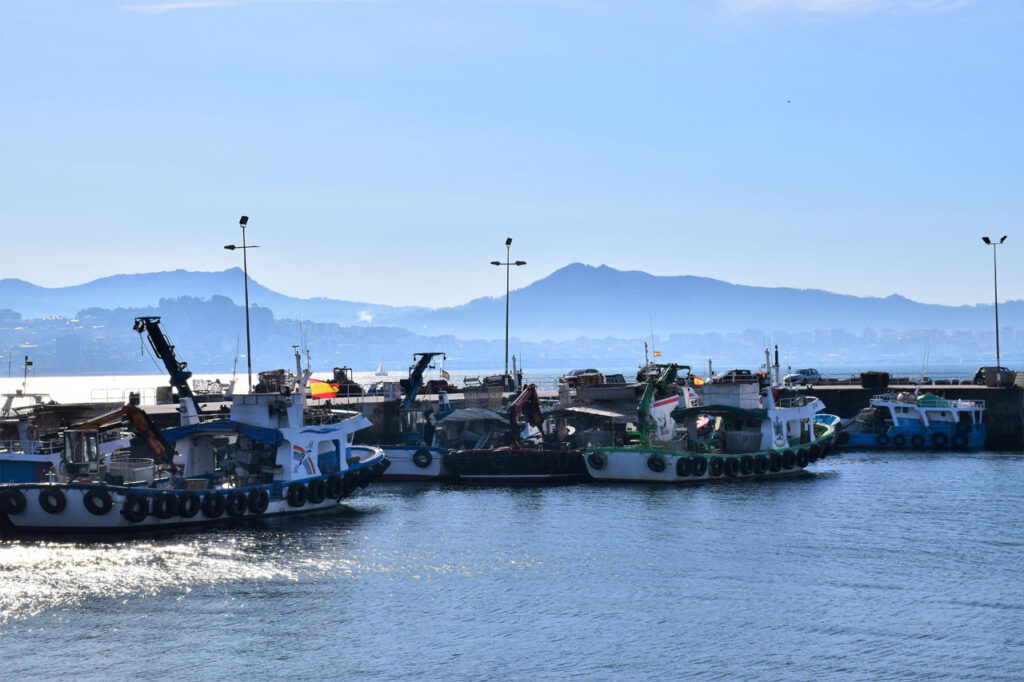
The inshore fishing is done in small boats and near the coast, with artisan methods and in small boats that go daily to port to sell the fresh product, since it is only refrigerated with hailed snow for its conservation, being a fresh product it is more expensive than the one captured by the offshore fleet. Sardine, horse mackerel, mackerel or pout are some of the fish caught by this method.
To know it better
The common or European pilchard is a saltwater oily fish that belongs to the family Clupeidae. Characterized by an elongated body, small teeth, colorless fins and a dark gray, blue and silver back, its belly stands out for its silver tones.
The roast pilchard is very famous in the Galician cuisine. Its campaign starts on May 31st. This species is in great demand on 24 June, the day of San Juan, as both in Moaña and in other coastal towns, pilchards are eaten to celebrate the typical day of San Xoán.
The two fishing gears used in Moaña to catch sardines are bottom trawling and purse seining. The first, as its name suggests, consists of dragging a large net along the seabed. This way, the sardines get caught in it. Today, this technique is not so widely used, as it can cause irreparable damage to other organisms on the sea bed, such as corals. The other fishing gear, the purse seine, involves surrounding a school of sardines with a large net. The net closes and the sardines are trapped inside.
Gallery
Location
- Town
- Moaña
- Municipality
- Moaña
- Province
- Pontevedra
- Country
- Spain
The asset
- Type
- Fish product
- Eco-destination
- Ría de Vigo
- Environment
- Maritime
- Relevance
- Regional
How to get there
- Access
- By sea
- Distance
- 0 km
The visit
- Accessible
- No
- Parking
- Sí
- Signposted
- Yes
Coordinates
- Latitud
- 42.27388400
- Longitud
- -8.73611500