


SEAFARIRNG DISTRICT. Historical and Geographical Evolution
About this heritage
Monterreal area has been known for more than 2000 years as a walled enclosure and a strategic place. Many communities settled there, including Celts, Phoenicians, and Romans.
During the war between Alfonso Enríquez and Alfonso VII de León (Alfonso IX), the first was held captive in the tower known as Torre del Príncipe (Prince's Tower), an event that received its name.
In 1201, King Alfonso IX of León signed a Town Charter in the Cíes Islands, by which he granted the name of "Baiona" to Erizana, gave crucial jurisdictions and privileges for maritime trades to its inhabitants, and ordered the end of their dependency under the lordship of the Oia monastery.
The arrival of the Pinta caravel in Baiona occurred in a favorable historical context for the town since in 1425 King John II determined that the La Coruña and Baiona ports were the only ones that could unload goods from abroad, authorizing the Royal Villa of Baiona to import and export any variety of merchandise.
In 1474, the town and the castle were assaulted by Pedro Madruga, who participated in the civil war in favor of Juana La Beltraneja and against Isabel La Católica.
A date of transcendent significance for Baiona was March 1, 1493, since the Prince's Tower of Monte Boi Castle witnessed the arrival of the famous caravel: "La Pinta," captained by Martin Alonso Pinzon and helmed by Cristobal Garcia Sarmiento. Therefore, Baiona's villagers became the first in Europe to know of the discovery of the New World. Then, Pinzón disembarked on the Ribeira beach after La Pinta had bordered the castle of Mount Boi.
The Catholic Monarchs granted numerous privileges to the 650 residents of Baiona and gave this city the titles of Noble and Loyal Villa; from that day, the peninsula of Monte Boi was referred to as Monterreal.
In 1585, the English corsair Sir Francis Drake disembarked near Baiona and bombarded the town, making the towners flee; however, he was unable to take the Monterreal fortress due to its exceptional defenses and the resistance offered.
During the Napoleonic domination, Baiona had a decisive influence on the reconquest of Vigo. It was the first city to get free from the domination of France.
In 1823, Baiona ceased to exercise jurisdiction over the Miñor Valley, and its influence was reduced to the local area.
On October 24, 1843, general Iriarte made a declaration in Vigo, sending his troops to Baiona to take the castle. The troops were rejected with cannon shots, the last ones from the cannons of the Monterreal Castle.
In 1859, a Royal Order established the end of Monterreal as a military fortress, and in 1872, the State announced its sale at public auction, and consequently, acquired by José Elduayen in 1877. In 1963, it was bought back by the State becoming a Nacional Parador three years later.
On March 1, 1974, the Ministry of Labour established the day of the Arrival of the Pinta (Arribada de la Pinta) as an official local holiday.
To learn more
Throughout the years, Baiona Villa has been evolving. With the news of the discovery of the New World, it lived his most significant period and grew due to its trade activity and geographical location. Soon, other cities, such as Vigo, would gain importance and cast a shadow on this port trade.
However and thanks to its splendid past, Baiona has historical buildings, emblazoned houses, Lordly Houses (Pazos), temples, and countless legendary stories; therefore, little by little, it became a tourist reference.
At the end of the 19th century, the health-tourism boom found in Baiona a meeting point thanks to its thalasso-therapy resort. The excellent properties of the iodine-riched waters were already well-known due to the abundant algae brought every day by the continuous beating of sea waves onto the Concheira beach. The algae are crushed by the action of the waves, decomposing them and producing the dissolution of the elements of proven therapeutic properties.
Doctor Cordero and Mr. Ordoñez saw a business opportunity and decided to set up a small spa with twenty movable cabins.
The development of the first thalasso-therapy health resort in Baiona took place on the popular Concheira beach (Shells beach) in 1896. It was a wooden low-rise building, set on stone piles to allow high tidewater to flow freely underneath.
It was necessary to invest in infrastructures to contribute to the tourist development of the Village, and thanks to the donations of returned emigrants, such as the Valverde-Cadaval couple, authorities completed the tram construction, which reached Baiona.
The inauguration was on September 3, 1926, and engineers Carlos Coloret and Ricardo Mella Serrano traced the route; the latter was the son of the intellectual anarchist and first manager of the Tramway Company. The design included a narrow-gauge railway between Vigo and A Ramallosa, from where one tram would leave to Gondomar and another one to Baiona. It continued functioning until December 31, 1968.
To know it better
The Baiona district continues to live up to its traditions. These include fish and seafood sales at the fish market - located in the port - and the festivities to commemorate the Arrival of the Pinta Caravel (La Arribada), where theatrical performances can be enjoyed during the first weekend of March. Moreover, in the celebration of the Virgen de la Anunciada, the patron saint of Baiona, and the Virgen del Carmen, patron saint of the sea and its people, the sailors join together to dance the "Danza de las Espadas" (Dance of the Swords), which is more than 400 years old, and also the typical Galician dance called "Muiñeira."
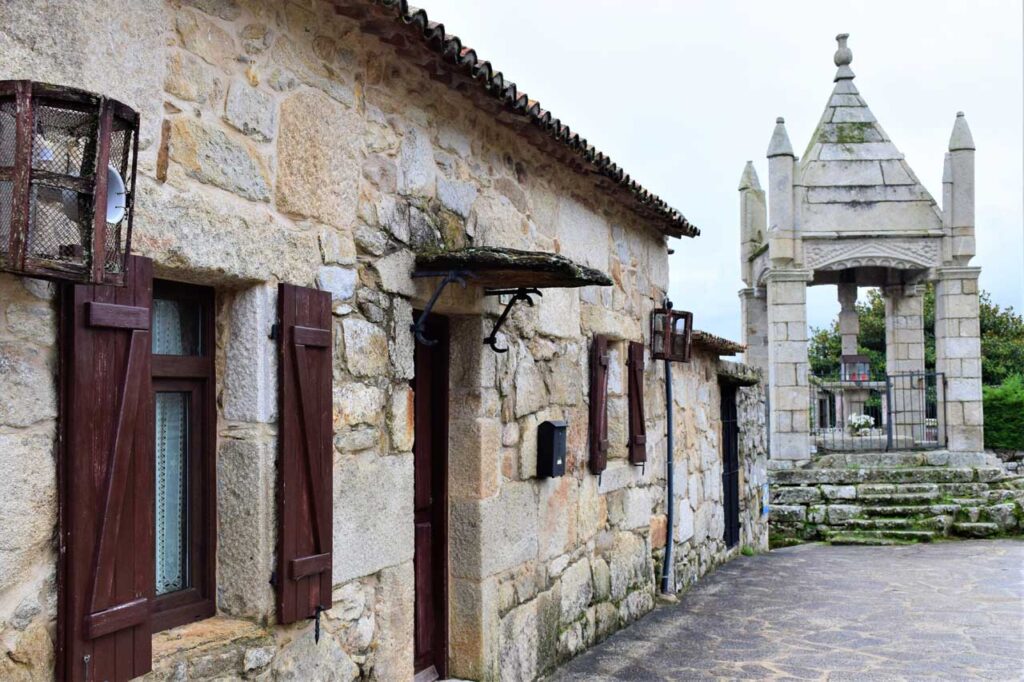
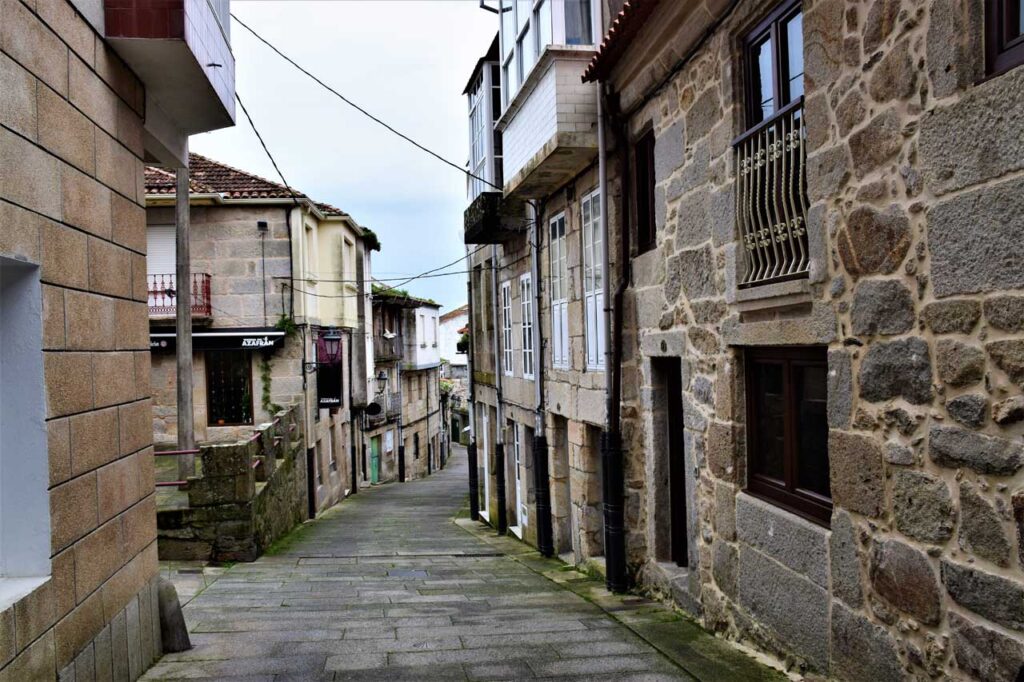
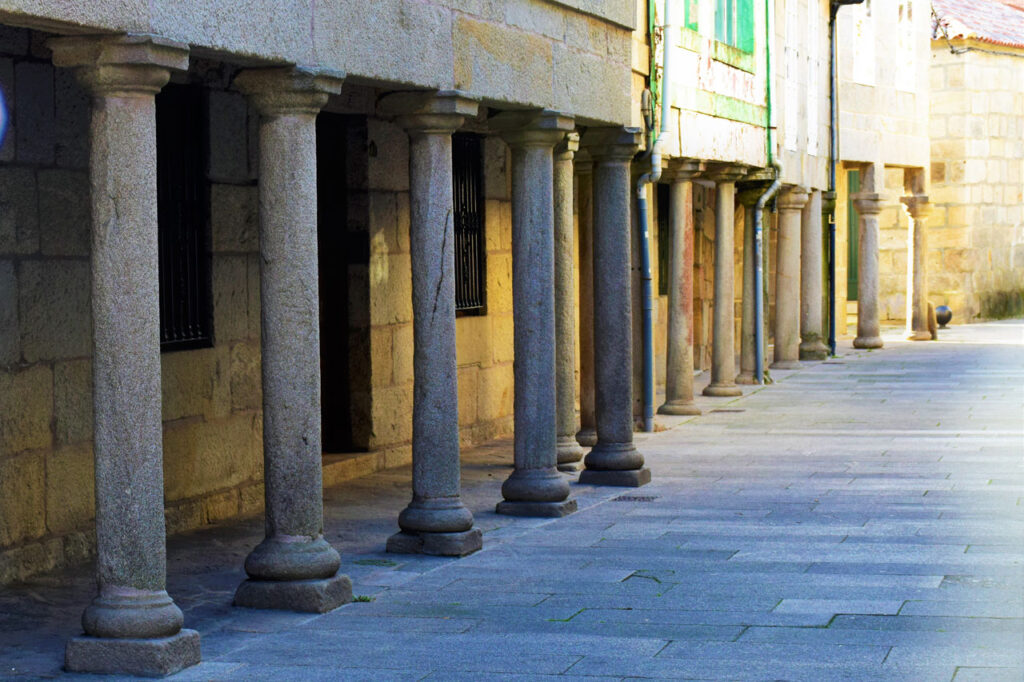
Another magnificent tourist attraction offered by this locality is its well-preserved roads and its old town center, which consists of little cobbled streets and fountain squares, allowing anyone to enjoy the spectacular walk.
Baiona County is in Pontevedra province located south of the South Estuaries (Rías Baixas) and holds a unique history. It has been a seafaring district for many years due to its unbeatable location for sea-related activities, such as fishing, shellfishing, and water sports.
Gallery
Location
- Town
- Baiona
- Municipality
- Baiona
- Province
- Pontevedra
- Country
- Spain
The asset
- Type
- Fishing neighborhood
- Eco-destination
- Ría de Vigo
- Environment
- Urban
- Relevance
- Regional
How to get there
- Access
- By sea By land
- Distance
- 1,3 km
The visit
- Accessible
- Sí
- Parking
- Sí
Coordinates
- Latitud
- 42.11687500
- Longitud
- -8.84511400