


The Sea Lamprey. The Pesqueiras
About this heritage
The scientific name of the sea lamprey is Petromyzon marinus; its weight can reach 2.5 kilos, and its dimensions range from eighty centimeters to 1.20 meters; it is an oily-fish. It lives in waters whose depth is from two to four hundred meters.
It is an agnatha fish, a jawless fish. The origin of the lamprey dates back to five hundred million years and has practically not evolved. The larva of the lamprey lives about five years in the river, then moves to the sea, where it lives for a while until returning to the river to reproduce and die; therefore, it is an anadromous fish.
The larva has a very different morphology from the adult; during this phase, it lacks teeth and feeds by sucking up microscopic organisms. After a long metamorphosis, which provides it with sharp teeth and a rough tongue, it becomes a parasite, allowing it to pierce the body of its hosts and suck their blood and body fluids. As an adult, it lives attached to sharks, salmon, cod, and marine mammals. Until it is satisfied or its hosts die, it does not detach from them. If they are large fish, lampreys can fix and feed on them for days or even weeks.
An adult lamprey in its most active stage is capable of killing up to ten kilos of fish; highlighting its voracity, it can kill a trout in about four hours.
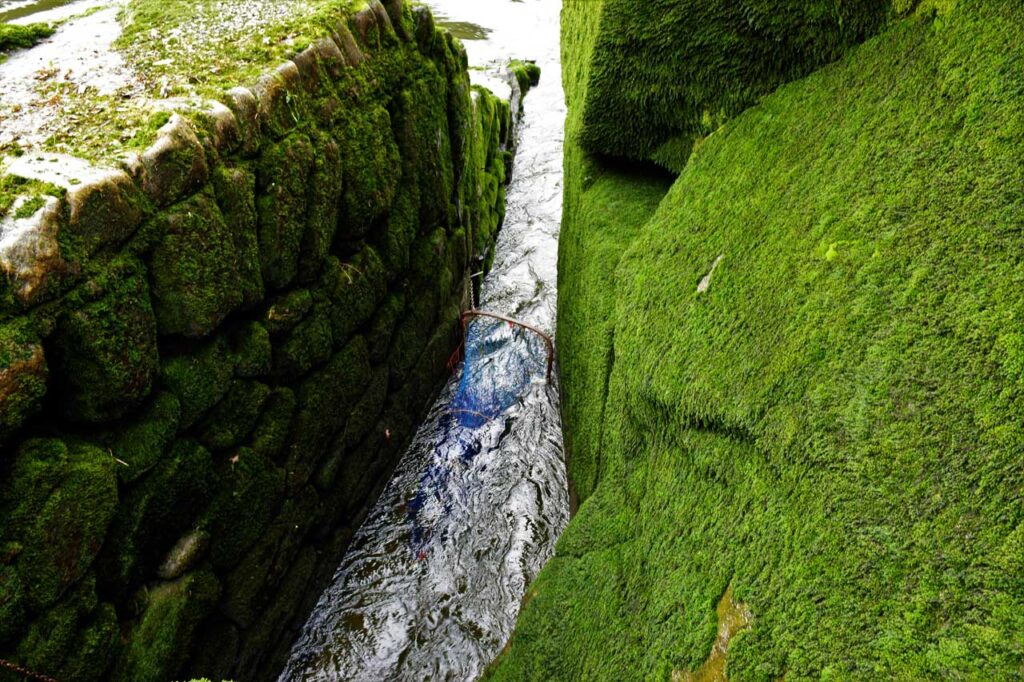
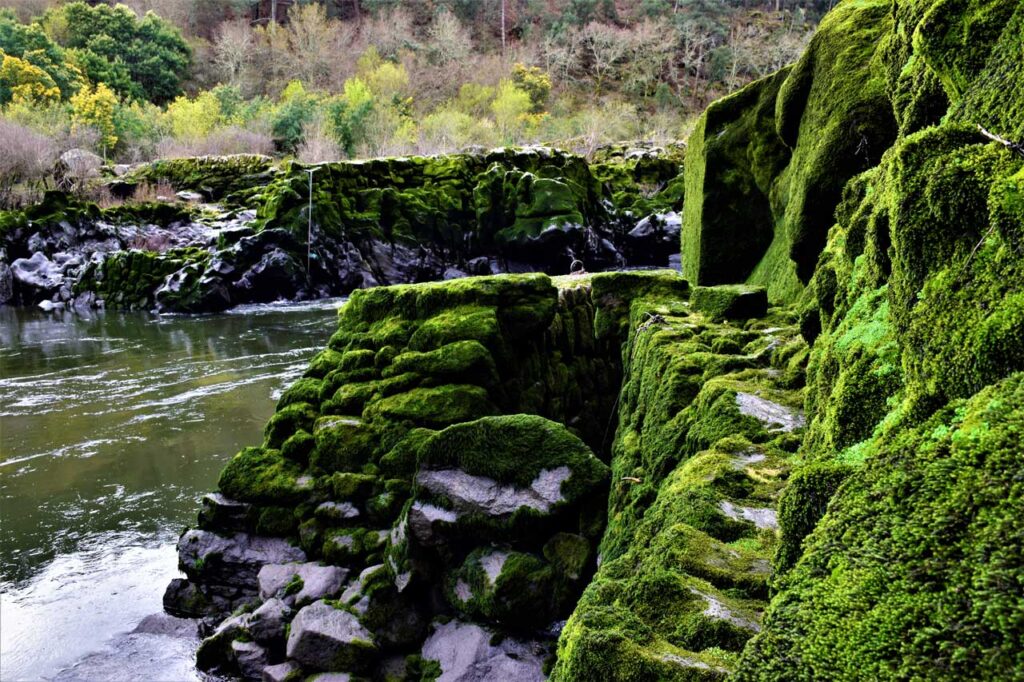
A Pesqueira is a Roman construction of architectural and ethnographic interest, which the Romans already used for lamprey fishing. Nowadays, it is part of the life, culture, and gastronomy of the inhabitants of Arbo, where they still use them for the same purpose and allow them to enjoy their fishing throughout the year, employing the same artisanal, sustainable, and environmentally friendly techniques.
To learn more
The body of the lamprey is anguilliform; its skin is smooth and has no scales. It has a sucker-shaped mouth with small, horny teeth. Its eyes are little in size. They breathe through a row of seven openings on each side of their body. Their body has no bony skeleton, and they hold in a cartilaginous notochord. While they are young, they have two dorsal fins; when they are adults, these two fins eventually come together.
They feed on the blood and meat of live prey (fish of various sizes) to which it attaches, and to prevent the host animal's blood from clotting, they produce an anticoagulant substance.
They can live up to 18 years, counting the time they live between the sea and the river. Their fishing season lasts throughout the year and occurs in places called "Pesqueiras."
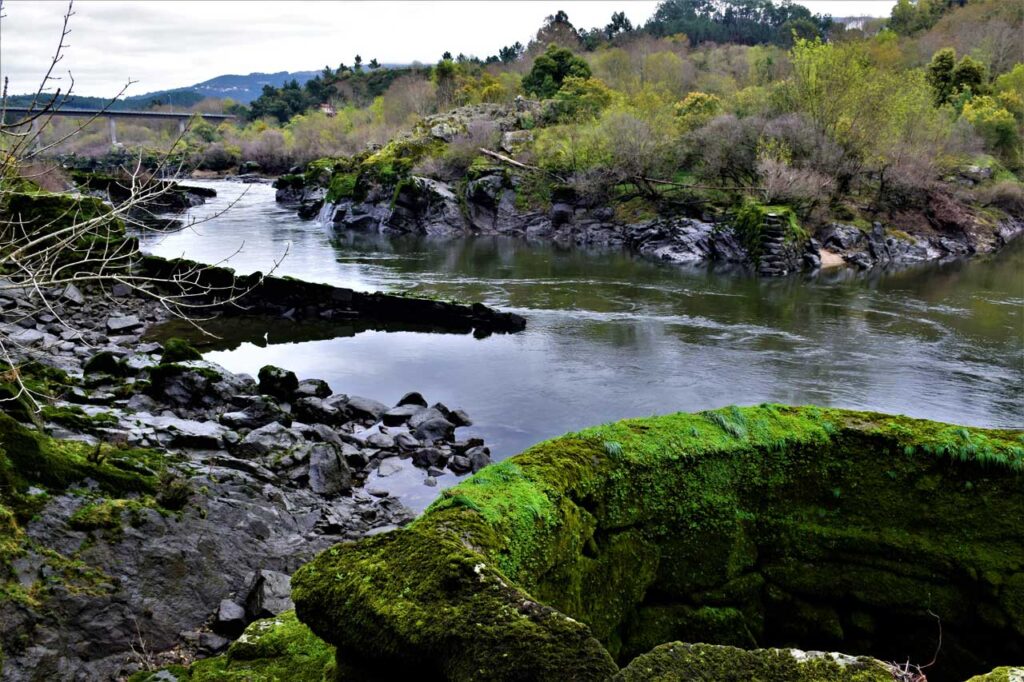
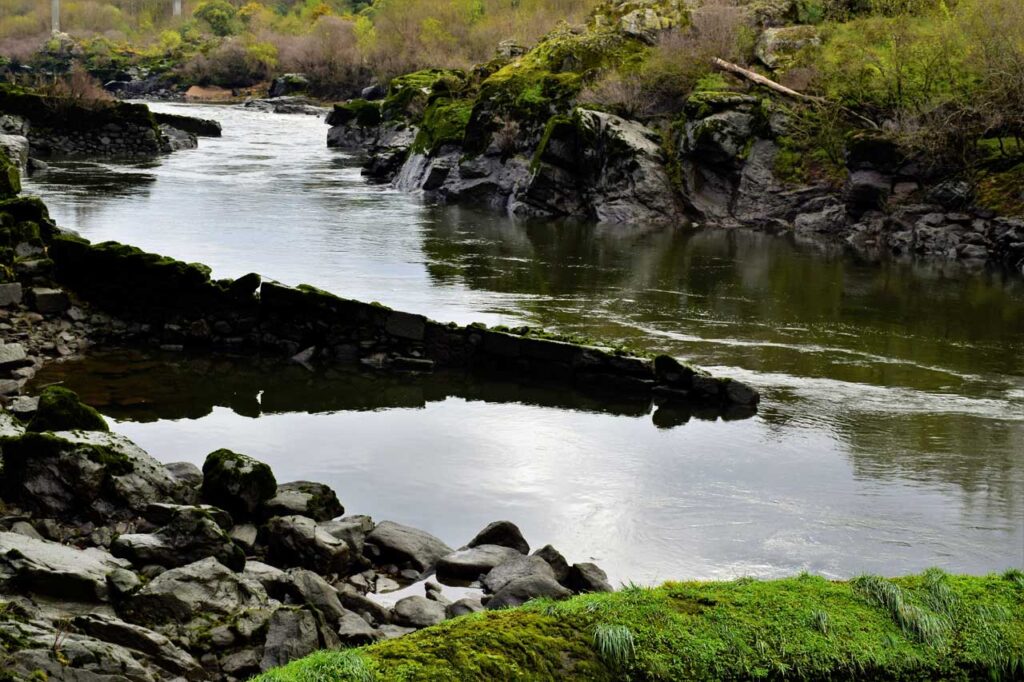
These are also called "Pescos," located in the lower course of the Miño River, approximately, at a length of twenty-five kilometers. Everyone can appreciate them when touring the "the Pesqueiras' Route." These river walls (Pesqueiras) date back to Roman times since lamprey fishing is centuries old. In the middle Ages, the possession of the “Pesqueiras” was linked to monasteries and feudal houses. By the twentieth century, specifically in 1979, they become artistic monuments and appear in the town hall's documentation as recorded ethnographic elements. In the pesqueiras, anglers used various fishing arts, the main one, known in Spanish as biturón, butrón, voitirón, voteirón, masoura, or nasoura, which is a cone-like net. Lamprey fishing occurs at night, and anglers have to check the state of the nets at least every two hours.
To enjoy the lamprey, the last weekend of April, Arbo celebrates "the Lamprey Festival," the oldest gastronomic festival in Galicia, declared of National Tourist Interest, in which they present participants with each possible way of cooking this oily-fish.
To know it better
The lamprey is an oily-fish and one of the first vertebrates on Earth, even before the dinosaurs. Today, it is found at depths from two to four hundred meters and has been living in the Galician rivers for more than five hundred million years. This fish is also known as "the water vampire" or "the queen of the river."
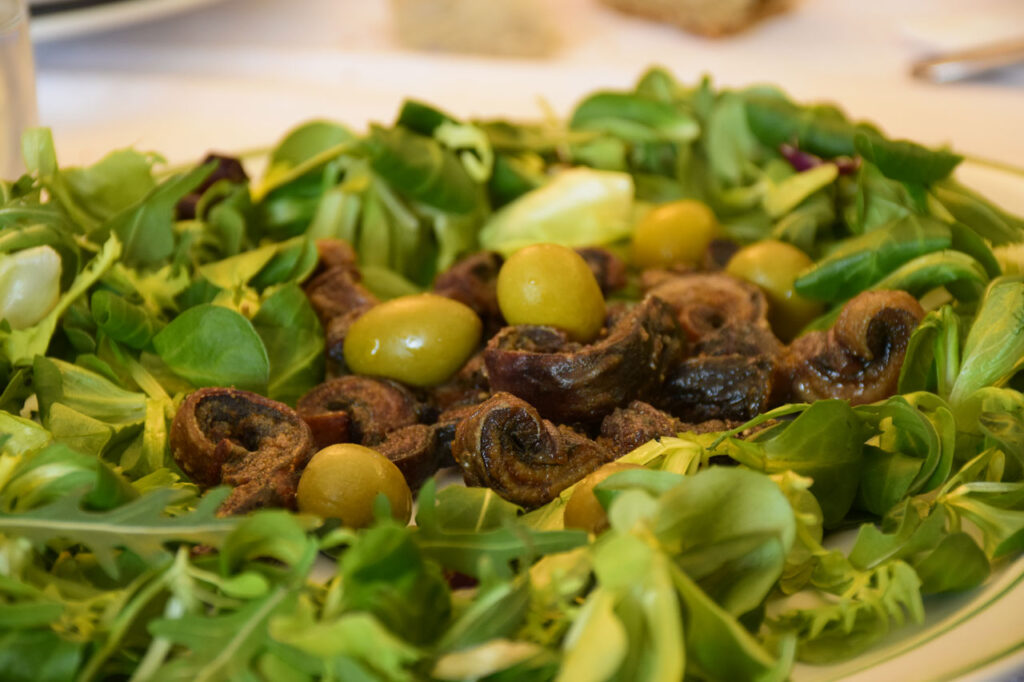
The inhabitants of Arbo have been living with this species for many years and have made it a true icon of this land, making it a reason for tourists to visit and try different recipes for lamprey. It is prepared in various ways, such as in an Arbo-style, cooked in its blood, bordelaise-style, stuffed, stewed, grilled, and even in a pie-like ("empanada") style. The best season for this product is from January to April. It is precisely in the fourth month of the year when in this town hall, they celebrate "the Lamprey Festival," declared of National Tourist Interest.
Other singular facts about the lamprey are the unusual capture technique, which goes back centuries. The Romans built stone walls, facing each other and attached to irons, on the Miño River. They called these "Pesqueiras." The water passes through the middle of each wall, where the anglers place a cone-shaped net called "Butrón." In this way, the current causes the lampreys to get into the net, thus being captured.
Arbo County is in the southeast of the Pontevedra province. It borders on the neighboring country of Portugal, separated by the Miño River.
Gallery
Location
- Town
- Arbo
- Municipality
- Arbo
- Province
- Pontevedra
- Country
- Spain
The asset
- Type
- Fish product
- Eco-destination
- Río Miño
- Environment
- Natural
- Relevance
- Regional
How to get there
- Access
- By land
- Distance
- Menos de 30 minutos en coche
The visit
- Accessible
- No
- Parking
- No
Coordinates
- Latitud
- 42.10741400
- Longitud
- -8.29827200