


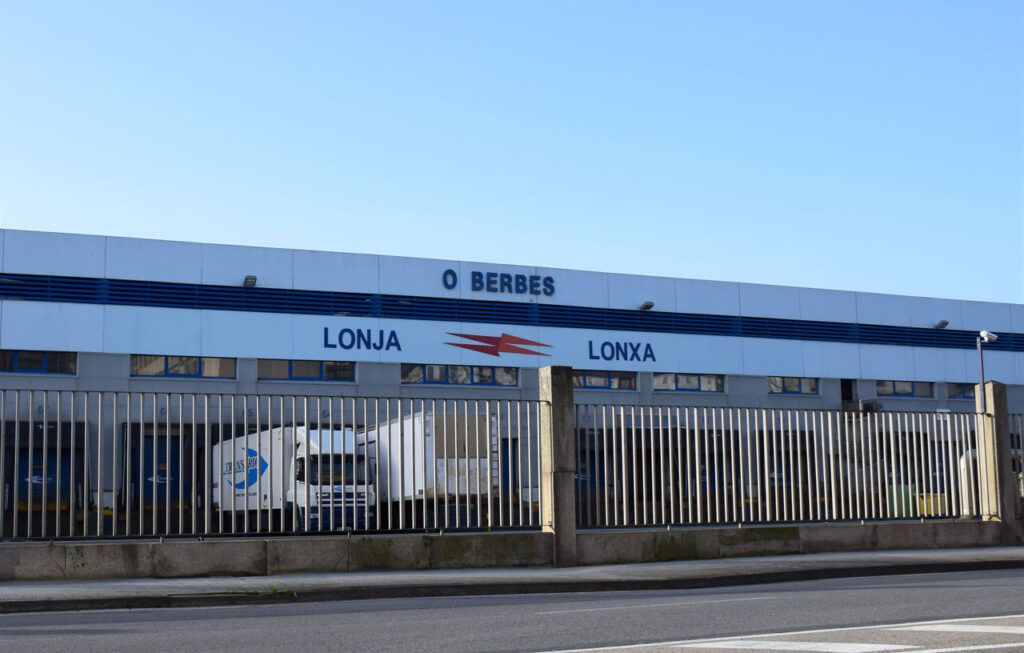
Vigo. Fish market
About this heritage
The Vigo port has a surface area of 241,238 m2 and recognized as one of the leading fishing ports in the world in terms of fish marketing for human consumption. This fish market is notorious for moving a substantial part of the total fish consumed in Spain and Europe.
In this first sale, the price is set and the product is labeled for the first time. The label must specify the area of capture, contact details, the species common and scientific name, its weight, date of capture and dispatch, vessel and fishing gear details, and production and presentation method - which defines the product as wild or from aquaculture, as well as the brand and traceability code. The brand may accompany the product throughout the marketing process if the other operators in the chain are also certified.
The labeling provides information on product traceability and assists in the selection of fish and/or shellfish, ensuring that the purchase of the local produce is fresh and of quality.
The Vigo Fishing Port consists of four docks. The one for unloading, provisioning, stay and repairs. An area of nurseries and another of refrigerators.
Depending on the origin and type of catch, there are five different fish markets, namely the Deep Sea, the Low Sea and Big Fish, the Coastal, the Seafood, and the Digital Markets.
It also includes buildings for ship-owners departments, for fresh fish and seafood processing premises of exporters and sellers, as well as for their offices.
To learn more
The six thousand direct jobs and the 357 fishing companies with a turnover of more than three thousand million euros per year make Vigo the fishing city of Galicia. It is in this county out of all Europe, where the freshest fish is unloaded.
They also carry out the entire process related to fishing and its products, from the shipyards, where they built the huge boats, to the unloading at the impressive fish market (Lonja) as well as the coming and going of all those boats.
To visit this fish market in groups, visitors can consult the Port Authority and follow the fish auctions live.
The Fishermen's Brotherhood of Vigo or San Francisco Guild was formed in 1944 as an inter-class association of the sea branch. Because Spain was, at that time, under Franco's regime, this brotherhood had a Catholic confessional character, obligatorily imposed, and therefore, a total absence of trade union and associative freedom. However, by the end of Franco's regime, the associationism began to flourish.
The territorial area covered from Cubillón Point, in the east, to A Serra Point, in the west, within the southern bank of the Vigo estuary.
It gathers multiple boats dedicated to deep-sea fishing, coastal fishing, and minor arts that fish in the waters of the Galician estuaries and northwest Cantabrian fishing grounds. It has 150 associates among executives and sailors, and it houses the "Illa de Toralla" Seafood Group.
There is also the Shipowners' Cooperative of Vigo (ARVI). This brings together the shipowners and the shipping companies, which are responsible for equipping, supplying, provisioning, crewing, and maintaining the seaworthiness of all the boats owned or under their possession, and therefore, assuming their nautical management and operation.
The cooperative has 160 members, among which are several associations of fishing boat owners. These associations and organizations have a legal personality and activity separate from ARVI, sharing a registered office in the Port of Vigo. All of them participate in the Cluster of the Extractive and Productive Fishing Sector of a technological and research nature.
ARVI and the Shipowners' Associations and Organizations of Fishing Producers register in Vigo have managed to constitute the most significant group of fishing vessel owners in Spain and one of the most relevant in the EU.
To know it better
Vigo is a Galician city in the Pontevedra province characterized by generating a considerable fishing activity. Its fishing port, in the Atlantic Ocean, is one of the largest in the world and managed by the Vigo Port Authority.
Vigo's port unloads the largest quantity of fish and, like most ports, has a fish market. A wholesale fish market is where the first sale of marine products takes place when fishing workers sell their products. It starts when the boats return to port, and the fish is organized in boxes depending on its species and size; then, it is transported to the fish market, where it is weighed and labeled for sale.
This fish market is responsible for bringing together different traders to buy and sell marine products. From these sales, which take place during the early morning, they transported the fish to other markets and places in both Spain and Europe.
Gallery
Location
- Town
- Vigo
- Municipality
- Vigo
- Province
- Pontevedra
- Country
- Spain
The asset
- Type
- Fish market
- Eco-destination
- Ría de Vigo
- Environment
- urban
- Relevance
- Internacional
How to get there
- Access
- By sea By land
- Distance
- 1,180km
The visit
- Visitable
- Yes (to consult with the Port Authority)
- Accessible
- No
- Parking
- No
Coordinates
- Latitud
- 42.23390000
- Longitud
- -8.73416100