


Cangas. Historic Center, Fishermen’s Quarter. Collegiate Church
About this heritage
The town of Cangas - and particularly its monumental area - stands out for housing an interesting artistic heritage; increasingly recognized and valued. In this old fishing village, clear traces of maritime constructions and architecture are evident. Thanks to the skilled hand of the stonemason and the good work of its men and women - over the centuries - its roots have intertwined with the present medieval tradition that left its legacy in Galicia.
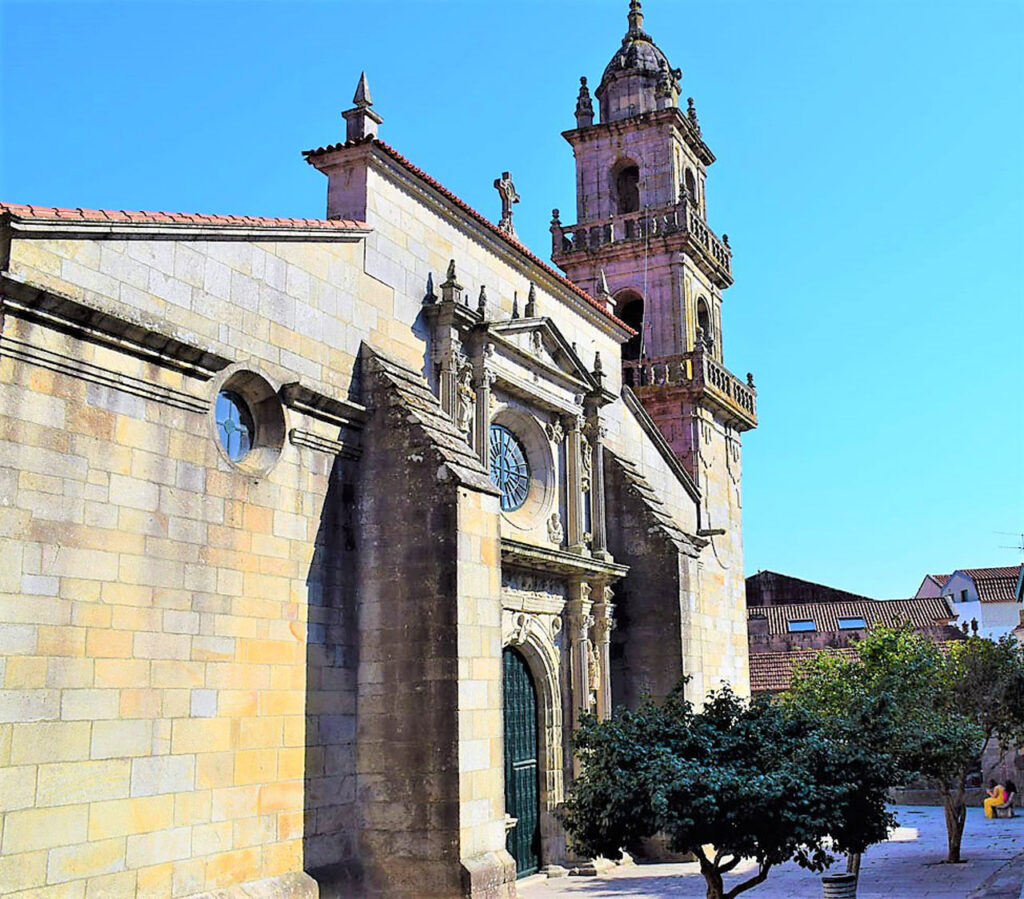
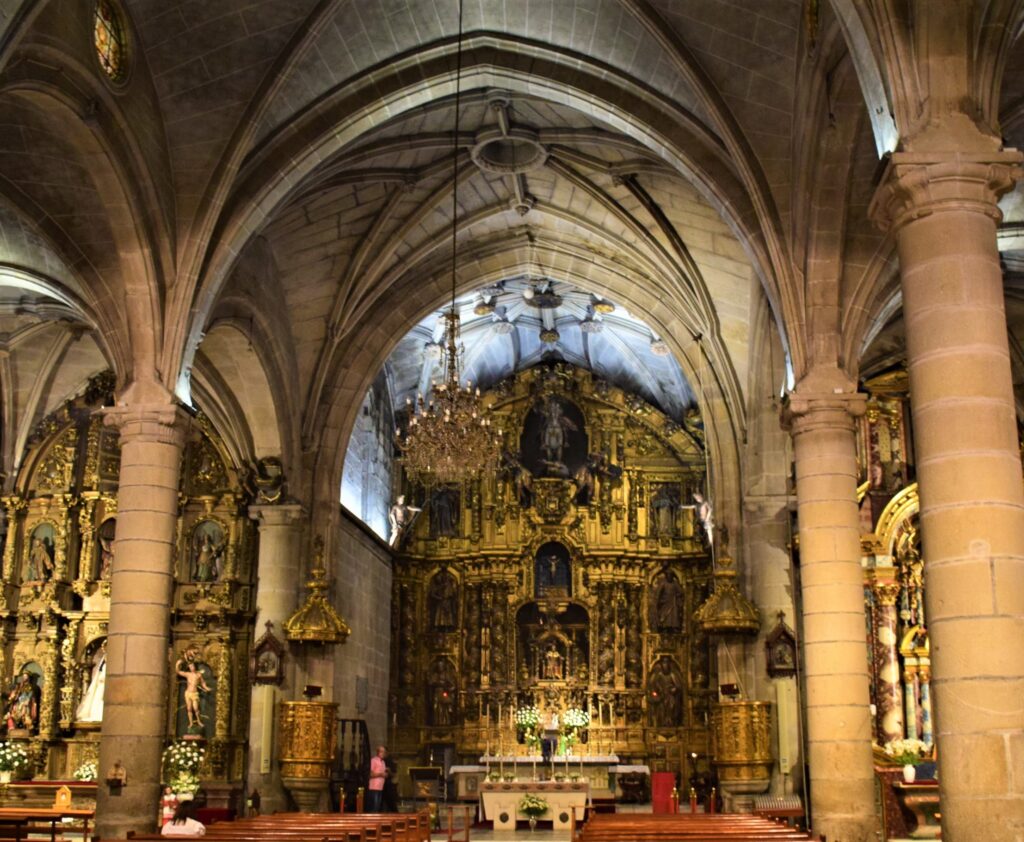
The tour of the historic center begins at the Town Hall, an avant-garde work bearing the signature of an acclaimed architect: Alberto Noguerol. From here towards the Xardíns do Sinal, we reach the Hospital Chapel, an emblematic monument commissioned by Prior D. Gonzalo de Nogueira y Araújo in 1711. Calle Real, an emblem of heraldry and noble architecture, ends at the equestrian statue of Santiago Apóstol. Thus, we reach the greatest treasure of the Pontevedra town, the former Collegiate Church of Santiago, in Baroque style. There is preserved a venerated Christ - "miraculous" - of which it is said that "it did not want to burn"
To learn more
since in 1617 it survived the temple fire caused by the Turkish pirates.
Through Calle de Hío, we head towards Eirado do Costal, the heart of the neighborhood and the old primitive core of Cangas. We then enter the Xardíns Félix Saoge, where we find the superb effigy of Don José Félix Soage Villarino, sculpted in 1914 by the brilliant Francisco Asorey. Very close by is "A volta do Mar," another sculpture with which Xoán Piñeiro wanted to pay a heartfelt tribute to all the fishermen of Cangas.
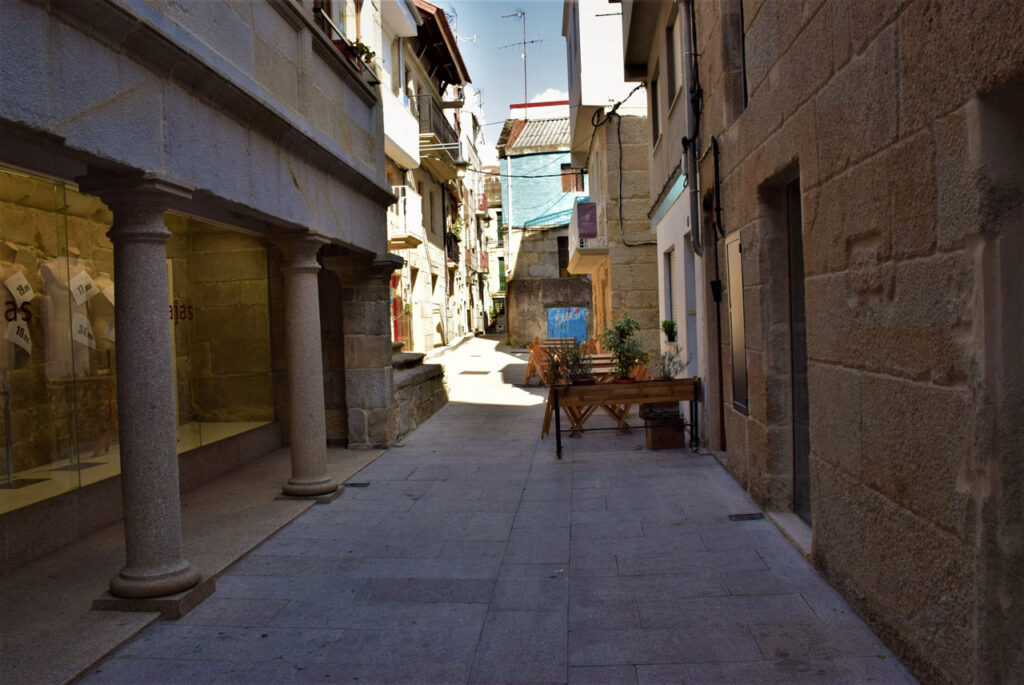
From here the monumental area emerges: Plaza del Arco, the old entrance gate to the town, where it is said that Jews lived during the Middle Ages. Antonio Garelly Street preserves one of the most exquisite "casas de patín" - the quintessential fishermen's house of Cangas - and the huge gates located on Pablo Iglesias Street
To know it better
which were once used to store fishing boats. The picturesque Plaza de Síngulis is another typical example of a fishermen's neighborhood in Cangas. Right in the middle, on a natural slab, stands a beautiful crucifix to which the locals have great devotion. Another fishermen's quarter is El Fuerte, with the old net "tendederas" next to Rodeira beach. To finish: the Costal Quarter, the oldest in the town. The sea reached its foot before the landfills. Stone is a constant, along with the presence of numerous springs: Fuente Herrera, Fuente Garrido, Fuente del Gallo, and Fuente del Caballo.
Gallery
Location
- Town
- Lirio, o la calle de la Estrella, San Xosé
- Municipality
- Cangas
- Province
- Pontevedra
- Country
- Spain
The asset
- Type
- Old town
- Eco-destination
- Ría de Vigo
- Environment
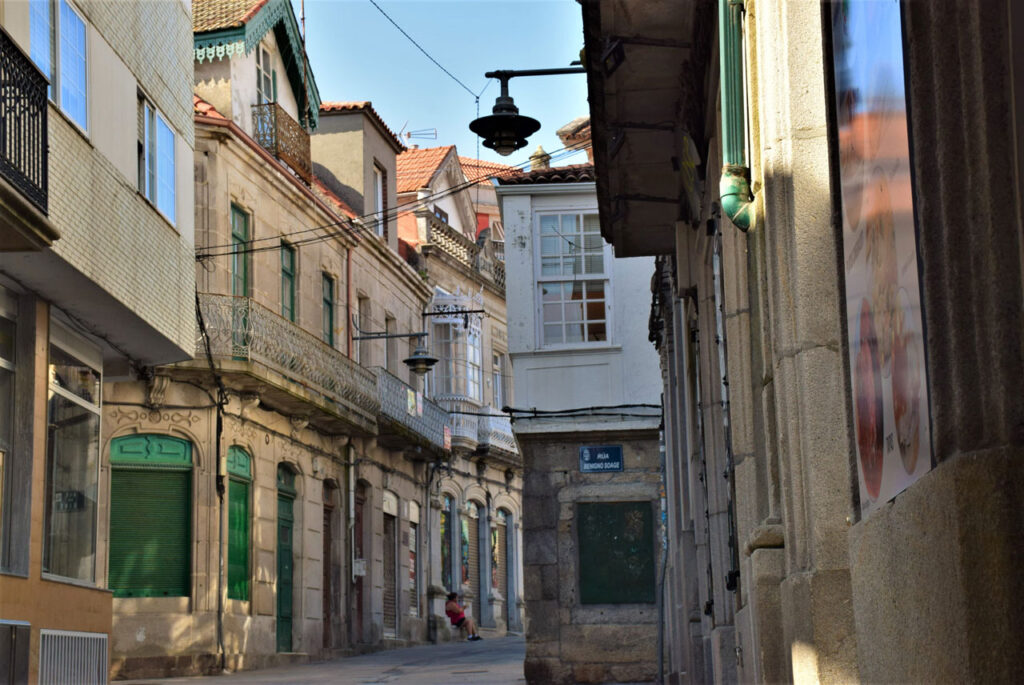
- The historic center of Cangas de Morrazo is divided into two halves crossed by the famous Calle Real. This leads to the flattest part of the town with "casas de patín" where fishermen stored their work tools. The Señal Quarter is more modern, with straight and narrow streets, which once hosted the tasks of the old guilds: Materia Street - now Ramón Franco - which housed various trades such as blacksmithing and leatherworking
- Relevance
- the Cerro - the highest part of the neighborhood -, Hío Street - the old entrance route for residents of that parish who loaded their donkeys with goods to be sold at the market -
How to get there
- Access
- By land
- Distance
- Menos de 10 minutos a pie
The visit
- Accessible
- No
- Parking
- No
Coordinates
- Latitud
- 42.26442000
- Longitud
- -8.78501200