


Barrantes Wine and the O Salnés Orchard
About this heritage
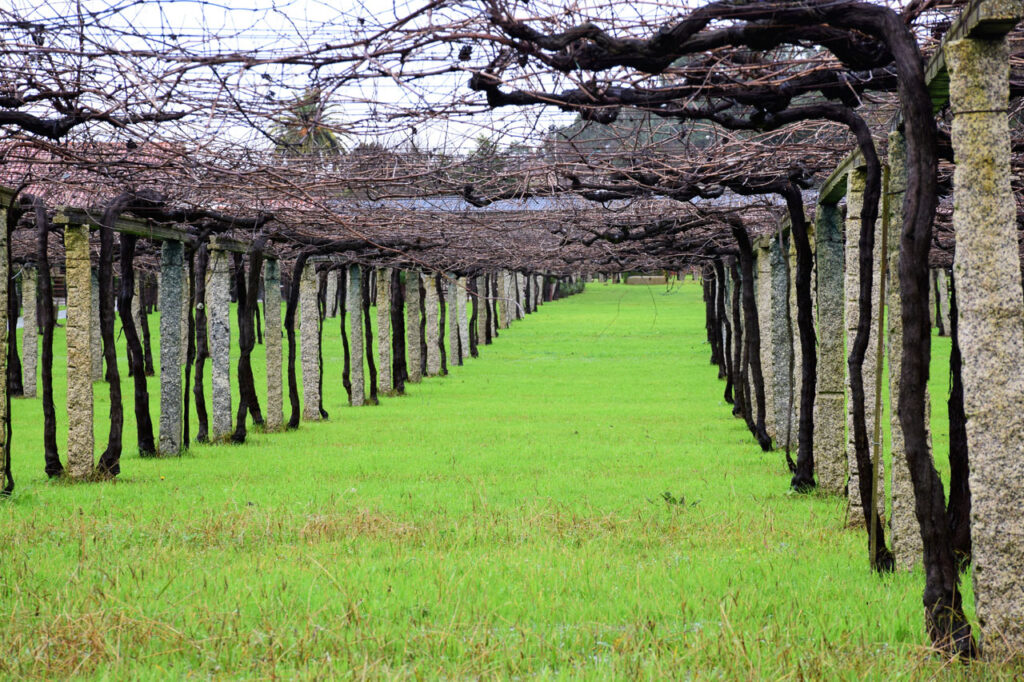
Its geographical location, its hours of light, the area's soil, and the formation of the Umia River valley makes the O Salnés region a suitable enclave for growing of vines.
The majority of its grapes (around 70%) are the albariño type; the other thirty percent, among other, the Loureira, the Treixadura, and the white Caiño types, are also cultivated in this region. All of them belong to the South Estuaries (Rías Baixas) denomination of Origin.
Another wine grown by local winemakers, which is less known, is the Barrantes wine, a type of hybrid wine, also known as "Round Leaf," in Galician "Folla redonda." Approximately eight hundred winemakers grow this type in O Salnés and other counties in the region, such as Vilanova, Cambados, Meaño, Meis, and even in Vilagarcía.
Ribadumia is the place par excellence for the cultivation of this type of wine, and its name comes from the town of Barrantes. Although it is a typical wine cultivated by local winegrowers due to its hybrid nature, its commercialization is not allowed. Therefore, all the producers joined to make a petition to the Regional government (Xunta) to legalize their wine. After several studies, they have estimated that by 2025 they will be able to market their wine.
Such is the love of local wine varieties that every year at the end of May, they hold a party in Barrantes to exalt these local red wine varieties.
Productos como cebollas, lechugas, pimientos, tomates y patatas, además de todo tipo de verduras son habituales en el mercado de la villa de Ribadumia.
However, not everything is about drinking, recognized for its orchard and greenhouses, in the O Salnés Region, they grow vegetables and legumes employing traditional methods. Products, such as onions, lettuces, peppers, tomatoes, and potatoes, as well as other kinds of vegetables, are typical in Ribadumia's market
To learn more
One of the most symbolic and representative varieties within Spanish and international white wines is the albariño grape from the grapevine "Vitis vinifera Albariño;" hence, the recognition at a worldwide level of these Galician white wines, especially the Ribeiro and the Albariño, which are remarkably well known.
Albariño grapes are characterized by small bunches of medium to high compactness with a short stalk. The berries are small, circular, and uniform in size. Its pale yellowish-green skin has a particularly soft and delicate outer layer and an abundant bloom. Its pulp without pigmentation is silky, notably juicy, and with a peculiar and characteristic intense floral taste and aroma.
The vines are highly vigorous and semi-upright. It requires long and supported pruning, which with the much needed, fresh soils can reach high-grade productions. They are frequently arranged in trellises or vines. The vine is somewhat resistant to mildew, but not very tolerant of the Powdery mildew (oidium).
Albariños wines give greenish musts, presenting pale yellow colors with very light greenish tones when transformed into wine. Their wines are extraordinarily aromatic, floral, and fruity. They are very fresh at the beginning, giving nuances reminiscent of ripe apples and even caramel when they evolve.
The Albariño strain variety produces high-quality fruit, from which they made single-varietal (monovarietal) and complimentary wines. Its alcohol content is medium-high with notable acidity; it has distinguished aromatic potential with seldom floral nuances, and overall, it has excellent oenological quality.
To know it better
Located in the heart of the O Salnés Valley, Ribadumia is a county in the Pontevedra province, bordering with Vilanova de Arousa, Cambados, Meaño, and Meis counties. Its name comes from the river that crosses it, the Umia. Like every other county in Galicia, it has a phenomenal gastronomic reputation and is well known for its excellent wines.Se puede decir que desde la comarca de O Salnés se exportan diferentes productos gallegos al exterior. Por un lado, alimentos que se cultivan en la huerta de O Salnés como cebollas, lechugas, pimientos, tomates y patatas, así como todo tipo de verduras. It could be said that they export abroad different Galician products from the O Salnés Region. On the one hand, the products cultivated in the O Salnés orchard, such as onions, lettuces, peppers, tomatoes, and potatoes, as well as other types of vegetables and legumes.
On the other hand, the area also has wineries, producing excellent quality South Estuaries (Rías Baixas) wines. The Albariño grape is a completely different type in comparison to the other types of grapes. Its origin goes back to before the thirteenth century; it is said that the grape was in Galicia and maybe later expanded to Portugal, Leon, Asturias, and Cantabria. Besides, customarily, they grow them employing a conduction system known as vine training, meaning on grapevines to get more sunlight.
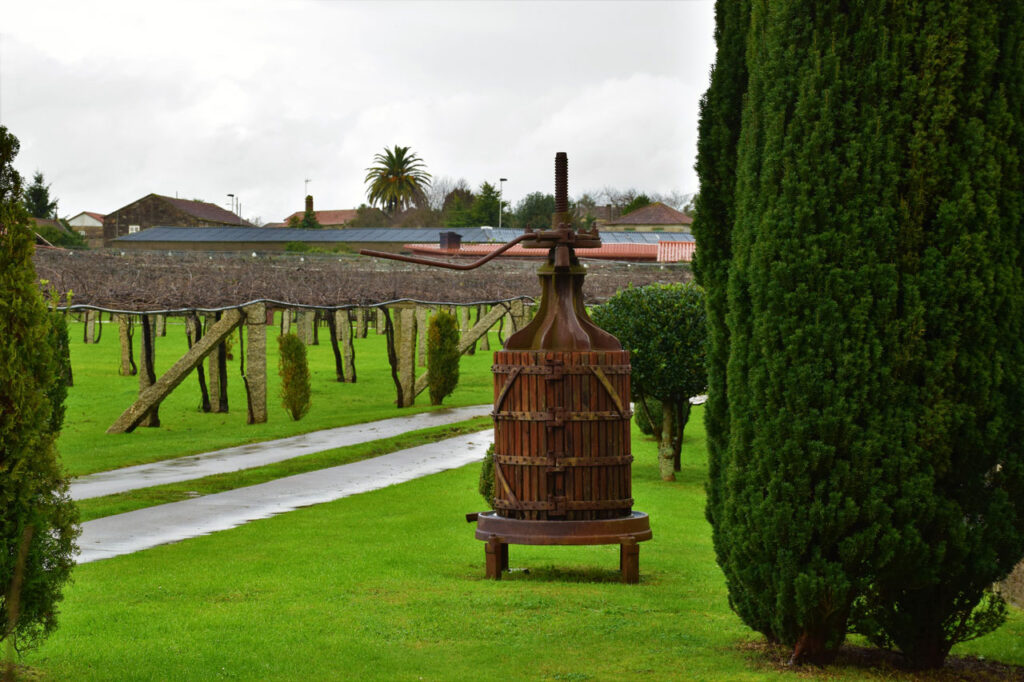
The Lordly House (Pazo) of the Barrantes estate is in the O Salnés Valley in the Pontevedra province, and its winery is at its center. This Lordly House (Pazo) is a 16th-century traditional Galician manor and has twelve hectares of albariño grape vineyards. They make wine in a remarkably charming enclave applying different cares, such as its pruning, conduction, yield, or calculation, which allows them to get a wine with an exceptional reputation.
Gallery
Location
- Town
- Ribadumia
- Municipality
- Ribadumia
- Province
- Pontevedra
- Country
- Spain
The asset
- Type
- Historic-artistic ensemble
- Eco-destination
- Ría de Arousa
- Environment
- Rural
- Relevance
- Internacional
How to get there
- Access
- By land
- Distance
- 5,500km
The visit
- Visitable
- Yes
- Accessible
- No
- Parking
- No
Coordinates
- Latitud
- 42.49688900
- Longitud
- -8.77276400