
Beluso. General Salted Fish Factory
About this heritage
Bueu is well known for its salted fish factories. At the end of the 19th century, the so-called Catalan promoters arrived here, who, seeing the production potential of the estuary, settled to establish numerous factories of this type of preserve. Along the municipality's coast, there were about thirty factories operating. But this reputation dates back far, as in the Roman Era there were such enclaves where fish was salted for preservation, known as "Garum." Thus, remains of Roman amphorae and the Pescadoira factory with several parts are found: some vats, a flour mill, some annexed facilities, and an ancient amphora kiln and another ceramic kiln. This is a type of ceramic called "San Martiño de Bueu," and thanks to researchers tracing findings of this type of ceramic, it is known that Bueu's preserves reached places as far as Lisbon or France. In the Middle Ages, the export from Galician ports of large quantities of salted fish, along with dried and air-cured octopus, destined for ports in the Cantabrian Sea, Portugal, and Andalusia, could have been one of the country's main sources of wealth. Shipments of pickled oysters to Castilla are also documented. The sardine trade with the Levant during the 15th and 16th centuries suffered competition from North Sea merchants, who began exporting herring and Scandinavian cod, leading to a crisis that lasted until 1738, when trade with England was banned. With the Mediterranean markets' shortage and the sardine crisis, Catalan and Italian merchants came to the Galician coasts to buy sardines and preserve them using salting methods developed by themselves. These early commercial activities took place in provisional wooden facilities near the sea. The acquisition of "escochada" sardines (without head, spine, and guts) from Galician fishermen was made in exchange for products from the Levant, such as wine, brandy, and other liquors, oil and soap, as well as Danish cod. After the escochado process, the sardines were placed in brine and left to salt in vats for a whole day. The next day, they were removed from the brine and placed in barrels in a circular manner, adding salt between each layer to prevent contact between them. Once full, the barrel was sealed for commercialization. Meanwhile, the head and guts were pressed in the "talla" by placing a large stone on top of the lid. From this, the fat or "saín" was extracted, which was used for leather refining, wood protection, paint manufacturing, as lighting or lubrication oil, or for export to various European ports such as Hamburg, Liverpool, or London, and American ones like Havana. From 1810 onwards, local companies were formed that integrated into the maritime society of the time to exploit these resources, mainly sardines. Part of the profits was dedicated to the salted fish factories' own activities, such as building and modernizing facilities.
To learn more
the construction of new vessels, nets, and fishing gear. Salvador Massó Palau brought seven Frenchmen to Bueu in 1816 who knew the industrial process of salting. Among them was Pascual Dargenton Lafont, with whom he created the first canning factory, called La Perfección. This company dissolved in 1898. The founder's younger sons, Gaspar and Salvador Massó Ferrer, created Massó Hermanos S.A., dedicated to the production of preserves, salted fish, buying and selling flour, nets, and manufacturing fishing equipment. In 1926, they built a second factory in Bueu.
To know it better
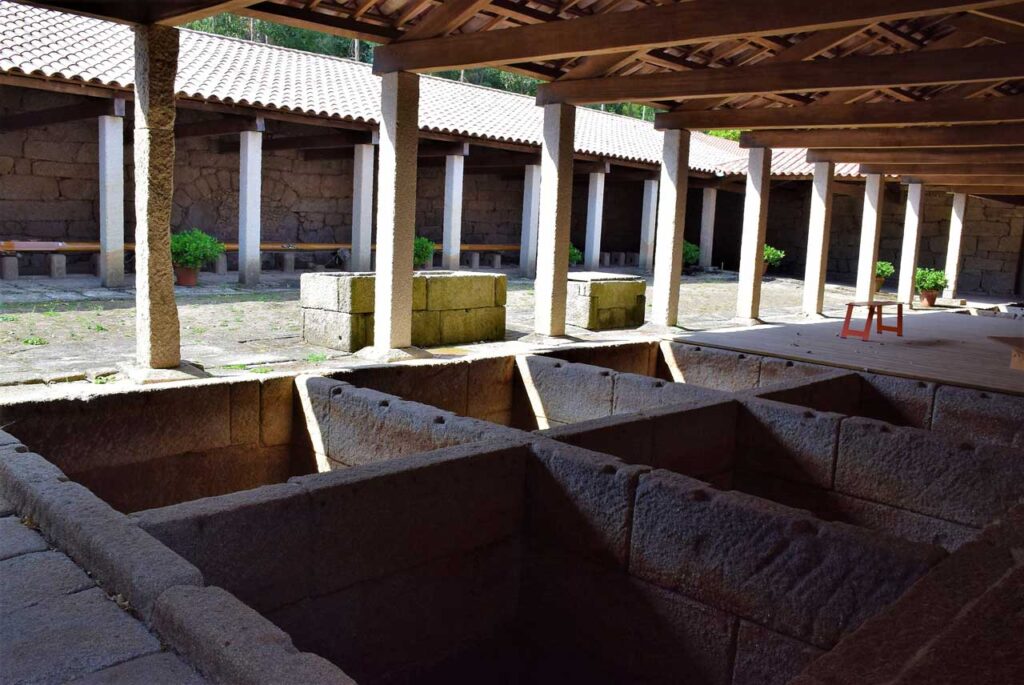
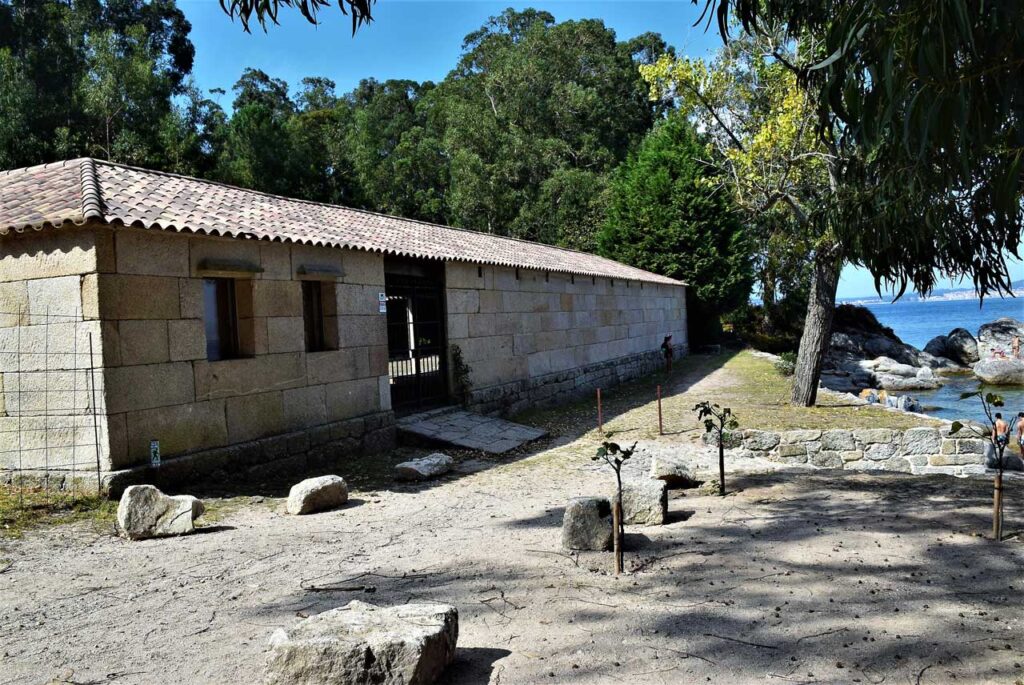
In Beluso, in the Cabo Udra area, there is Mourisca beach and, to its left nearby, an old salting factory that was rebuilt by architects Alicia Freire and Mauricio Sanchez-Bella. This factory from the late 19th and early 20th centuries features almost intact "machos" in its inner courtyard, the large stones used as presses. There are also the "pías", the basins where the fish was salted. The interior of this old factory can be seen from a doorway as it is private property. From there, all the elements can be appreciated, including a freshwater well located in the courtyard. In the mid-18th century, with the arrival of the Catalans, salting shifted from being a family business to being invoiced in the new warehouses or factories, buildings equipped with several rooms with eight to ten vats, kitchen and housing, as well as the tools used for extraction which were also new and called jábegas. Their packaging system continued to be done in wooden barrels, which the Catalans called tabares or cascos. By 1839, the Catalans used the term "Peseta" in some invoices of their transactions. In that same year, 24 cascos containing 198 thousand pressed salted sardines were sent from Beluso to Barcelona at a price of 16 to 18 pesetas per thousand. The peseta would become the official currency in Spain starting in 1870.
Gallery
Location
- Locality
- Se puede visitar todo el año
- Municipality
- Bueu
- Province
- Pontevedra
- Country
- Spain
The asset
- Type
- Factory
- Eco-destination
- Ría de Pontevedra
- Environment
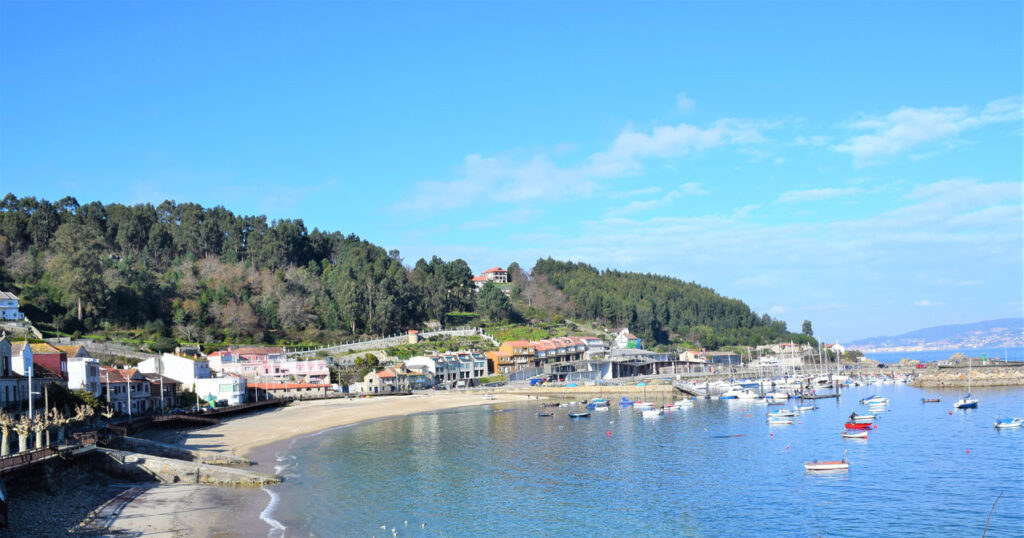
- Beluso is a fishing village that belongs to the municipality of Bueu, in the province of Pontevedra. Since its beginnings, its inhabitants have benefited from all activities related to the sea, including fish salting. During the 19th and 20th centuries, Bueu became a reference point for the salting and canning industry. In fact, in its time, it had about thirty salting factories. Currently, the old Mourisca salting factory can be seen, which is in very good preservation conditions and, thanks to it, visitors can get an idea of how fish was preserved at that time. This site covers an area of 800 square meters and is enclosed by walls in good condition. It also has a stone floor, a washhouse, a well, and a small dwelling. Additionally, it is cataloged by the Cabo Udra Special Plan and by the Xunta de Galicia seeking its prompt restoration. The salting technique arrived in Galicia thanks to the Phoenicians about 2,500 years ago. Later, the Romans used Roman saltworks, and it was with the Catalans in the 18th century that this industry was created. The method consists of dehydrating food; that is, salting, washing, and drying the products to enhance their flavor and to make them last longer in good condition.
How to get there
- Access
- By sea By land
- Distance
- Distancia 4 km – 10 minutos en coche
The visit
- Visitable
- It can be visited all year round
- Accessible
- No
- Parking
- No
Coordinates
- Latitud
- 42.33272
- Longitud
- -8.800780