
Chapela. Galicia´s oldest cannery and shipyards.

About this heritage
The first pioneering factory to apply an industrial canning method in Galicia was located on Arealonga beach, in Chapela. A parish that currently belongs to the municipality of Redondela, but which, at that time, belonged to the municipality of Lavadores. Víctor Curbera Puig was its founder in 1861. He was Catalan by birth and moved to Vigo looking for business prosperity, a family business adventure that ended in 1990.
Due to a casual event (a shipwreck in front of Finisterre´s coast), he learned about the method developed by the Parisian confectioner Nicolás Appert, and decided to apply it in Vigo. Appert invented a way of preserving food in glass jars that shortly afterwards Philippe de Girard would innovate by using tin containers.
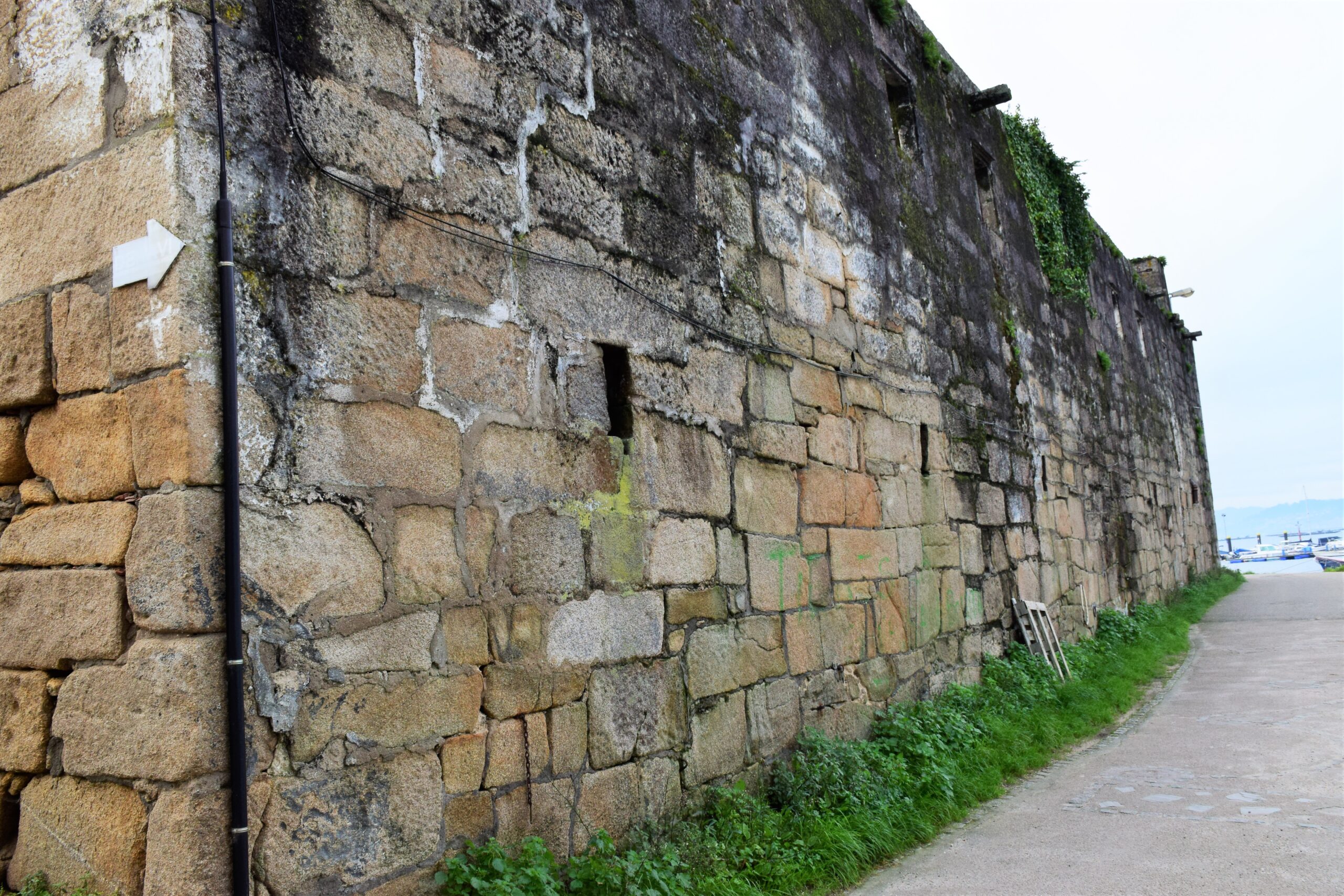
Curbera made a great investment and built two buildings near Arealonga beach that had access ramps from the sea to unload the material. In the factory, women worked to treat the product, while the men did the mechanical work. In addition to sardines and other fish, fruit, meat and cow's milk were also packaged.
As the Curbera family had experience in maritime transport, especially with American countries, large part of the production was destined for exportation from Vigo´s port. They used a very artisanal method to produce the preserves, so production costs shot up.
The cannery worked until 1877 even though the family continued in the business and became a reference not only in Vigo but also in other places in Galicia.
To learn more
Despite the fact that the cannery worked until 1877, the family continued in the business and became a reference not only in Vigo but also in other places in Galicia. His son José Ramón Curbera in 1900 would have developed an important business with factories in Vigo and Bueu and produced three and a half million canned food per year. The experience and his good contacts made him become the President of the “Canned Food Manufacturers Union”, an entity whose objective was to improve the conditions of the industry, to obtain public aid and at the same time to invest in the innovation of new projects.
He also devoted himself to politics, becoming Vigo´s Deputy Mayor and one of the founders of the Chamber of Commerce and what was Vigo´s Bank. He was the president of the “Club de Campo” (Country Club) and also of “Vigo Sporting”, one of the most representative football clubs in the city.
Curbera´s son, promoted the economic activity of the city and managed to establish an economic balance between investments and profitability, also helping many sailors in Vigo and its surroundings.
This family saga also suffered from the crisis produced by the lack of sardines in Galicia, which it was solved by buying seven steamers to carry out fishing tasks in Asturias and North Africa. The aim was, not to abandoned the canneries they managed.
Finally, the Curbera family companies disappeared in 1990 when they were unable to cope with the crisis. It was the end of a family dynasty, although its values were preserved.
Arealonga beach is located in the parish of Chapela which belongs to the municipality of Redondela. The sandbank is located between the marina and Chapela´s port.
To know it better
Redondela is a municipality in the province of Pontevedra that has been inhabited since ancient times, as different remains of dolmens, petroglyphs and rock engravings have been found on Penide mountain or Mirallo and Ventosela mountain to prove it.
Chapela is a parish of Redondela that stands out for being a seafaring town where industry is very important, having a prestigious factory in the municipality: Pescanova.
Galicia has always been one step ahead in terms of fishing and preserving. From the 19th century, Catalan businessmen decided to change the salting factories for canned fish. This is demonstrated by the “Palacio de Oriente” canning factory, as Antonio Alonso (the founder), chose Galicia to build his first factory in 1814.
On the other hand, shipbuilding has always stood out in the province of Pontevedra. There was a need to fish further away with larger boats, so the shipyards in Vigo´s estuary began to be created.
In the beginning, ships like gamelas, dornas and lanchas de xeito (all of them traditional Galician ships used for fishing and sailing) were built by hand, this were adapted ships to the fishing of the time. But from 1880 onwards, the railway was already bringing fresh fish to the domestic market and so, Vigo´s canning industry increased its demand.
Gallery
Location
- Locality
- Chapela
- Municipality
- Redondela
- Province
- Pontevedra
- Country
- Spain
The asset
- Type
- Cannery
- Eco-destination
- Ría de Vigo
- Environment
- Rural
- Relevance
- Regional
How to get there
- Access
- By sea By land
- Distance
- 0 km
The visit
- Accessible
- No
- Parking
- No
Coordinates
- Latitud
- 42.26430000
- Longitud
- -8.67809000