
Combarro. Historical-artistic site. The hórreos
About this heritage
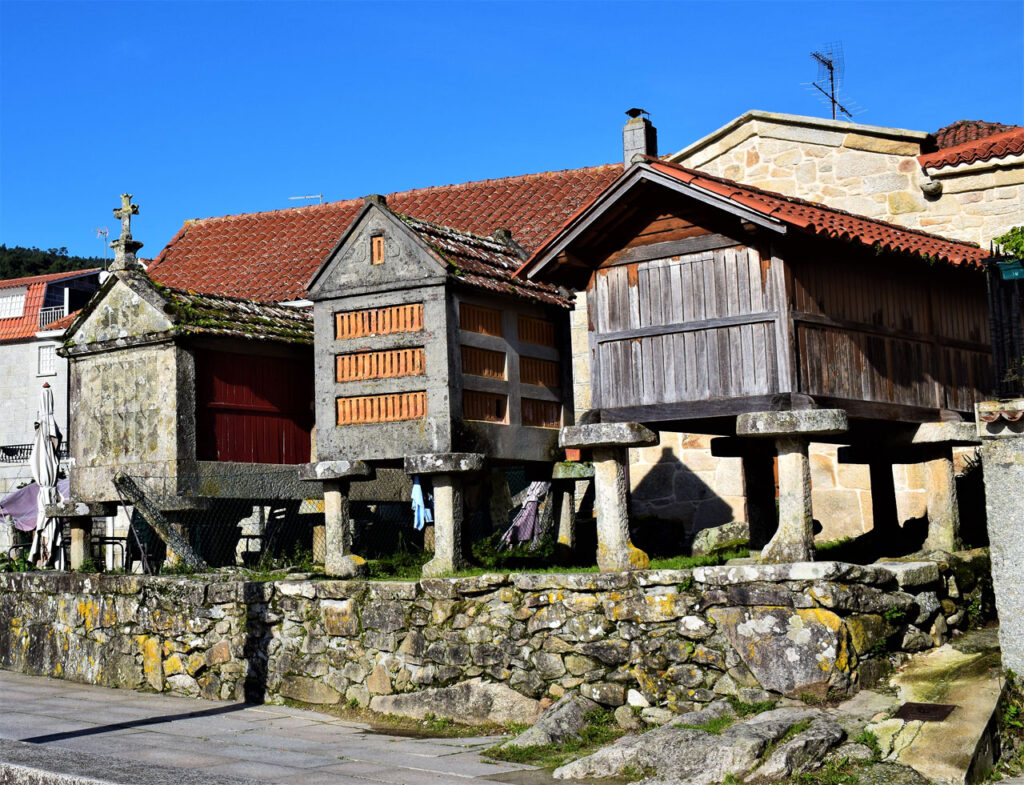
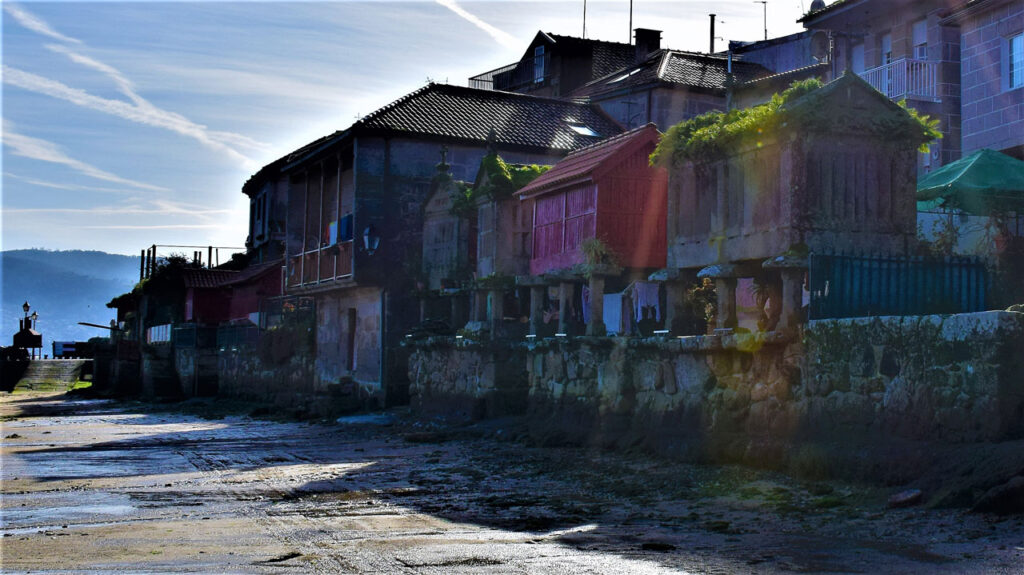
The hórreo is iconic in this town in the municipality of Poio,in Pontevedra. Not in vain it is one of the most famous images of this historical complex which shows a panoramic view of the line of hórreos that separate the town from the sea.
The hórreos are in fact a small (or not so small at times) storehouse for grain in order to keep it out of the reach of rodents and other predators. They were used formerly and are still used today in the villages where maize is still cultivated for self-consumption.
The first hórreos were made using braided canes for the walls and straw for the roof, hence they are known in the area as palleiras.
Later, more resistant materials were used, such as stone and wood.
The hórreos that we can see in Combarro, are from the 18th and 19th century. Their construction is designed to keep the harvest safe. First of all, they were separated from the ground by columns to avoid humidity. On these columns a flat stone was placed to prevent the mice from climbing up, which was called "tornaratos", which can be translated as "mouse-turning", and on them the rest of the structure. The lateral ones of the hórreo allowed the air´s entrance.
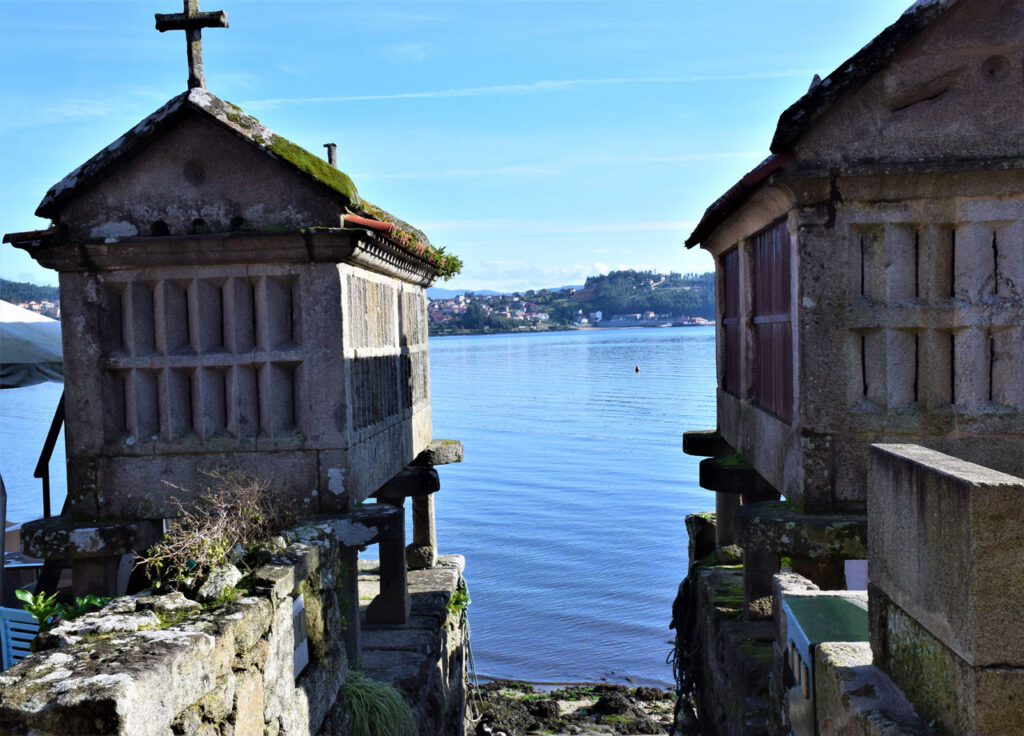
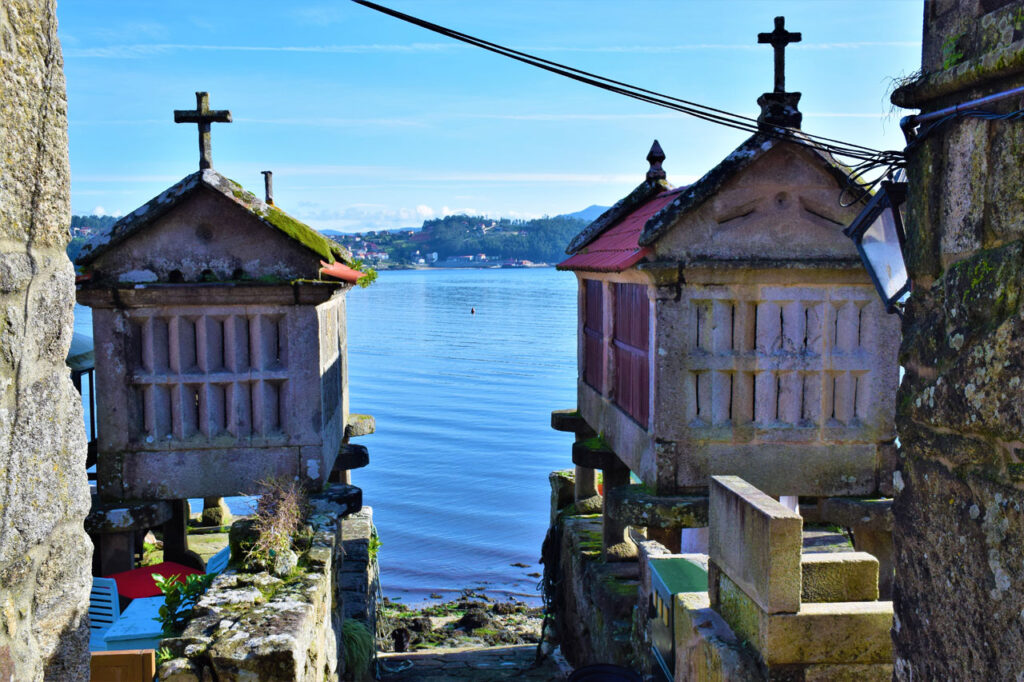
In Combarro there are still around 60 hórreos, 30 of which can be seen lined up from the coast. This fact, unique in the world, makes Combarro a special place.
To learn more
Surely the visitor will wonder the meaning of aligning the hórreos to the coast line, the explanation is practical and simple at the same time. Many of Combarro's neighbors had farms in remote places, and transporting the harvest by sea was a good option, and much better, if once on the coast, the harvest was unloaded directly into the hórreo.
In Galicia, the hórreo is omnipresent. They are one more element of the Galician landscape. There are all sizes, like the hórreo of Carnota that, with its 35 m. long, is declared National Historical Monument, the hórreos of Piornedo in Os Ancares, or the 34 of A Meca in Ourense settled in the same esplanade.
To get to Combarro, we have to get to Poio, a municipality in Pontevedra´s province. Combarro´s history is linked to that of the Monastery of Poio. There are documents that state that the Island of Tambo and the town of Combarro were given to the Monastery of Poio by Queen Doña Urraca.
But returning to Combarro, the best thing to know it is to cross its streets starting off from the ample square of Chousa, this square is an space opened to the sea, from here we will be able to get to know its historical and artistic nucleus, to cross its narrow streets, flanked by beautiful traditional marine houses.
Houses attached to each other and with 2 floors. The ground floor is dedicated to storage and wine cellar and the upper floor is dedicated to kitchen, living room and one bedroom. On the façade, the stone balcony stands out in the most powerful houses and the wooden balcony in the most humble ones.
To know it better
Combarro´s town, which belongs to the municipality of Poio, stands out for its coastal hórreos. These constructions were intended to store food such as wheat, potatoes or onions so that they were kept away from animals and humidity and could be better preserved. In Combarro we can enjoy an open-air museum of these constructions which are located next to the estuary of Pontevedra and, even, when the tide rises, we can appreciate how the water touches the base of them.
Poio is a municipality located in the center of the province of Pontevedra, with an area of about 34 km², divided into its five parishes: San Salvador, San Xoán, Combarro, Samieira and Raxó.
The municipality has different places of interest where you can see different landscapes. The Monastery of Poio, from the 7th century, is where you can find the library of the monastery with more than 100.000 pieces and the Museum of the Mosaics; the historical-artistic set of Combarro that is one of the biggest groups of hórreos of Galicia and, the Combarro´s Marina, where you can appreciate an authentic traditional seafaring and fishing district of Galicia.
Gallery
Location
- Town
- Combarro
- Municipality
- Poio
- Province
- Pontevedra
- Country
- Spain
The asset
- Type
- Historic-artistic ensemble
- Eco-destination
- Ría de Pontevedra
- Environment
- Rural
- Relevance
- International
How to get there
- Access
- By sea By land
- Distance
- 0 km
The visit
- Visitable
- Guided tours Language: Spanish, Galician, English, French
- Interpretation
- Yes
- Accessible
- No
- Parking
- Sí
Coordinates
- Latitud
- 42.43109500
- Longitud
- -8.70582100