
Historic Centre of Vilanova de Arousa
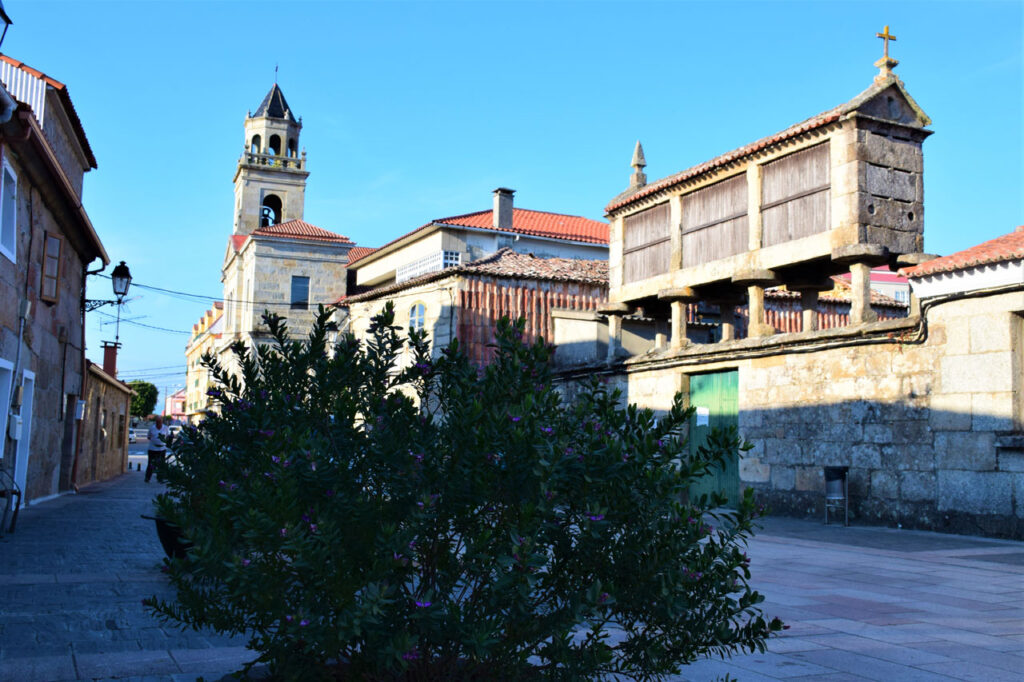
About this heritage
Vilanova de Arousa is a coastal county in the O Salnés Region within the Arousa Estuary, as indicated by its name. This town has astonishing landscapes and beaches, which inspired intellectuals, such as Ramón María del Valle Inclán and the brothers Julio and Francisco Camba.
Among its religious architectural monuments, the Santa María de Caleiro Church stands out, a Romanesque style temple. Although its original structure has transformed over time, it preserves part of the 12th century primitive Romanesque church. This church has other architectural elements from the 16th century, including a chapel with a rectangular floor plan and starred vault, called "Chapel of the Cristo de Los Crespol," designed by Pedro Otero.
Declared a Historic-Artistic Monument and linked to the life and work of Valle-Inclán, it is the 16th-century Lordly House (Pazo) of Rúa Nova (New Street). It has four different bodies joined together. Of the group, it is worth noticing the crenelated gate and the tower with a balcony, an 18th-century chapel dedicated to Saint Michael, and a body joined by two coats of arms.
On Luces de Bohemia Street, alluding to one of the works of the writer Valle-Inclán is the house-museum where he was born, which is also called "Casa do Cuadrante." It is a Lordly House (Pazo) built in the 16th century on an old fortress.
Close to the coast, on a promontory, is the Cálogo Tower, which is part of the 9th-century monastery remains. According to tradition, it served to signal ships and possibly defend against Viking attacks. The Cálogo monastery was attacked between 844 and 846 because the Arousa Estuary was its gateway to Galicia.
To learn more
The Viking invasions began in 793, with the registered attack on the English monastery of Lindisfarne occurred, and ended in 1066, with the battles of Stamford Bridge and Hastings. In Galicia, they arrived around 844, and their gateway was the Arousa Estuary.
One of the determinants for the Viking invasions was the lack of sufficient resources in the Scandinavian nations, which were much colder than today. The scarcity forced the Scandinavians to seek new lands and territories with the resulting culture clash. They especially did it through trade, and through plundering, which is the current image identifying them the most.
In O Salnés, as well as in the rest of Galicia, the Vikings spent short periods, never able to negotiate as locals greeting them with weapons. As it had happened to them in other parts of Europe, such as France, this convinced them from settling. However, there was a precise reason to approach the O Salnés Region, the wealth generated by the pilgrimages to "Jakobusland" (Santiago de Compostela).
They left no trace in the area, as their settlements were commonly made of wood and perishable materials. However, the locals did notice the shape of their boats, which sailed faster across the seas. From the Viking "Drakkar," they took the pattern to build the versatile "dornas," used for centuries until the invention of the motorboat.
There are still defensive constructions, such as the West Tower in Catoira, which, apart from protecting against the Vikings served, as a defense from subsequent Saracen and pirate attacks. They were one of the most relevant fortifications of the time, along with that of A Lanzada.
The first Viking attack in the Arousa Estuary was on the Cálago monastery in Vilanova de Arousa, dated between 844 and 846. Very little is known; however, some data indicate its complete destruction. The monastery was used as an alarm to warn villagers of such attacks.
Among the Viking warlords who passed through O Salnés are notable names, such as Bjorn "Iron Skin" Ragnarsson. After him, others came, such as Olaf Haraldsson, who would eventually become Saint Olaf, the Norwegian patron saint. Another significant Viking leader was Ulf, who made several raids in the early 11th century and ended up with the nicknamed "the Galician" or "the Wolf of Galicia." There was also Gunderedo, whose troops won the battle of Fornelos and traveled throughout Galicia for over a year.
To know it better
The council of Vilanova de Arousa in the Pontevedra province within the O Salnés Region is a place with antiquity, and therefore, with history.
They have found Palaeolithic remains on As Sinas beach and Bronze Age finds in Tremoedo and Baión, as well as castreña culture in Baión, a Roman occupation in Tremoedo, and a Roman bridge in Ponte Arnelas.
Vilanova is a land of towers and Lordly Houses (Pazos), among which stands out, the Lordly House of Baión and the Lordly House of the Marquis of Bolaños, converted into a salting factory. Likewise, the Rúa Nova Lordly House, built on top of a 14th-century fortress, was declared a National Monument in 1976.
Besides, Vilanova has always stood out as a fishing port, as it supplied fish to the entire Castile region as early as the 16th century. When the Catalans came, they set up salting and preserving factories. Currently, fishing and seafood production is one of the most significant activities in the county.
Gallery
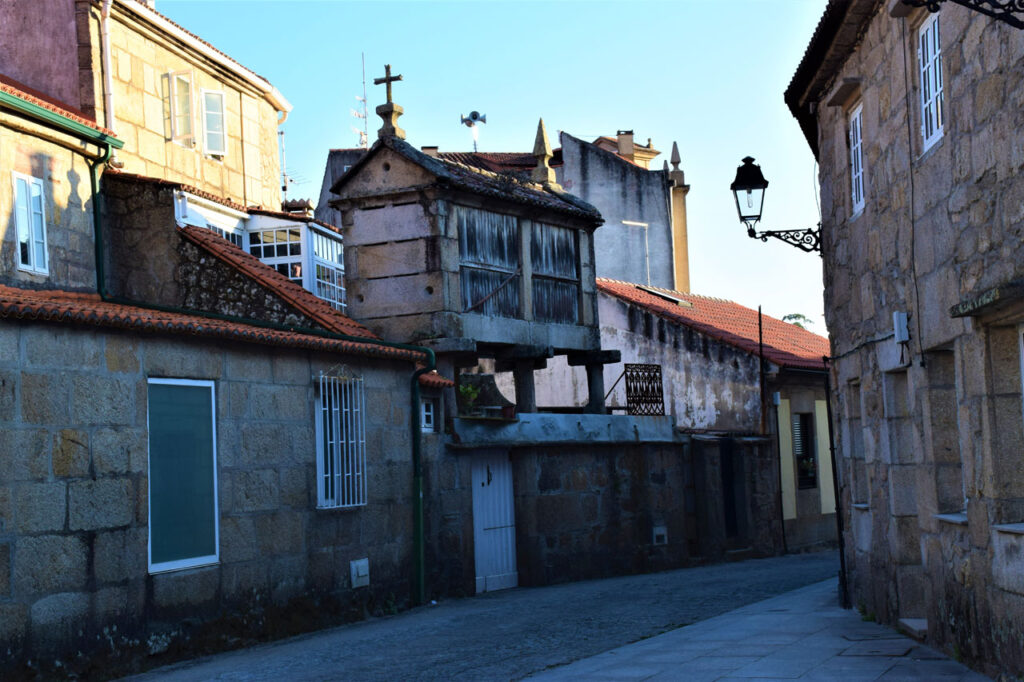
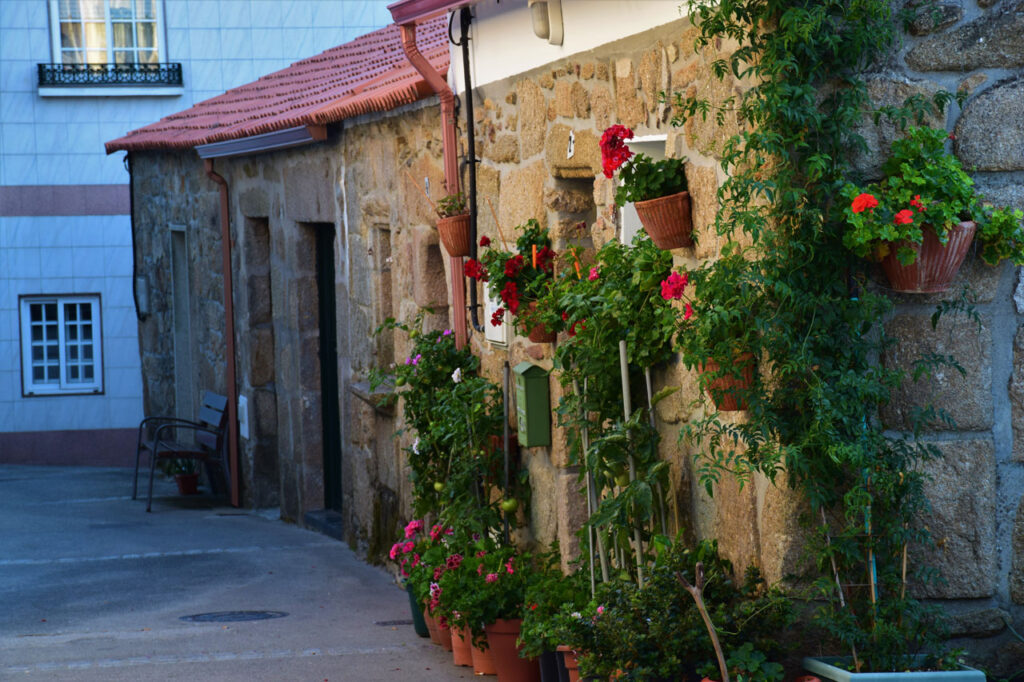
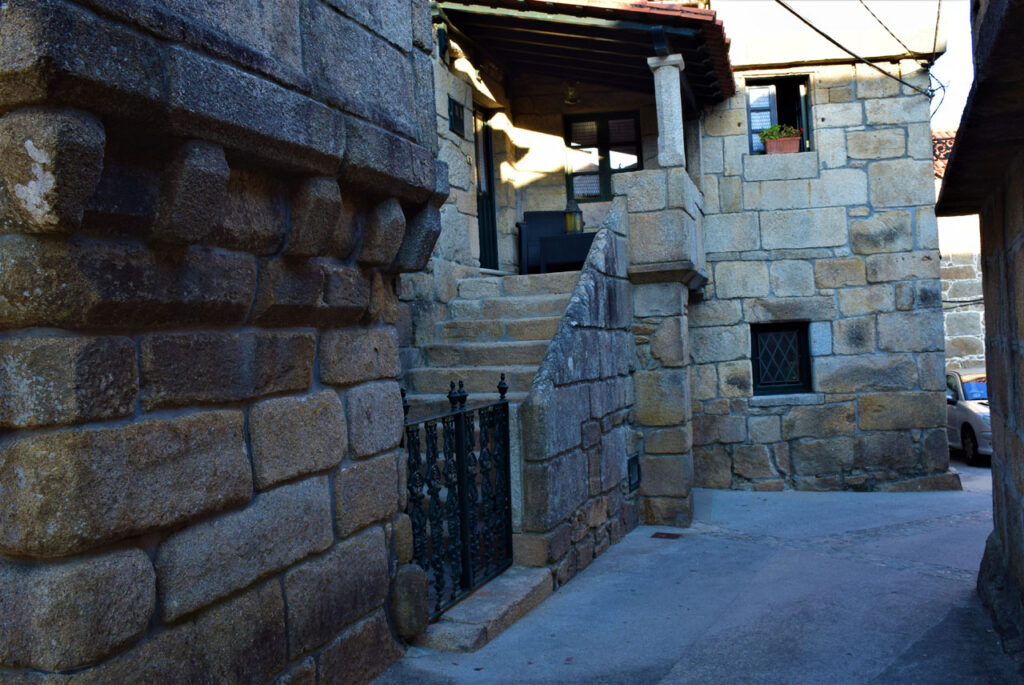
Location
- Locality
- Vilanova de Arousa
- Municipality
- Vilanova de Arousa
- Province
- Pontevedra
- Country
- Spain
The asset
- Type
- Historic-artistic ensemble
- Eco-destination
- Ría de Arousa
- Environment
- Urban
- Relevance
- International
How to get there
- Access
- By sea By land
- Distance
- 0 km
The visit
- Accessible
- No
- Parking
- No
- Signposted
- Yes
Coordinates
- Latitud
- 42.56356800
- Longitud
- -8.83019900