
Maritime House Museum
About this heritage
The Maritime House is a municipal institution created for exhibiting a collection, which can be visited, relaying the historical relationship that the town had with the sea, through its port in the context of Atlantic navigation, becoming the engine of urban and social conformation.
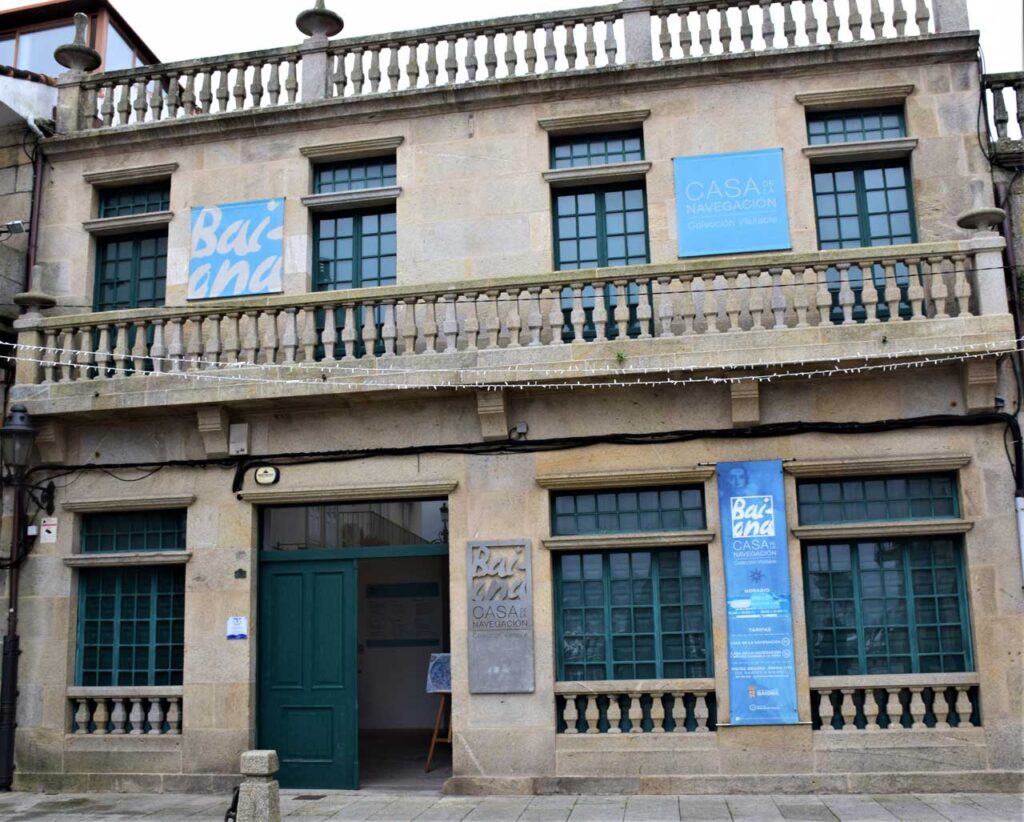
This project is housed in the century-old dwelling of María Carvajal, situated on Pedro de Castro square, just in front of the fishing port. This residence used to be the municipal government’s headquarters and was subsequently rehabilitated to accommodate its new usage. Located in the old quarter, it consists of two levels and a 347 m2 back garden.
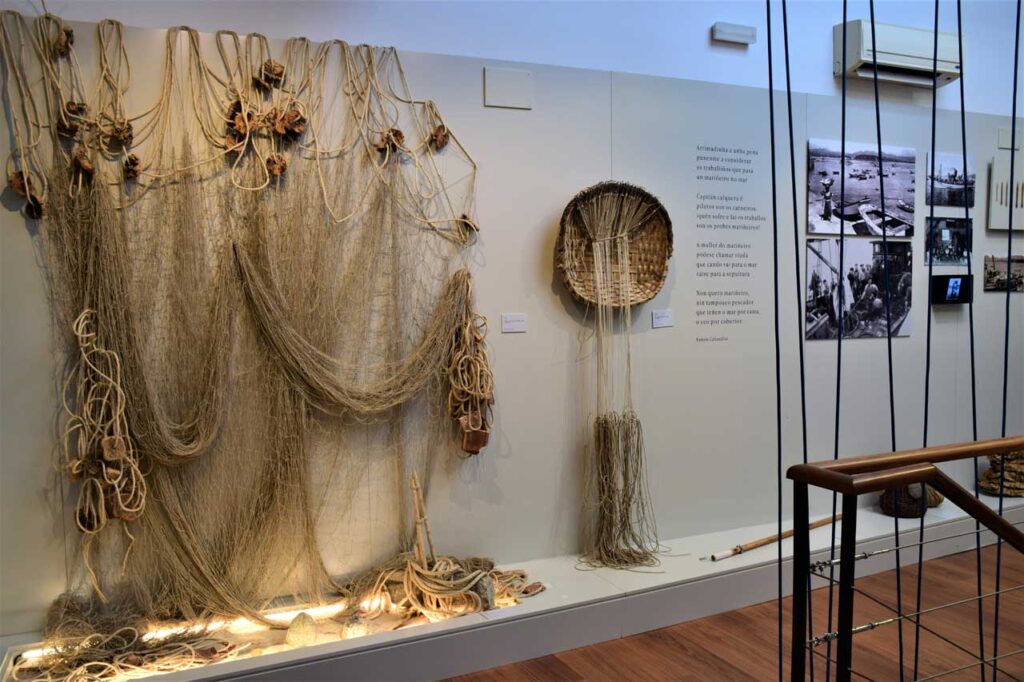
The collection displayed originated, in part, from the Marine Museum of Galicia and the Provincial Museum of Pontevedra. It has a replica of the Royal charter of foundation by King Alfonso IX, cartography collection belonging to Román Pereiro Alonso. Archeological items, such as a gravestone, a 13th century coin and ceramic fragments, and a miniature model of the La Pinta Caravel, built in 1985, the robot submarine RU-27, fishing gear received on loan from Remigio Leyenda, photographs loaned by Esperanza Fernández Vernet, navigation instruments, shipwreck objects, old lanterns from the Silleiro lighthouse and two small artillery pieces.
The musealization project began in 2009 and was financed by the Provincial Government of Pontevedra and the Baiona City Council. It was inaugurated on March 1st, 2015 by representatives of both institutional bodies: Alberto Núñez Feijoo, the president of the Galician Autonomous Government (Xunta de Galicia) and Ana Pastor Julián, Minister of Development at the time.
To learn more
The María Carbajal residence was rehabilitated in 2007. It is a two-storey edifice, with a top storey of 212 M2, as well as a garden of more than 347 m2. A masonry building that stands out for its austerity, with a symmetrical façade, although the running balaustrades that finish both storeys confer a high value. The balustraded cornice is ornamented with four symmetrically placed pinnacles.
The “Casa Carbajal” is today an important cultural reference in Baiona. It houses the Maritime Museum and also displays temporary exhibitions.
It has two large exhibition areas, an assembly and audiovisual hall, and an interesting patio which opens on to the rear end of the building, with a stone pavement and garden area, conserving the confining walls of the land plot. The building is used as a headquarter for the City Council.
The building lodges a replica of the RU-27, nicknamed Scarlet Knight, which was the first lithium battery-operated robot to cross the Atlantic (a distance of more than 6,000 Km.). It was a combined project between USA and Spain, which made history. During its 225-day flight, it gathered data which would assist in understanding the impact that the oceans have on climate change.
After a cycle of submerging and surfacing, it transmitted the data registered and awaited commands to be launched from the Coastal Ocean Observation Lab in New Jersey.
The actual president of the United States of America received the robot in Washington and perhaps a further study will be carried out for developing a cleaner and non-contaminating system of maritime transportation.
The importance intended with the choice of Baiona as a symbolic destination, was to commemorate the landing of the La Pinta Caravel in 1493, in remembrance of the discovery of America.
To know it better
Baiona’s old quarter is notable for all its history, but also for its Maritime House Museum exhibition, available to visitors. The enclosure offers a collection of the historical, urban and social evolution of the town.
The Maritime House is known as the Carvajal House (Casa Carvajal) and serves in presenting the important role Baiona had in the Atlantic maritime history. Its port was the first port in Europe to receive the news of the discovery of America. Captain Martín Alonso Pinzón set anchor in Galician Waters in 1493.
The collection is a display of ancient documents and archives, as well as pieces recovered from archeological and subaquatic explorations. The collection is divided into four areas and three modules. The lower level is allocated to the geographic contextualization, the origin and evolution of the town. The second level is structured in two ambiences: the port and its social, urban and historic significance, and the art and perils of navigating.
Gallery
Location
- Locality
- Baiona
- Municipality
- Baiona
- Province
- Pontevedra
- Country
- Spain
The asset
- Type
- Museum
- Eco-destination
- Ría de Vigo
- Environment
- Historical
- Relevance
- Regional
How to get there
- Access
- By sea By land
- Distance
- 900 m
The visit
- Visitable
- Yes
- Interpretation
- There are panels for interpretation in Spanish, Galician and English. Apart from the information that appears on the web: Select between: French, English, Galician, Spanish, Portuguese (www.turismodebaiona.com)
- Accessible
- Sí
- Parking
- Sí
- Signposted
- Yes
Coordinates
- Latitud
- 42.11873000
- Longitud
- -8.84736600