
Salting Museum or Museo da Salga
About this heritage
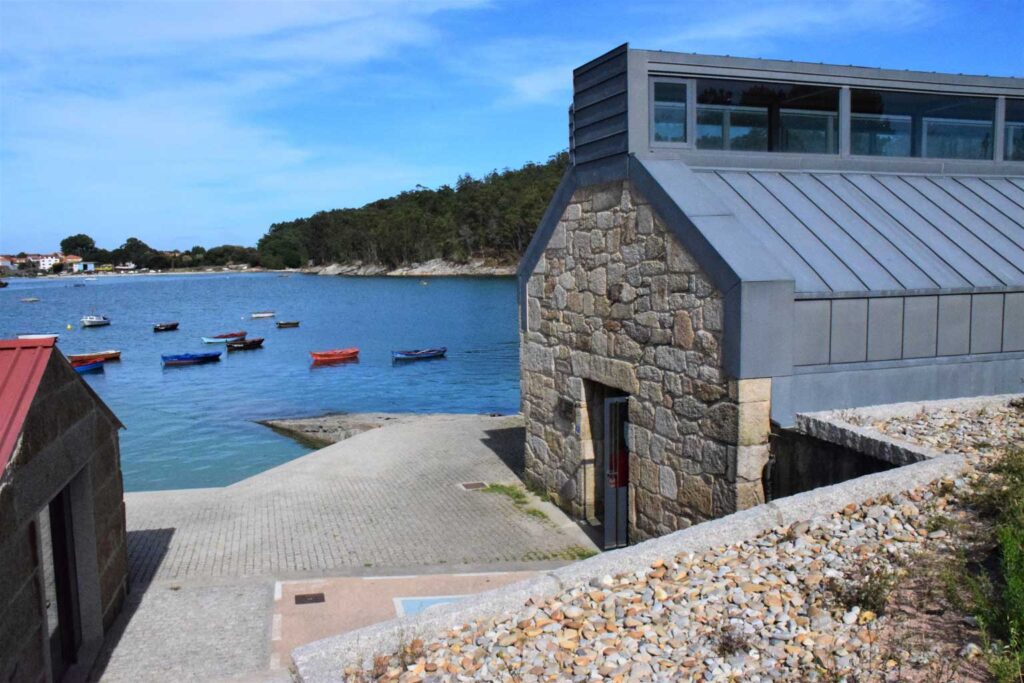
The ethnographic museum of Fishing and Salting "Salgadeiras de Moreiras" is located in Punta Moreiras, a coastal place belonging to the parish of San Vicente de O Grove, given its location and salt history. It was first opened on the 15th of June 2007 and the development is made up of three structures.
The oldest is fully equipped and provided with the necessary elements for its operation as a salting factory. It is free to get in and you can appreciate the processes that were carried out there to conserve sardines in brine, the basins, the dams, the channels through which the fish oil was driven. The process is explained in detail on the panels.
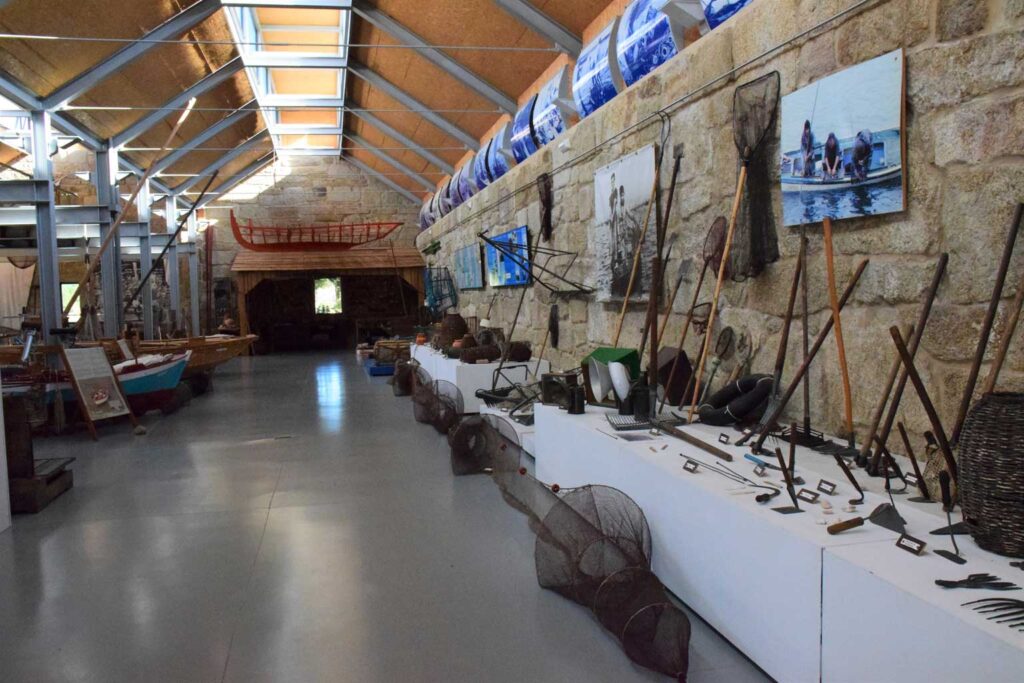
The second factory, which would correspond to a more modern structure from 1931, and which was rebuilt on top of an earlier one from 1790, has a small artisan pier. It was restored and refurbished and it is where all the most delicate pieces are exhibited, informing the visitor about the tradition and culture of the sailors of the Rías Baixas.
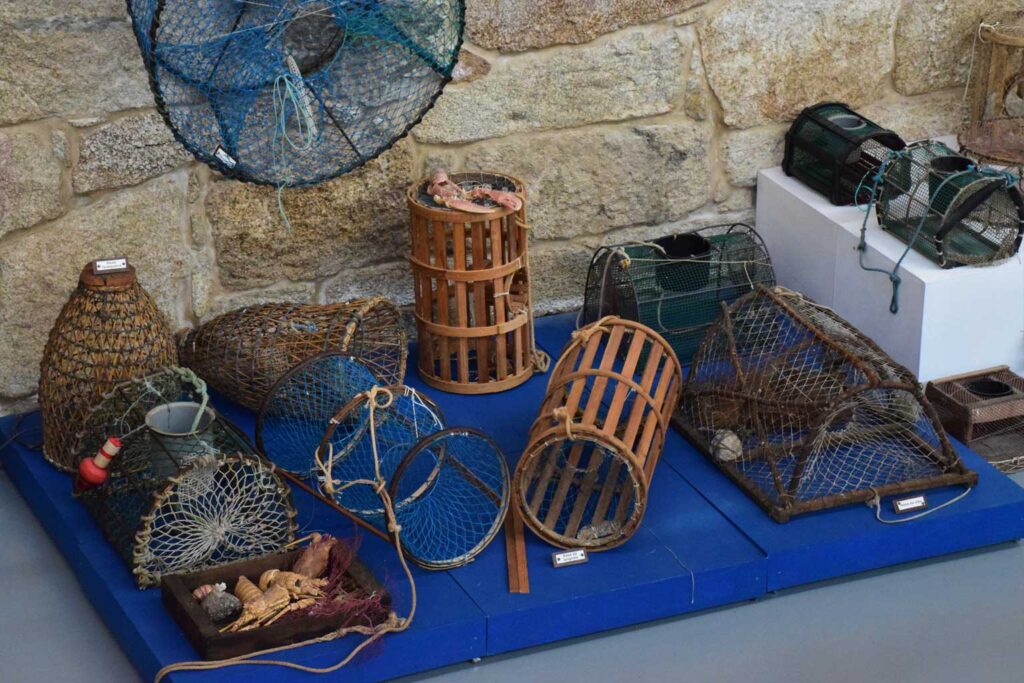
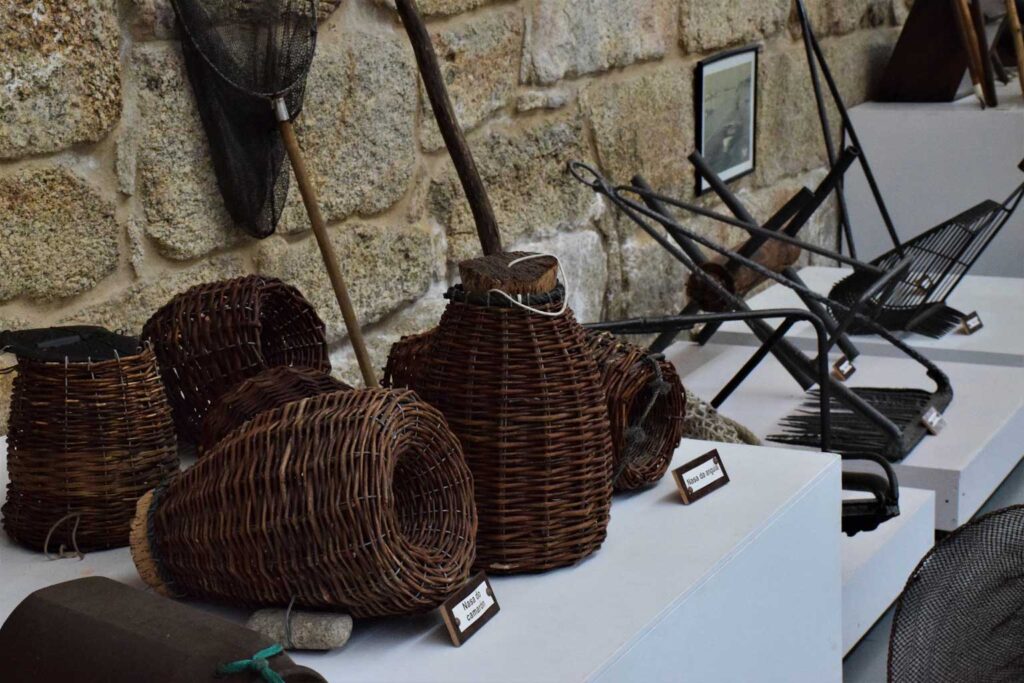
This facility has several sectors with material collected over the years, such as fishing equipment, as well as major structures such as marine engines. It is divided into the following sections: fishing and shellfishing, Ribeira carpentry, marine engines and the first electronic instruments, salting and cooperage, hermetic preserves and nets and ropes.
In front of O Porto de Meloxo a wooden lookout point was built over the remains of a third salting factory. Some large pieces were added, such as a steam boiler of the ship Hidria II, the autoclave of an old cannery, large anchors, several sculptures related to the sea, the framework of a galleon of the estuaries and a twelve-metre fishing boat with its Barreiros engine and navigation devices.
A path was fitted to connect all the buildings in order to create a combined interior and exterior visit, with views of the surroundings.
To learn more
The design intended for this museum area is that environmental orography become a part of everyday language. It tries to recreate an important moment in the history of salting in Galicia that goes from the end of the 18th century until the middle of the 20th century, when the Catalan promoters settled on the Galician coasts giving way to the important industry of sardine salting and subsequent canning industry.
The creation of this museum complex was developed over the years with small exhibitions. For example, in 1991, during the Shellfish Festival, old tools and fishing nets were exhibited, along with live shellfish.
Between 2001 and 2006, five exhibitions focused on marine anthropology were held in a large tent set up in the port area called Mar Adentro.
The memoirs were jointly published in April 2003 and the execution of the great project began. It was thanks to the municipality of O Grove, through its Plan of Tourist Excellence and the museum project, to the marine biologist José Luis Escalante González and the project for the restoration of the buildings to the cabinet of architects of the locality formed by Carolina Álvarez Míguez and David Cacabelos Rico.
The first visit to the facilities, still in their first phase, took place on the 15th of June, 2007, with Mayor Miguel Ángel Pérez García, an effective promoter of this long and ambitious project.
The surroundings of the museum complex are of great natural beauty. Just across from the Museum is the Porto Meloxo inlet, with its boats floating to the rhythm of the waves, and also the Moreiras estuary, an enormous sandy area that is exposed at low tide and frequently visited by shellfish workers.
A route called "Conjunto escultórico de Punta Moreiras" (Punta Moreiras Sculpture Ensemble) runs through this place. It is a path of 5.6 kilometres of low difficulty that starts at the Punta Moreiras cove and ends at the Porto Meloxo cove. Along this path you can see a set of 42 sculptures of mermaids, human figures, fish, cormorants or marine mammals, which objective is the enhancement, dissemination and promotion of marine culture.
To know it better
The Salting Museum or Museo da Salga is located in the municipality of O Grove, in the province of Pontevedra, and more specifically in Punta Moreiras. This museum centre offers a wide selection through which we can learn many details about the process of salting fish.
Formerly in these salting factories, or salgadeiras, the salt sea water was left to evaporate to remove the salt, dry it, and thus leveraging the use of the fish.
The museum has two areas that can be visited. On the one hand, it offers a freely accessible outdoor area, where visitors can become acquainted with the fish salting process that took place at the end of the 18th century and throughout the 19th century, through information panels. On the other hand, the second zone includes a more modern warehouse, as it corresponds to the year 1931. The latter was built on the ruins of an older one and has an exhibition on fishing and shellfishing techniques, showing different types of nets and the seafaring history of O Grove.
Gallery
Location
- Locality
- Lugar Gandariña
- Municipality
- O Grove
- Province
- Pontevedra
- Country
- Spain
The asset
- Type
- Museum
- Eco-destination
- Ría de Arousa
- Environment
- Rural
- Relevance
- Regional
How to get there
- Access
- By land
- Distance
- En coche desde el puerto de O Grove: 8 minutos
The visit
- Visitable
- Guided tour with staff
- Interpretation
- Galician and Spanish brochures
- Accessible
- No
- Parking
- Sí
- Signposted
- Yes
Coordinates
- Latitud
- 42.48527800
- Longitud
- -8.88985400