


Salvaterra do Miño. Port. Ceramic Factory. Ceramic´s history. Sailing through the Miño river.
About this heritage
The Dry Port of Vigo or Plisan (Plataforma Logística de Salvaterra-As Neves), will be in 2020 the largest business park in Galicia, in 2019 has opened in its first phase, with about 200,000 net meters - 500,000 gross, there are roads and areas with other uses - of the nearly three million planned by the three promoters, Port Authority of Vigo, Zona Franca and Xunta through the Ministry of Infrastructure.
When the construction of the dry port began, Roman ovens were found. The first option that has been considered is to allow visiting the place where they were located and where they used to work cooking tiles and other tools for the inhabitants of the Miño river´s surroundings.
According to the studies, these ovens were part of a group of remains to which more constructions were added to bake tiles and a necropolis. However, the work of the sand and gravel extraction companies over decades, ended up damaging part of the complex and other constructions that have already disappeared.
At present, only four structures from the end of the 3rd or beginning of the 4th century have been found, one of them in a very good state of conservation and two others quite deteriorated.
One of the peculiarities highlighted by Santiago Ferrer´s team, responsible for the location, was that they all had a square floor plan. This circumstance was compared with the others located in Galicia, which had a circular shape.
Galicia nowadays has a village dedicated to preserving and promoting the olive industry. This is Buño, a town in Malpica de Bergantiños (A Coruña) where, with a tradition that began in the sixteenth century, thirteen potters and nine shops are still living off the clay creations. In the village of Meder, Salvaterra do Miño, this craft is about to disappear for lack of successors, as the remaining potters are unique cases and are close to retirement.
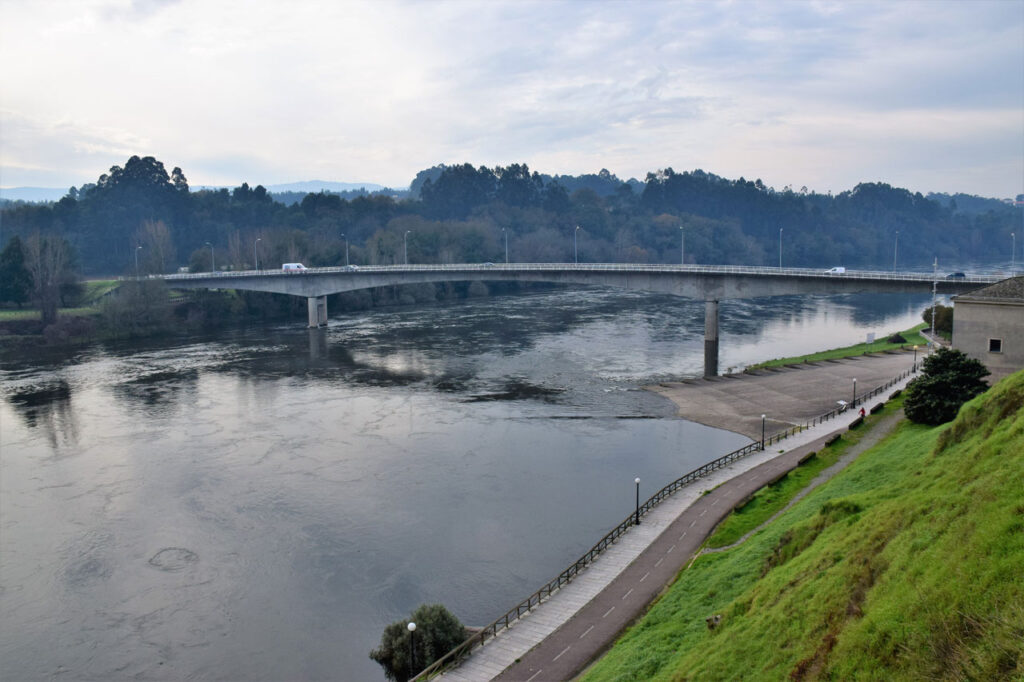
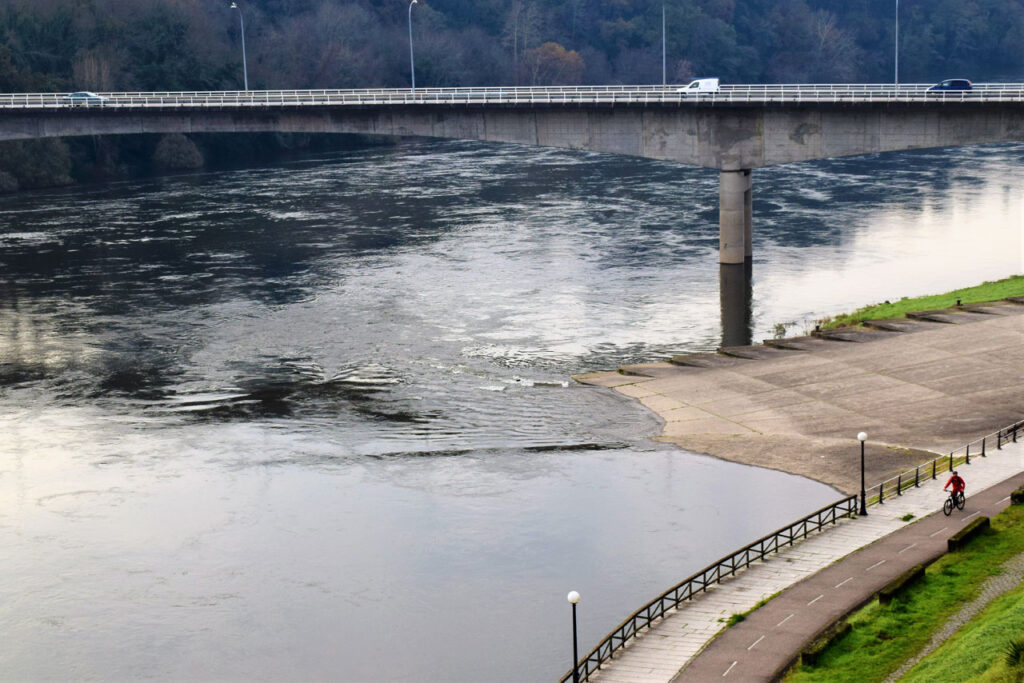
Navigation on the river Miño will be possible from the year 2020, will be navigable between Salvaterra and Tui, after the approval of the Interreg V program between Spain-Portugal 2019-2021 and after Brussels authorized and subsidized the navigability of the Miño river which, from the year 2020, can be travelled in tourist boats with scale.
To learn more
The Dry Port of Vigo or Plisan (Logistic Platform of Salvaterra-As Neves), will be in 2020 the biggest industrial area of the Euroregion Galicia-North of Portugal. An industrial park of 4 million square meters. A project for a logistics platform, for which 200 million were invested from the public coffers and some 500 million from the private initiative.
When work began, some ovens that date back to Roman times were found. The location of the ovens is not the only piece of history from this period that is kept in the area of Salvaterra. In the area known as A Igrexa, belonging to the parish of Santa María de Liñares, a team of an archaeologist from Ourense located a gold mine. In reality, the remains are composed of parallel trenches of different dimensions that could have been used as a source of exploitation or as reservoirs to store the water from which the golden material was filtered. After extensive research, the experts suggested that this could be the second option.
With all this evidence in hand, it cannot be ruled out that in the area where the future logistics platform will be located there was a population centre thousands of years ago that would use the advantages of the Miño river and the mineral wealth of the south of the O Condado region.
In Galicia there are traditional pottery centres. At present there are only five: Bonxe, in Outeiro de Rei, Buño, in Malpica de Bergantiños, Gundivós, in Sober, Meder, in Salvaterra do Miño and Niñodaguia, in Xunqueira de Espadanedo. In all of them, its existence goes back to many generations of skilled “oleiros"; who took advantage of the clay´s quality that, in general, was always close to the production´s centre. The only exception is the Meder workshop in Salvaterra, which emerged in the 20th century as a result of the emigration of a craftsman from Buño to this Pontevedra municipality.
From the year 2020, navigation on the river Miño will be possible between the cities of Tui, Valença, Monção and Salvaterra do Miño. The City Council is leading the project with Tui, Valença, and Monção as partners, as well as Galicia´s Tourism Agency and the General Direction of Natural Heritage of the Xunta de Galicia and the Ente Turismo Porto e Norte de Portugal (Porto Tourism and North of Portugal). The promoter of the idea of the navigability of the Miño river was the Council of Salvaterra that always dreamed of creating a “Small Douro'; in this Miño river.
To know it better
Between Salvaterra do Miño and As Neves, municipalities separated from Portugal by the Miño river, one of the largest industrial estates is being built to link the port and the Vigo Free Trade Zone. This area will be called Dry Port. The investment will be very large and will occupy an area of more than four million square meters of both municipalities.
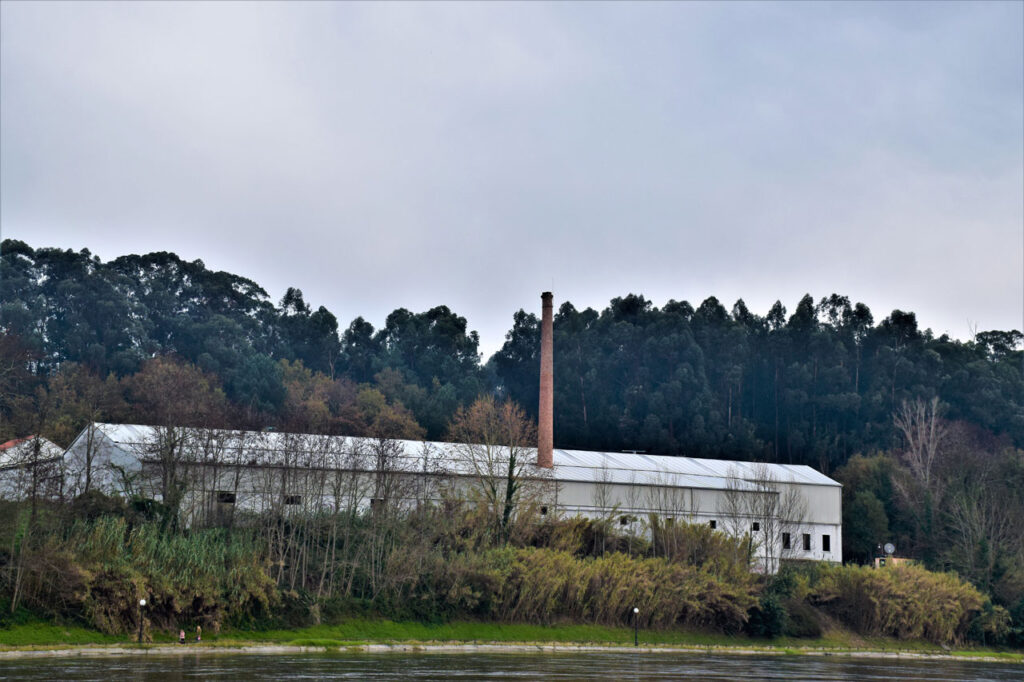
In Galicia, different areas have been exploited for years to produce crockery and tiles in a traditional and rural way. The work consisted in extracting the clay to create these pieces called “telleiras". The name “telleira"; was applied both to the building and to the production of tiles, bricks and other construction elements based on clay. Between the 19th and 20th centuries, this process was known as the manufacture of roof tiles and bricks from local clay, although industrialisation from the beginning of the 19th century is noteworthy.
Salvaterra do Miño is a municipality in the southwest of Galicia, in the province of Pontevedra, very close to Portugal. It occupies some 61. 79 square kilometres and has 9,800 inhabitants distributed in 17 parishes: Alxén, Arantei, Cabreira, Corzáns, Fiolledo, Fornelos, Leirado, Lira, Lourido, Meder, Oleiros, Pesqueiras, Porto, Salvaterra, Soutolobre, Uma and Vilacoba.
Gallery
Location
- Town
- Salvaterra
- Municipality
- Salvaterra do Miño
- Province
- Pontevedra
- Country
- Spain
The asset
- Type
- Port
- Eco-destination
- Río Miño
- Environment
- Rural
- Relevance
- International
How to get there
- Access
- By sea By land
- Distance
- 0 km
The visit
- Accessible
- No
- Parking
- No
Coordinates
- Latitud
- 42.08323000
- Longitud
- -8.49821700