


SEAFARING DISTRICT. The Life of a Sailor
About this heritage
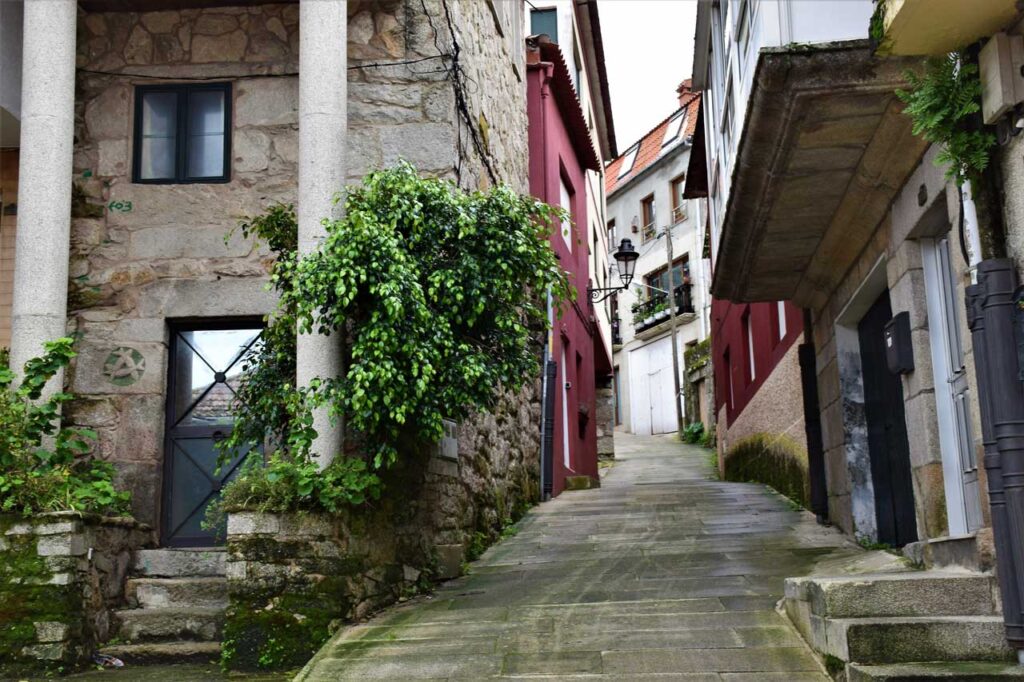
The marine life and culture in Baiona are breathed in its narrow and stone-paved streets, bathed by the breeze of the sea. The low-rise buildings generally have arcades and are of stone or granite. Their balconies and the entrance to these houses are characteristic with wide doors and double opening as well as waist-high low windows. The facades of the houses extended opposite the promenade; most of them are seafaring-style with glass windows overlooking the sea.
The Lordly Houses (Pazos) are also well-preserved; they are from periods of prominent economic and commercial growth and strategic significance of the Baiona port. Noteworthy is the military architecture of the defensive wall of the Monterreal Fortress, which defended the Baiona towners on many occasions and throughout the centuries. It also profited from the arrival of the Pinta Caravel, bringing news from the New World.
The House of Navigation and the Pinta Caravel floating museum of the preserve proof of some of this historical legacy and tangible heritage of seafaring tradition.
Besides, we can appreciate Baiona's seafaring culture in the remains of civil structures, namely the Monte Boi promenade cetareas (a nursery dedicated to marine life), the old fish market wall in front of Barbeita beach, and the ancient well that used to collect water. Moreover, it is also recognized in contemporary constructions, such as the pier, the docks, the current fish market, and the marinas.
Baiona also has a sculpture on Mount Sansón, representing the sailors' devotion to Our Lady. The Virgin of the Rock is a statue that stands at the top of the mountain overlooking the sea. It is the Virgin of Carmen, patron saint of sailors, holding a boat under her care.
As in every seafaring village, it is typical to celebrate the festival in the Virgin's honor, taking Her out in a colorful maritime procession through the estuary waters. At the end of it, towners always present an offering for those who have died at sea, throwing a wreath of flowers into the sea.
To learn more
The Baiona's fishermen had the gamela as their main working tool. It is a small wooden boat, about 5 meters long. It has flattened bow, stern, and hull's bottom that can be rowed or sailed. Depending on the desire catch, they fished in pairs or bigger groups. For instance, they went two by two for the sea bass; three by three, to carry out the trammel net technique; and four by four, to the racú (highly selective fishing gear). They used minor gears, such as gillnets, hook tackle, and artisanal fishing creels.
They set sail extremely early each morning for sea bass-like (robalizas) and pollock (abadejos) to earn a living. They rowed at dawn passing by the Estelas Islands in front of Monteferro, reaching the Cíes or even further.
Once the fish was obtained, the challenge started. They returned to port at full speed to catch the tram at eight in the morning at the latest, and then, loading the day's merchandise to be later sold fresh in various counties of the area where the business took place. For them, not making it on time meant many wasted hours, and they were forced to wait until the next day to try again.
The return to port, after a fishing day, was quite difficult because of the kilos added by the caught fish, which became a considerable weight to drag. Formerly the nets were made of linen, and when wet; they absorbed the water acquiring a higher weight, which required a huger effort on their part.
This work causes the arms and back to suffer from the effort; the hands end up hardening both for rowing and for using the fishing equipment, leaving some calluses.
However, the work did not end here, on numerous occasions, the gamelas were taken to the beach for their much-needed maintenance, and their fishing equipment had to be repaired for new use. However, the female net-menders (rederas) became very important because they were in charge of the meticulous work of repairing these fishing nets, even though their work was less noticeable.
To know it better
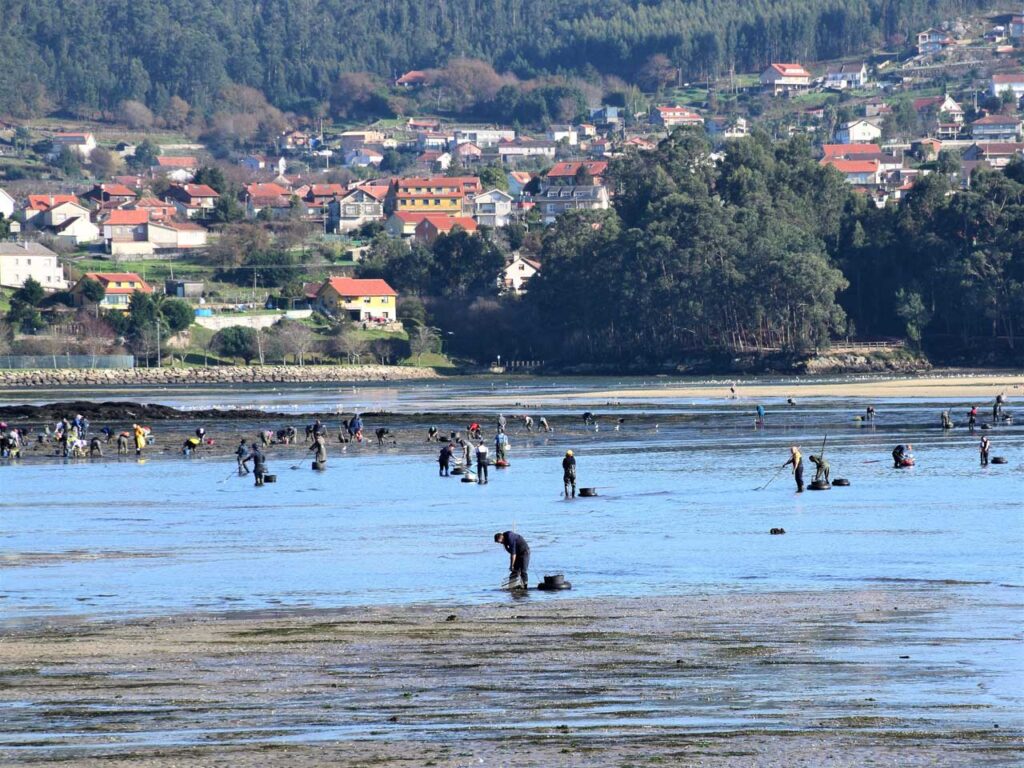
Baiona county is in the province of Pontevedra in the south of South Estuaries (Rías Baixas). Its location is unbeatable for sea-related activities such as fishing, shellfishing, and water sports. For this reason, it stands out for being through many years a seafaring district.
Seamen and women devote much of their lives to living in boats to obtain the food, which later, they will sell in the port. This is an extremely arduous work since much of their working hours take place during the night or early dawn under the dim light and with incredibly high and dangerous waves.
In Baiona, live and have lived many and outstanding professionals of the sea. Among them, we find Juan Leyenda Marcote, who is considered a hero in this coastal town. He started as a sailor when he was just 11 years old. He and his father fished in Baiona, and eventually farther into Finisterre (province of A Coruña); unfortunately, where his brother lost his life while in a boat after a heavy swell. As in numerous coastal counties, in this village, there is a monument dedicated to sailors built by Manuel Quintas, a popular local sculptor.
Gallery
Location
- Town
- Baiona
- Municipality
- Baiona
- Province
- Pontevedra
- Country
- Spain
The asset
- Type
- Fishing neighborhood
- Eco-destination
- Ría de Vigo
- Environment
- Urban
- Relevance
- International
How to get there
- Access
- By sea By land
- Distance
- 1 km
The visit
- Accessible
- Sí
- Parking
- Sí
Coordinates
- Latitud
- 42.11727000
- Longitud
- -8.84568000