


The Toralla Ancient Fortification
About this heritage
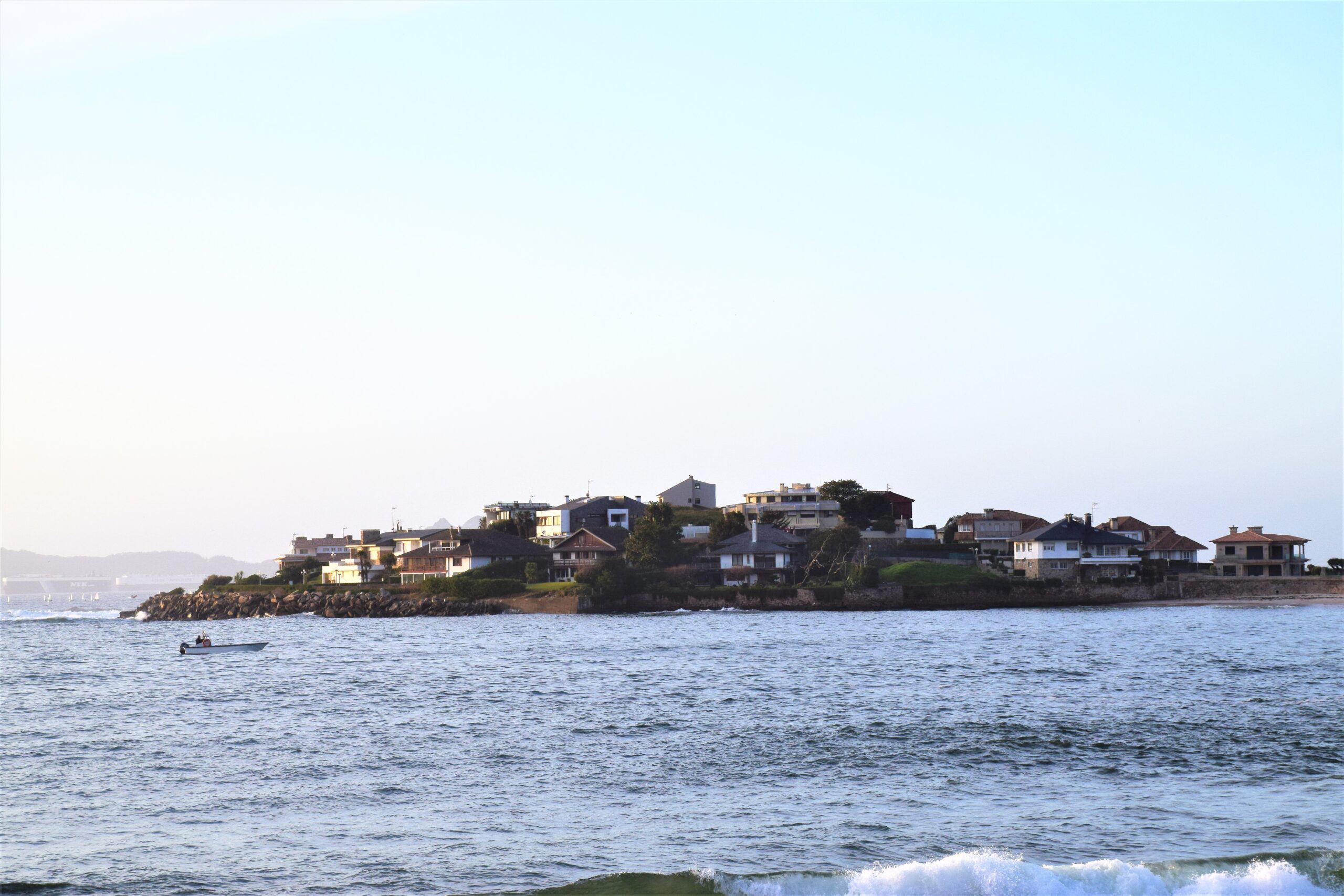
The Toralla ancient fortification is located on a small island, in Vigo’s sea inlet. The fortification walls measured 3 metres thick and one metre high. Since the 80’s of the past century, numerous excavations have taken place, which have uncovered an important batch of Punic materials, including some fragments of red engobe ceramics. The Toralla fortification was possibly used as a redistributing trading centre for Mediterranean materials, until the 2nd century B.C., as with the Muíño do Vento fortification, also located in Vigo. This fortification was probably abandoned during the 2nd century B.C.
Of particular importance is the one-and-a-half metre long granite baetyl which is kept in the Quiñones de León Museum in Vigo. The baetyls (obelisks) appear in Phoenician-Punic religious contexts along the Mediterranean, from Byblos to Gadir, which suggests that there was a Phoenician worship space here, as well as in Punta do Muiño do Vento, in Alcabre. This temple, similar to those found in Andalusia and Levante, would have been port sanctuaries chosen by merchants from the Mediterranean to carry out their transactions
To learn more
The communities that the Phoenicians found when they arrived in the northwest at the end of the 5th century. A.C. were in the process of change. Precisely this period marks the change between the First and Second Iron Age in the area. Until then, the northwest had been characterised by considerable cultural homogeneity: predominantly small fortifications (castros), with little monumental architecture of circular shape and fortifications with a predominance of terraces, ditches and embankments. The occupation of the territory was not very dense, and the settlements were located in elevated locations. From the end of the 5th century BC onwards, many of these settlements were abandoned and the number of settlements at the valley bed multiplied, with complex defense mechanisms and, at least on the coast, they were characterised by a monumental stone structure and a very dense occupation, although they remained small (2 hectares) at least until the 2nd century BC.
In contrast to the south of the peninsula, the northwest was in no way "Mediterranean". The Punics maintained trade relations, but without establishing colonies or permanent settlements. The closest thing to a permanent settlement were the worship spaces identified in Punta do Muiño do Vento and the island of Toralla (Vigo). However, there is evidence of influence in some Castro's settlements of the southern coast, where metallurgies and elements of religious culture were adopted due to possible ideological transfer through the Punic places of worship in the town.
The first emporiums with Punic presence were established in familiar places for the merchants coming from the south. These landscapes are similar to the Punic Mediterranean world and the area of the Strait of Gibraltar: islands close to the coast, capes flanking inlets, good natural harbours and river mouths that act as gateways to the interior. A first feature of this first Punic trade is its concentration on the coast. Apparently, the Emporiums monopolised the vast majority of imports and acted as intermediaries between inland metal producers and merchants on the coast, following the classical model that seems to be found in different parts of European protohistoric geography. The involvement of the Galicians in the Second Punic War as soldiers in the service of Carthage demonstrates that the interactions between the communities of the northwest and the Punic navigators had created close ties.
From the second half of the 2nd century B.C. and most strongly from the year 125 B.C. was when the exchange with the Mediterranean world reappears vigorously, as evidenced by the appearance of a large number of remains in numerous locations. It was in this late Punic period that the oppida appeared, large castros that became an asset to trade and particularly encouraged the importation of large amphorae, the contents of which were used for banquets sponsored by the large elites leading the oppida.
Wine plays a key role in the political economy of the oppida and undoubtedly acted as a boost for trade from the second century BC. Wine was one of the products traded by the Phoenicians, who planted vineyards in all their colonies and around their factories in North Africa, including Carthage, which later inherited all Phoenician power, as in the Iberian Peninsula, France and Italy.
To know it better
On the island of Toralla, located in the south of Galicia, there are approximately 140 people. Located in Vigo (province of Pontevedra), it is a private island, accessible only to residents.
Just a few years ago in Toralla, some ruins of an ancient fortification were found, which could correspond the 7th century B.C.. It had a rampart and, together with the Alcabre ancient fortification, is one of the oldest settlements in Vigo. Baetyl (obelisks) or granite memorial stones, i.e., sacred stones which represents a Phoenician cult zone, were found in both castra.
Not far from the island of Toralla is the Roman Villa of Toralla or Mirambell Estate, where the first Roman ruins were found. This town, located on the coast, was engaged in the exploration of marine resources, through fishing, salt industry and salt mines.
Gallery
Location
- Town
- Vigo
- Municipality
- Vigo
- Province
- Pontevedra
- Country
- Spain
The asset
- Type
- Castro
- Eco-destination
- Ría de Vigo
- Environment
- Urban
- Relevance
- International
How to get there
- Access
- By sea By land
- Port
- Puerto de Canido
- Distance
- 100 metros
The visit
- Visitable
- Do not
- Interpretation
- Do not
- Accessible
- No
- Parking
- Sí
- Signposted
- Yes
Coordinates
- Latitud
- 42.20013300
- Longitud
- -8.80286800