


Vigo. Worldwide comunication base. English cable
About this heritage
Vigo´s history is drawn thanks to its port, location and worldwide communications base. Europe and the foreigner not alien to these conditions, just before the outbreak of II World War, choose this locality as a point for exchanging telegraphic messages, from one end of the planet, to the other.
At the end of the 19th century, specifically 1873, the British company “The Eastern Telegraph Company Ltd”, known in Vigo as the “the English cable”, installed its first stop over in the city, connecting the UK with its colonies and the rest of the world.
At the beginning of the writing thousands of cablegrams contained the words “Vía Vigo”, as news from a good part of the world, passed through our city through the submarine cable before reaching the UK. Vigo was chosen thanks to the protection provided by a fully sheltered port: suitable for cable boats. The work of laying the submarine cable was carried out by the ship “Minia”.
This made Vigo the best Spanish city communicated with the rest of the world, becoming the gateway to Spanish telecommunications. From Lisbon to Brazil by the south, and towards Asia penetrating by the Mediterranean sea; this line would cross the Suez´s canal and the Persian´s gulf, until arriving at Bombay in India, colony of vital importance for the British metropolis. The line would continue to Australia and New Zealand.
The first cablegrams had a cost of 40 reales (Spanish old currency) in a 20 words writing and another 20 for every ten words or a fraction of them. This connection was not the first one made in Vigo, ten years before the city had already been connected with the San Simón´s Lazaretto.
The first headquarter was located at number 20 in Real street and then moved to Príncipe street and sometime later to the Bárcena building, where the social and cultural centre of Afundación is now located. The first representative of the company in Vigo was Mr. C.J.Murphy until 1881, when he was transferred to the Portuguese town of Caminha, being replaced by John R. Rosse.
The clock located in the façade of the headquarters of “The English cable” in Velázquez Moreno Street nº 22, was used by the people of Vigo to put their clocks on time. Everyone is familiar with English punctuality, even for their offices, so every minute they received a cable with the exact time. That is why you could hear the expression in Vigo “I´m on cable time”.
The staff of the British company based in Vigo, had an important influence on the tradition of part of Vigo´s society, since they were the introducers of sports such as football, hockey or rugby, recreational activities such as ping-pong or billiards and the introduction of drinks such as beer and Porto wine.
The English cable saw its own end on December 31 in 1969, when it definitively closed its office in Vigo. At midnight that same day, the clock that gave time to the people stopped. It would never work again.
To learn more
Spain faces the final stretch of its Civil War and is on the verge of the outbreak of II World War. The Germans are currently crossing an infinite number of telegrams with their Japanese colleagues. All of them passed through Vigo, on the so-called English cable. From Hamburg they received in this, their first scale of submarine cable; as a way of negotiation and communication from one part of the world to the other.
José Ramón Cabanillas, a Vigo historian, pursues in his book “Vía Vigo” the layout of the implantation of this British communications base. The Eastern Telegraph Company Ltd” was used by the English since 1873 to circulate Morse code messages heading for America in one direction, and the Far East in the other. In thousands of cablegrams the words “Vía Vigo” appeared at the beginning of the writing, as news from a good part of the world passed through our city before arriving in the UK.
The Eastern obtained the concession of the Spanish government and the election of Vigo took place thanks to the shelter that provided a suitable port for cable boats. The work of laying the submarine cable was carried out by the ship “Minia”. This would make Vigo the Spanish city best communicated with the rest of the world, making it the gateway to telecommunication in Spain. The first cablegrams had a cost of 40 reales (Spanish old currency) for a 20 words writing and another 20 for every ten words or a fraction of them. This submarine cable connection was not the first one to be made in Vigo, as in 1863 the city had already become connected to San Simón´s Lazaretto.
From Lisbon the line continued to Brazil by the south, and towards Asia penetrating by the Mediterranean sea; this line would cross the Suez´s canal and the Persian´s gulf to Bombay in India, a colony of vital importance for the British metropolis. The line would continue to Australia and New Zealand.
The first headquarter of the company was located at number 20 in Real street and then moved to Príncipe street and sometime later to the Bárcena building, where the social and cultural centre of Afundación is now located. The first representative of the company in Vigo was Mr. C.J.Murphy until 1881, when he was transferred to the Portuguese town of Caminha, being replaced by John R. Rosse.
The expression “I´m on cable time” was one of the most listened to in Vigo until relatively recently, thanks to the clock on the façade of the headquarter of the English cable, (Velazquez Moreno street nº22). It would help the people to settle their clocks in time. For the English company it was essential to have the exact time in all their offices, so every minute they receive a cable with the exact time. That is why the clock of this company was a reference as to the accuracy of the time and could also be heard.
However, this was not the only legacy left by the English who, as they passed through Vigo, made their mark with their traditions, sports and activities. The English owners of the company cared about their employees, and wanted them not only to work well, but also to give a good image in those countries where they settled so that they would be “their pride”. They covered the free time of their young employees through sport. An activity that in the 19th century in the UK was already developed, much less in Galicia. They had their social club located on the ground floor of the Moderno Hotel, had recreation rooms with billiards and ping-pong tables. At the foot of Castro mountain the staff of the English cable enjoyed a large estate (Villa Felisa) with a magnificent two-floor stone building in English style: residence and social centre. Next to the residence, in Taboada Leal street, had two courts where you could play “lawn tennis” or tennis on grass.
In the residence, “The Vigo vigilant” could be read, which had been printed since 1904. The newspaper contained news from England and local news related to the company. A good part of the newspaper took care of sports news. In addition to playing tennis, Eastern staff practiced rowing in the estuary, athletics and soccer. The Exiles Cable F.C. was his football team that played matches with the local teams, Vigo and Fortuna.
Matches were also organised with the crews of English navy ships arriving in the port. And they used to play in a field of land reclaimed from the sea (“El relleno”) where today is the Compostela square. The first reference of a football match in our city dates from February 1903, disputed between the employees of the company cable and the crew of the ship called “Calliope” which was moored in Vigo´s port.
The British company staff had an important influence on the customs of part of the vigo society, introducing drinks such as Porto wine or beer, which was made by the English citizen Mr. Hyde.
As Vigo remained in the “National side” during the Civil War, Franco took advantage of the situation to occupy the offices of Eastern to transmit their communication abroad. In 1937 it forbids the English and German companies to remain open and, in 1939, with the beginning of the second World War, the English cut the German cable and vice-versa, so that the office in Vigo will stop transmitting information. With the arrival of the spring in 19491, the English cable office reopened its doors in Vigo, in the new post and telegraph building in the Compostela square.
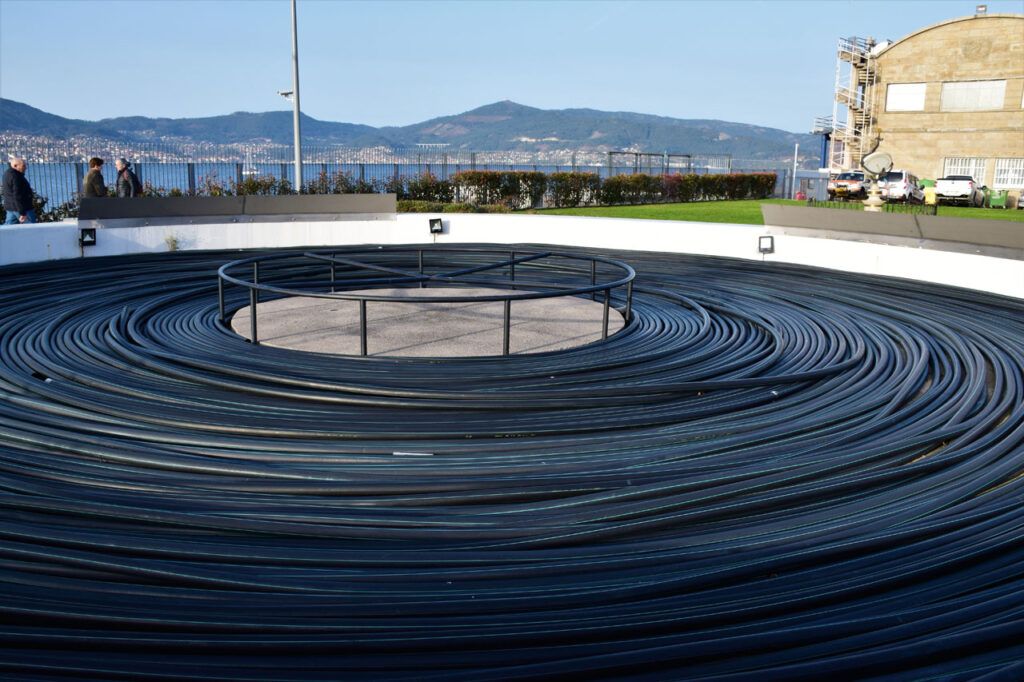
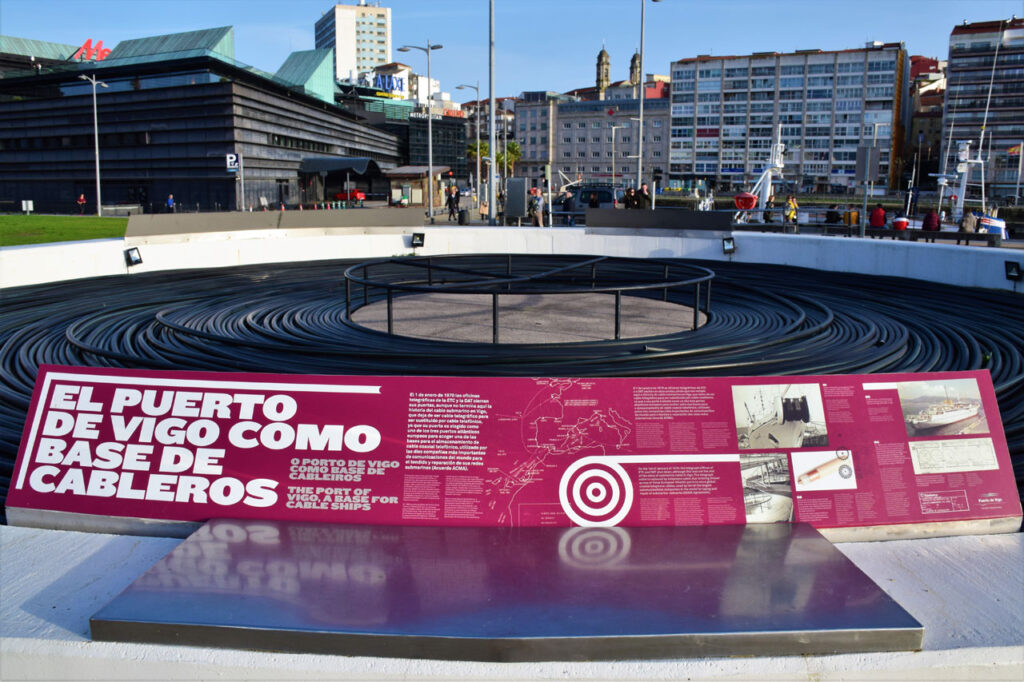
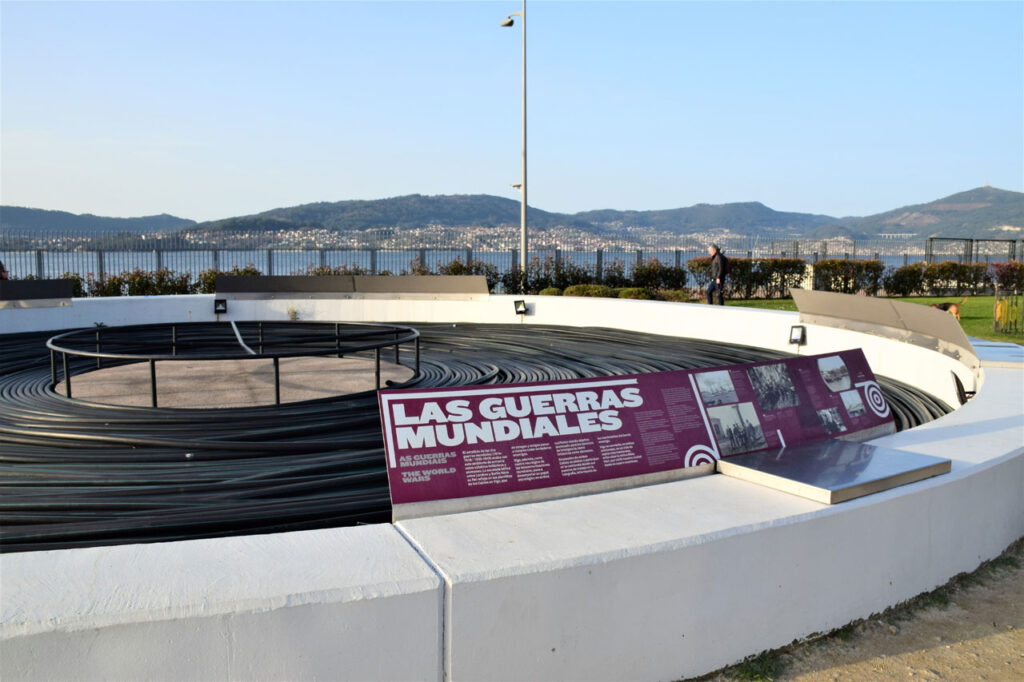
It wouldn’t be wars the ones which would put an end to the functioning of this communications base, but the rise of new technologies. The invention of the telex, left cablegrams obsolete and on December 31 of 1969, at midnight, the clock that gave the time stopped working forever. Nowadays we can find traces of the cable in the Maritime Station of Vigo, where the old cable silos were located. There, informative panels have been incorporated that provide data on the company of the English cable.
To know it better
In the city of Vigo, in Pontevedra province and in XIX century there wasn’t any smartphones or computers, and that is why the 27 of May of 1873 was inaugurated the cable communications between Vigo and England to achieve a certain communication.
The company that allowed this sending of information was “The Eastern Telegraph Company Ltd.”, also known in Vigo as “The English cable”. It consisted of an English company that, through the submarine cable it communicated UK with different points of the world. The messages, called “cablegrams” began with the words “Vía Vigo” as the news travelled from Vigo to UK. Eventually, the activity of this company finished in 1969.
As a curiosity, it should be noted that the cable graphic communication of the time, was always done in code so they could keep certain secrets. This process was achieved thanks to machines like “Enigma” and “Lorenz” which left any type of text unrecognizable.
Gallery
Location
- Town
- Si
- Municipality
- Vigo
- Province
- Pontevedra
- Country
- Spain
The asset
- Type
- Port
- Eco-destination
- Ría de Vigo
- Environment
- urban
- Relevance
- Internacional
How to get there
- Access
- By sea By land
- Distance
- 0,600km
The visit
- Visitable
- Yes
- Accessible
- Sí
- Parking
- Sí
Coordinates
- Latitud
- 42.24054000
- Longitud
- -8.72991700