


The Rande Strait. Interpretation Center of the Battle of Rande
About this heritage
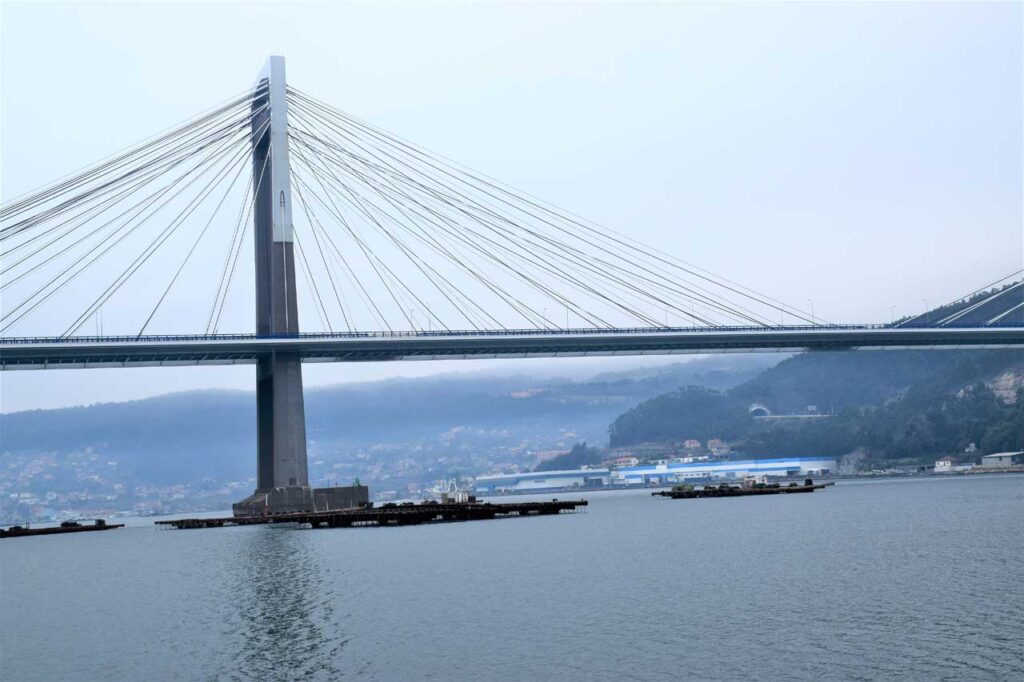
In Meirande, near the Rande Bridge, linking Vigo with the O Morrazo Region is the Interpretation Center of the Battle of Rande and the Industrial Heritage. Here you can see the archaeological and cultural treasures from the Battle of Rande period, as well as part of the industrial and historical heritage of Rande.
The building is in an old canning factory from 1944, owned by Otto Gerdtzen Boyé, an allied of the Nazis during the Second World War and an executive who started his activity in Vigo in 1893.
The center consists of several modules distributed in four exhibition halls. On the outside, it the maintained ruins of the old stone façade work as a closure for the whole complex, and behind that open-air wall, there are various machines from the old Boyé canning factory.
The first room is dedicated to the technical explanation of the battle itself, as well as its historical context and the conflict of interests that originated the succession of King Felipe IV. There are models of ships from that time, replicas of cannons, and various objects of the interior of a galleon, uniforms of Dutch and English sailors, and the recreation of the captain's cabin. Also on display are not-so-antique materials, such as a diving suit, diver's shoes, and other tangible elements, so that the public can interact with the exhibition.
In the other room, there is an approach of the period when the Spanish Crown profited from the plundering of America's natural resources and the trade of gold and silver, precious stones, mineral pigments, noble woods, cocoa, tobacco, and foods, such as corn, tomatoes, and potatoes. All of these transported in fleets of galleons guarded by other heavily armed ships.
Finally, it has a space dedicated to those machines used in the canning factory and fishing tools. The center can be visited by boat as it has a small dock to access the building, making this visit a complete experience.
To learn more
The Interpretation Center of the Battle of Rande and the Industrial Heritage is inside the wing, where the mid-19th century old cannery used to be. The first knowledge of this factory dates from 1836, when the Catalan executive, Sebastián Carsí de Vilanova I la Geltrú, was dedicated to the salting of fish and meat.
In the second half of the 19th century, the Carsí family quit the salting business and decided to rent the factory to some businesspersons until 1939, when they sold it to Román Cordero.
In 1941, Cordero requested the Vigo Port Authority permission to extend the factory, which consisted of a coastal wall, two docking ramps, stairs leading to what was left of the beach, and a filling site on the eastern side of the land. A year before the work was completed, the factory passed to Otto Gerdtzen Boyé.
On February 7, 1942, their relationship with the Nazi party included them on the blacklist of the United States Federal Reserve, which also added other companies as well as German residents of Vigo. The factory in Redondela transformed into a canning factory using the commercial name "Conservas Boyé."
In 1952, the factory definitively quit the salting business, devoting itself entirely to canning until its closure in 1955.
Near Meirande, a few meters further inland from the estuary, one can see a metal structure that extending into the sea. It is an old iron and steel miner's loading bay, from which they exported metal from the Wagner reserve in El Bierzo.
In the mid-20th century, the Basque engineer Julio Lazúrtegui discovered the Wagner and Vivaldi preserves. He was an enthusiast of classical music, particularly these two composers. The engineer dreamed of turning the Bierzo into the new Biscay.
In 1952, the Wagner reserve began to be exploited, becoming, at that time, the largest iron mine in the Iberian Peninsula. The company had five hundred workers on its staff and used a two thousand meter cable car to transport the ore to the loading bay at San Miguel de las Dueñas (Saint Michael of the Landladies) railway station. It had a capacity of two thousand tons distributed in eight hoppers, onto which the buckets were unloaded by simple manual tipping.
The minerals were destined for the ENSIDESA factory in Avilés and to countries in the north. Initially, the company devised a 115-kilometer overhead cable to connect the reserve with the Avilés Port; however, the project was discarded, and the Vigo Estuary was chosen as the destination for this cargo.
The Rande Maritime cargo yard in the Vigo Estuary of Muradas, known as "Cargadero Deuchess," is in the Bruñido Point. The Vigo port was inoperative due to the massive shipments; therefore, it was decided to build this formidable steel structure in the San Simón Cove Sea.
The structure was of dock-like style, with a draught of more than ten meters to allow the berthing of solid bulk carriers of up to 40,000 GRT (gross register tonnage). It had a beach of nearly three hectares, where they could gather approximately 125,000 tons. Belts transported the cargo and had a loading capacity of 2000 t/h.
This is how in 1969, according to the memory of the Minero Siderurgica (private coal company) of Ponferrada, 300,000 tons of iron ore left from there. The mining railway reached the same loading bay, where the ore was stored and transferred to the ships.
The exploitation of these areas ended in 1982.
To know it better
Redondela County in the Pontevedra province has been inhabited since ancient times, proven by findings of various remains of dolmens, petroglyphs, and rock engravings on Penide Mount, Mirallo Mount, and Ventosela.
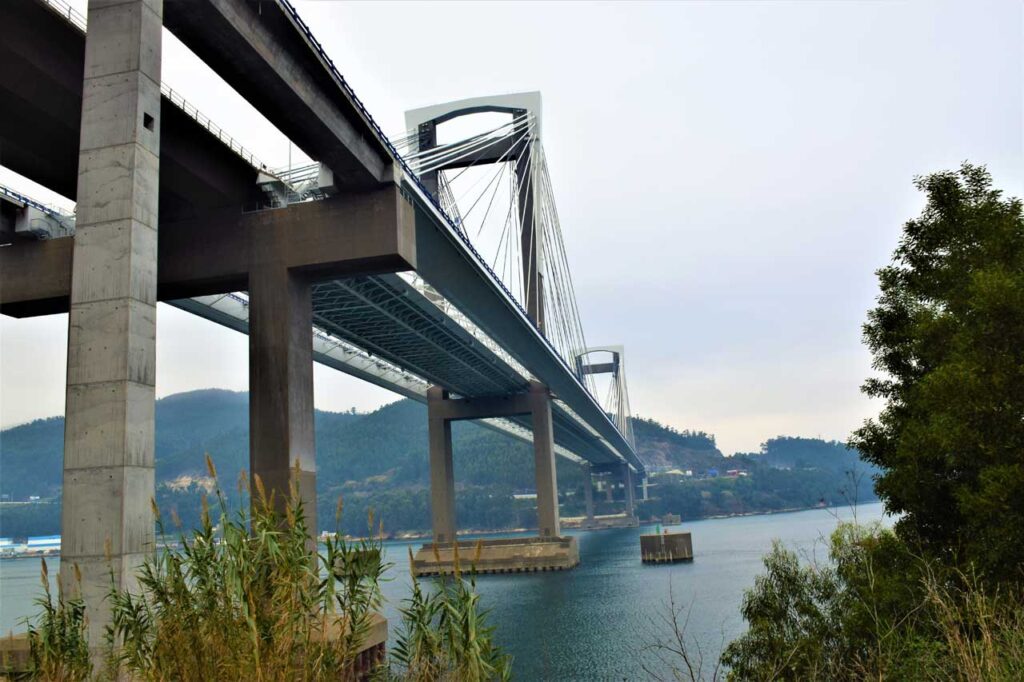
Near Redondela, the Rande Bridge is linking the Redondela and Moaña counties, where long ago, the so-called "Battle of Rande" occurred. On October 23, 1702, this significant naval battle took place in the Rande Strait, between Besta Point and Rande Point in the widest section of the Vigo Estuary.
The Vigo Estuary holds fortunes and treasures from the various battles that took place at sea, leaving many goods in its depths. In the Interpretation Center of the Battle of Rande, one can find several pieces of our industrial and historical heritage. The Interpretation Center was built right by the Rande Strait at the former location of the 1944 ruins of the "Factory of the German" (Fábrica do Alemán).
Gallery
Location
- Town
- Rande
- Municipality
- Redondela
- Province
- Pontevedra
- Country
- Spain
The asset
- Type
- Interpretation center
- Eco-destination
- Ría de Vigo
- Environment
- Maritime
- Relevance
- International
How to get there
- Access
- By sea By land
- Distance
- 0 km
The visit
- Visitable
- Yes
- Accessible
- Sí
- Parking
- No
Coordinates
- Latitud
- 42.28512000
- Longitud
- -8.65601000