


Cetárea A Redonda
About this heritage
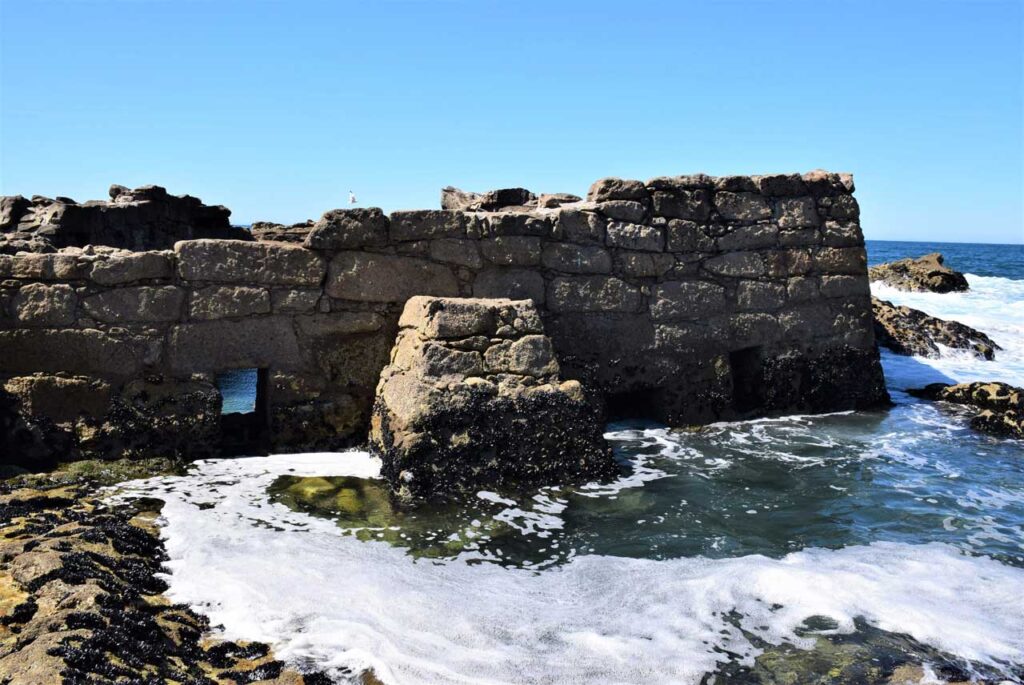
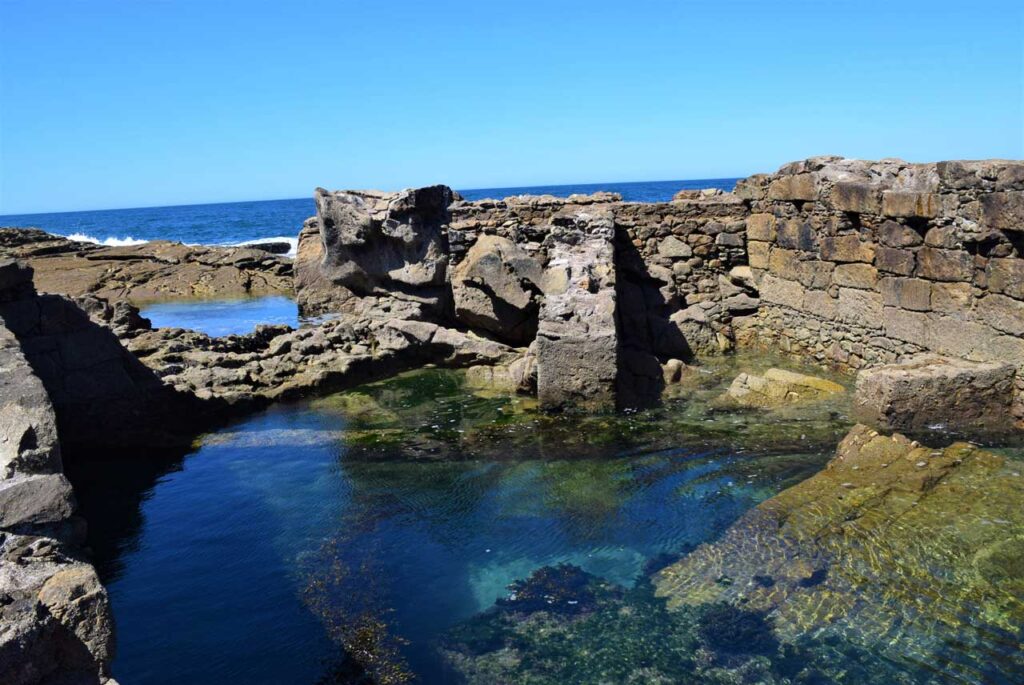
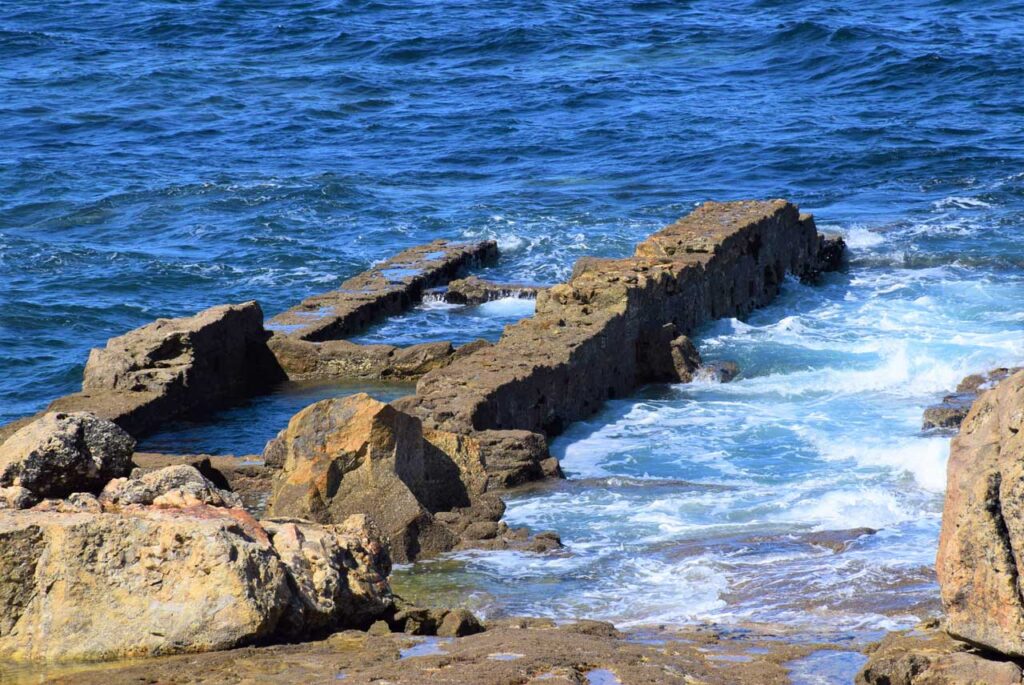
Cetáreas are ancient stone constructions in the intertidal zone that were used as natural nurseries for lobsters and other crustaceans. They are an important part of the history of a town intimately connected to the sea. The cetárea A Redonda or Pepe Sobrino's cetárea is a traditional type of construction from 1895 where mainly shellfish and lobsters were stored for later sale to support the livelihoods of families who lived from the sea. It has a curious circular shape formed by a wide wall open on the side facing the sea. The cetáreas are arranged inside forming rectangular cells. It is the largest cetárea that can even be visited at high tide. It is located after passing Área Grande beach heading north. The Cetáreas Route covers 4.5 km, starting from the Agrelo cetárea and heading towards the fishing port to the north, skirting the coast almost to the municipal boundary with O Rosal where it joins the Portuguese Coastal Way. It shares the first 500 meters with the Coastal Path and in the Agrelo area the first interpretive panel is located. In this same area, we can see the remains of a windmill, constructions belonging to the ethnographic heritage of A Guarda, which extend from O Puntal to the place of As Solanas, coinciding at several points with the cetáreas route.
To learn more
Cetáreas are nurseries for lobsters and other crustaceans, built in the intertidal margin to keep shellfish alive for later sale. A Guarda gained notable prestige by marketing high-quality shellfish, and this recognition evolved into the emergence of an interesting gastronomy highlighting seafood products. Since 1991, they have celebrated the Lobster Festival with a large influx of visitors; the celebration takes place in early July and for three days this delicacy can be enjoyed. The Cetáreas Route highlights the heritage of these traditional constructions and much of the history of a town linked to the sea. It was launched by the Fishermen's Guild and the City Council allowed the recovery and promotion of these ancient nurseries. It extends 4.5 km and starts at the port heading north along the coast almost to the municipal boundary with O Rosal. It shares the first 500 meters with the Coastal Path and in the Agrelo area the first interpretive panel of the Cetáreas Route is located. The remains of 4 cetáreas that are still preserved can be seen. Even at high tide, the largest cetárea, the Redonda or Pepe Sobrino cetárea, can be visited after passing Área Grande beach heading north. Along this coastal area from O Puntal to the place of Solanas there are constructions belonging to the ethnographic heritage of A Guarda which are windmills that used wind energy for their operation. Camposancos is the southwesternmost point of Galicia where the remains of several four-bladed windmills are preserved. Walking along the Coastal Path or the Cetáreas Route you can appreciate remains of some of these ancient constructions such as in the A Guía neighborhood, As Solanas, A Cruzada, and in the parish of Camposancos.
To know it better
Cetáreas were used decades ago as a natural nursery to raise marine species, including lobster, a highly valued crustacean species in cuisine that was shipped and marketed in various parts of the Peninsula. The existence of this type of exploitation in its territory has made the municipality of A Guarda, in the province of Pontevedra, a prominent town in the gastronomic field. The so-called cetárea A Redonda dates back to the 19th century. It worked as follows: water entered the enclosure and kept the marine species alive, including lobsters, spiny lobsters, spider crabs, or velvet crabs. Thanks to the project carried out by the Santa Tecla Fishermen's Guild of A Guarda, together with the A Guarda City Council and the Galician Sea Department, different cetáreas have been located along the coast. Thus, the Cetáreas Route has been created, a nearly 5-kilometer coastal route along which the remains of these constructions of Redonda, Altiña, Portiño, and A Grelo have been connected.
Gallery
Location
- Town
- La Guardia
- Municipality
- A Guarda
- Province
- Pontevedra
- Country
- Spain
The asset
- Type
- Fish farm
- Eco-destination
- Ría de Vigo
- Environment
- Rural
- Relevance
- Regional
How to get there
- Access
- By sea By land
- Distance
- En coche unos 15 minutos (5,2 Km)
The visit
- Visitable
- Yes
- Interpretation
- Informative panels and brochures
- Accessible
- Sí
- Parking
- Sí
- Signposted
- Yes
Coordinates
- Latitud
- 41.91848600
- Longitud
- -8.88430500