
Jacobean Route of the Sea of Arousa

About this heritage
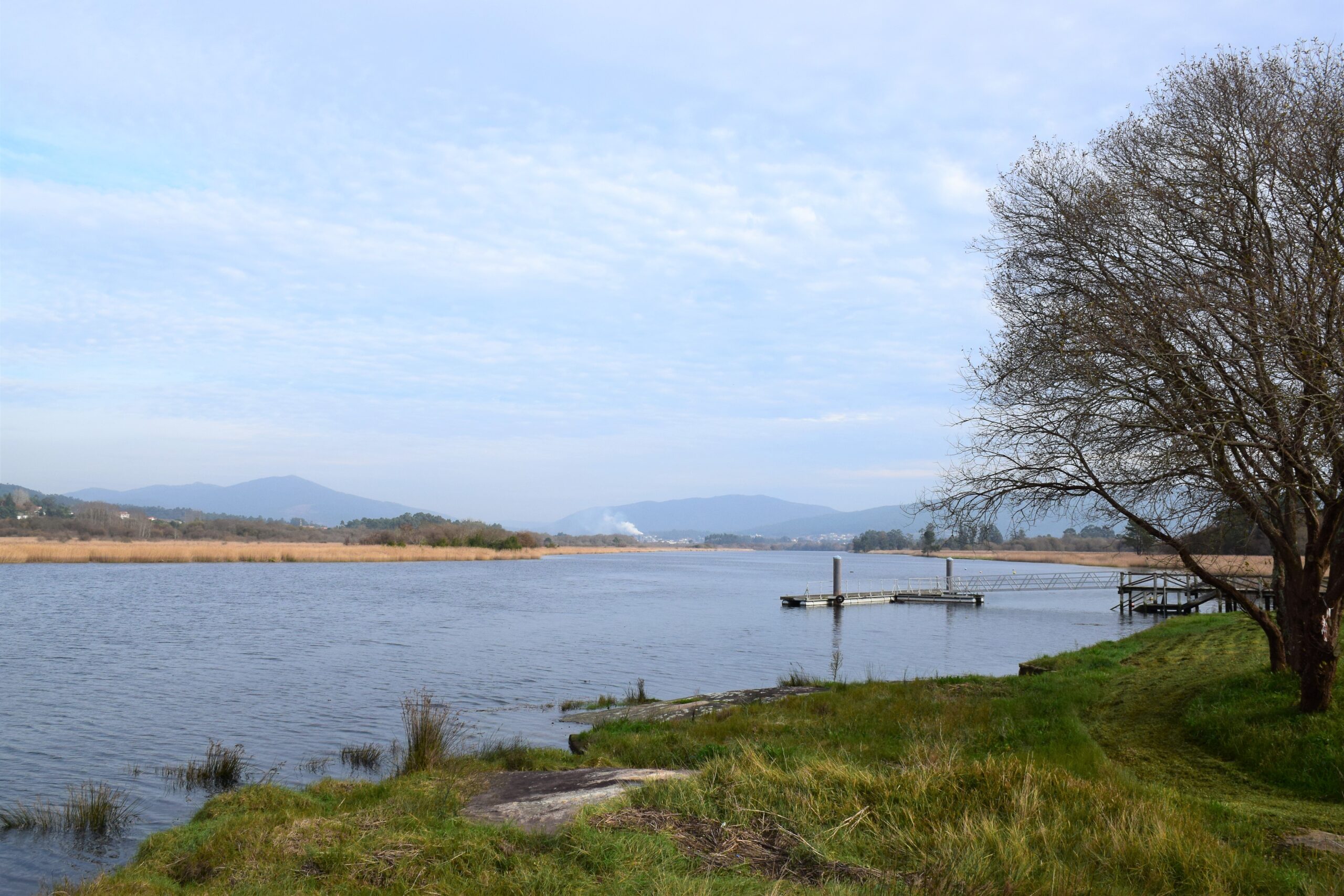
The Jacobean route of the Sea of Arousa and the Ulla River is an itinerary that commemorates the arrival in Galicia by the sea of the Saint James Apostle. The maritime-fluvial route passes through the Sea of Arousa and goes up Ulla River to Padrón.
Legend has it that the body of James accompanied by his disciples, Theodore and Athanasius, was due to a tradition, referring to the final resting place for the apostles of Christ in the land where they had preached and taught the gospel. They transferred him from Jaffa in Palestine, across the Mediterranean and the Iberian Atlantic coast, to the confines of the West. He entered through the Arousa Estuary and went up Ulla River until it reached Padrón, at the Roman city of Iria Flavia's river port. They would come in a stone boat that was possibly an ancient cabotage vessel used to move mineral rocks; therefore, it would be more accurate to say that it was a boat loaded with stone, omitted in the version from the 12th-century Codex Calixtinus.
The difficulty of this route, which would be done by boats, is low and consists of three main stages, which are Sanxenxo, Ribeira, and Padrón. These stages allow us to have a panoramic view of the Arousa River from the sea and the ascent of Ulla River, contemplating its mouth and take advantage appreciating the innumerable species of birds sheltered by the estuary that forms the river. On top of that, the forests on the riversides are an idyllic setting, where the river meets the sea
.
Once in Padrón, visitors obtain the Traslatio, which is the credential of having made this maritime-fluvial route, leaving just one stage to reach Santiago de Compostela to venerate the Saint and to obtain the Compostela.
To learn more
The “Traslatio” or Jacobean Route of the Sea of Arousa is a unique itinerary by sea. It is another manner in which to do the Way of Saint James.
Since the 1960s, the Jacobian Route of the Sea of Arousa-Ulla River Foundation has been rescuing the tradition of this maritime-fluvial crossing; however, it has only been in recent years that this crossing has become popular.
The beginning of this route should be either in San Vicente do O Grove, which would be the entrance to the estuary from the south, or in the Aguiño Port in Ribeira, which would be the entrance from the north.
From the north, the most enriching experience would be to make a series of stops in enclaves like Pobra do Caramiñal, one of the best-preserved villages with a rich historic-artistic heritage; then pass through Boiro and the port of Cruz Cape; and later approach Rianxo, the birthplace of many illustrious Galicians.
Another option would be to visit the Sálvora archipelago, taking advantage of its proximity. This archipelago belongs to the Maritime-Terrestrial National Park of the Atlantic Islands of Galicia, where everyone can enjoy the granite landscape, its nature, and the countless legends that surround it.
Another highlight of the Traslatio is Cambados, one of the most stunning towns in the South Estuaries (Rias Baixas), where one can take advantage of the opportunity to drink a magnificent albariño and tour around its old town. Continuing with this maritime route, visitors can arrive at the Arousa Island, linked to the mainland by a bridge approximately at Vilanoba, where the second stage of the Spiritual variant of the Portuguese Way ends.
From this point or nearby Vilagarcía, regular sea services depart in the season for those who do the Traslatio and for pilgrims who come on foot from Pontevedra.
On this route, one can also see the Cortegada Archipelago, which also belongs to the Maritime-Terrestrial National Park of the Atlantic Islands of Galicia. It stands out its laurel forest, reaching a height of up to twelve meters, and because it is the starting point of a maritime Way of the Cross (Vía Crucis) that accompanies the traveler during the rest of the journey. Later, it stops in front of the Western Towers (Torres de Oeste), remains of the ancient Catoira fortress, entering the mouth of Ulla River in Brañas of Laiño. The crossing ends in Pontecesures since the boats can no longer reach the nearby Padrón.
To know it better
The maritime-fluvial Jacobean route along the Sea of Arousa and Ulla River, also known as the Traslatio Route, commemorates the arrival by sea to Galicia of the remains of the Apostle James the Great (Santiago el Mayor) after his martyrdom in Jerusalem. According to the legend, an angel and a star guided the boat through this route, which ended approximately at the current Padrón County.
The route is also known as the Jacobian Traslatio, starting in Pedras Negras in O Grove, and ending in Iria Flavia, Padrón in the Coruña province. The Arousa Estuary and Ulla River cover twenty-two town halls. Twelve of them belong to the Pontevedra province: Cambados, Catoira, A Illa de Arousa, Meaño, Meis, O Grove, Pontecesures, Ribadumia, Sanxenxo, Valga, Vilagarcía de Arousa, and Vilanova de Arousa.
In 1963, the Jacobean Route Sea of Arousa and Ulla Foundation proposed the Traslatio through the Sea of Arousa and Ulla River, declared of cultural and Galician interest by the Galician Regional Government (Xunta) in 1999. Moreover, with this route, they issue the nautical charts necessary to obtain the institutional document "Jacobean Traslatio."
Gallery
Location
- Town
- Ribadumia
- Municipality
- Ribadumia
- Province
- Pontevedra
- Country
- Spain
The asset
- Type
- Xacobean Route
- Eco-destination
- Ría de Arousa
- Environment
- Natural
- Relevance
- Internacional
How to get there
- Access
- By sea By land
- Distance
- 4,900 km
The visit
- Accessible
- No
- Parking
- No
Coordinates
- Latitud
- 42.51525900
- Longitud
- -8.76553200