
O Grove. Submarine. Meloxo Port. Mussel Rafts
About this heritage
The O Salnés territory is a peninsula bathed by the Arousa estuary waters. Therefore, it is common for locals and foreigners to have contact with the marine ecosystems in tourist routes and leisure activities. One case is catamaran tours with underwater views, which is available almost every day throughout the year from the O Grove Port.
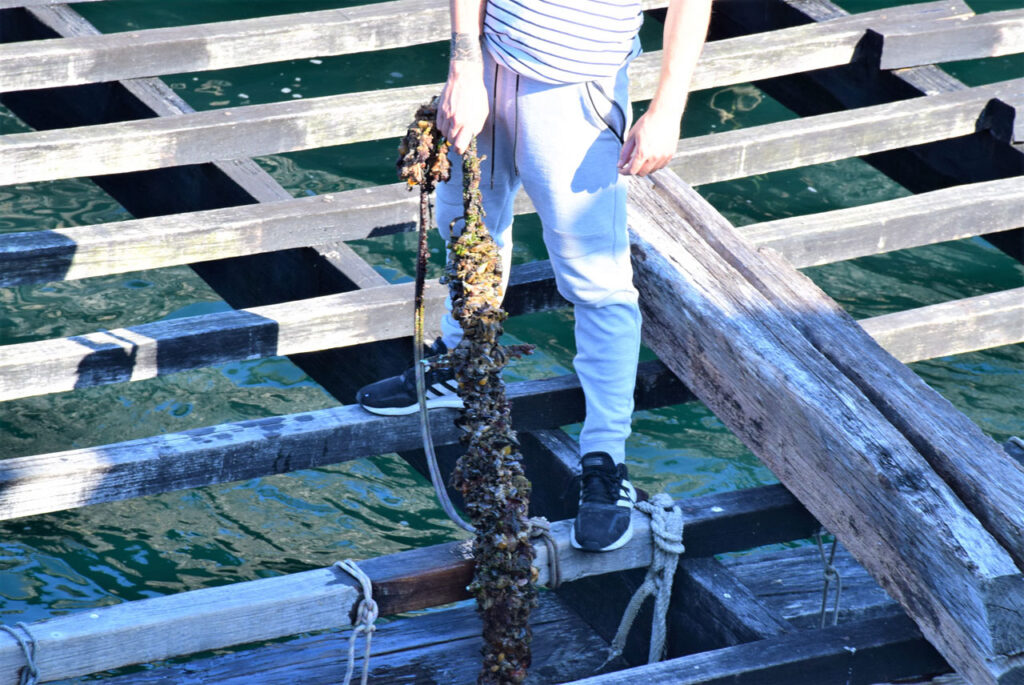
Usually, these routes last one hour, which includes a particular experience, where the boats approach the mussel rafts. The passengers get an explanation of Mussel culture while closely observing the structure of these structures and the mollusks themselves; the same thing happens with oysters or scallops. The contact with the sea is constant, thanks to the glass hulls of these boats. The younger visitors are invited to feed the seagulls, and it is quite probable, the sighting of short-beaked common dolphins (Delphinus delphis) and bottlenose dolphins (Tursiops truncatus). Other species that can be observed are a variety of cephalopods and diverse species of algae typical of these ecosystems.
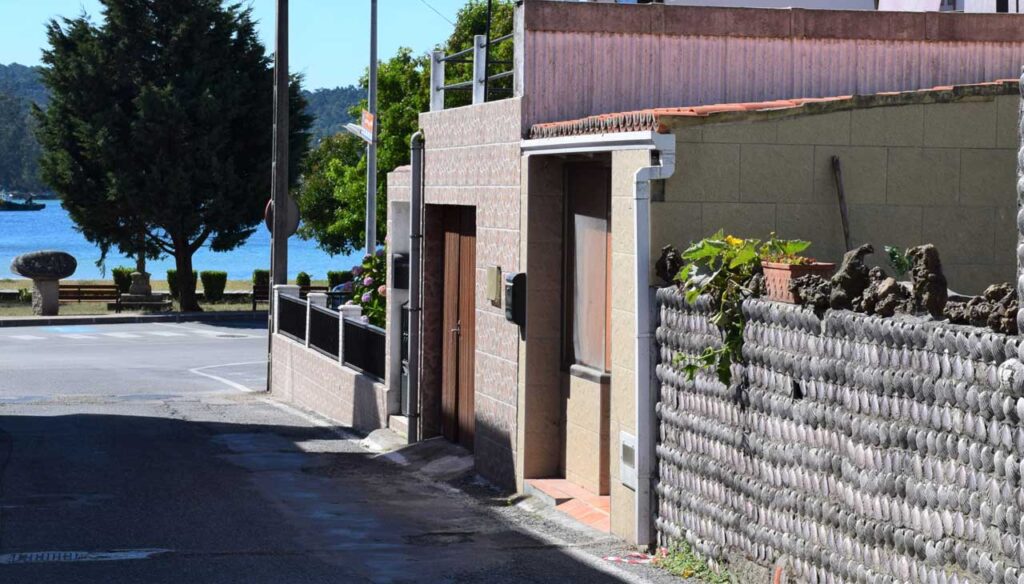
Moreover, Meloxo Port is one of the seafaring districts of O Grove, dedicated exclusively to the fishing and culture of mussels. In its vicinity, we can see traditional fishing and shellfishing boats, traditional wooden boat building (carpinterías de Ribeira), and ancient salted fish factories. It is said that the best mussel in the world is cultivated in this area. In its surroundings, there are many mussel rafts, where local sailors cultivate the highly prized mollusk.
To learn more
Catamaran rides with underwater vision are conducted in an area between O Grove, A Toxa, Cambados, and Arousa Island. In these one hour trips, the tour guides provide exhaustive explanations on the peculiarities of the Arousa Estuary and its rich seabed, delving into the cultivation of mussels, oysters, or scallops.
There are about 370,000 people a year demanding this type of activity known as the O Grove mussel boat. This venture not only provides educational learning of the Galician estuaries seabed but also offers tastings of the local wine and the most popular mollusks. The contact with the sea is constant, thanks to the glass hulls of these boats. The younger visitors are invited to feed the seagulls, and it is quite probable, the sighting of short-beaked common dolphins (Delphinus delphis) and bottlenose dolphins (Tursiops truncatus). Other species that can be observed are a variety of cephalopods and diverse species of algae typical of these ecosystems.
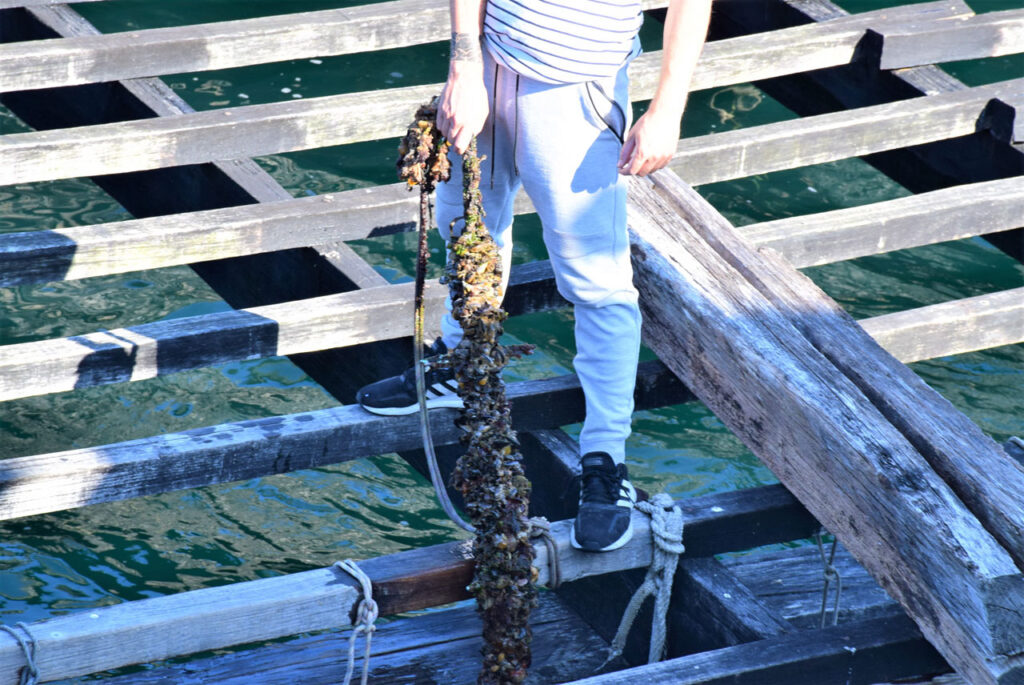
The visit to the floating platforms that give life to the mussel to observe up close their culture ropes and the marine seabed is an obligatory stop from this luxury underwater viewpoint. From the boat, it is also possible to contemplate the seafaring towns of Cambados, Ribeira, A Illa, Sálvora, and A Toxa.
The link between Galicia and mollusks, and more specifically mussels, is an indisputable fact. Since its first inhabitants took advantage of the low tide to get a rich seafood menu, things have evolved. They have progressed from a straightforward harvest to leading farming in the world of aquaculture, which is the primary economic pillar of many coastal towns. The history of mollusk culture began in the middle of the 18th century when the marinated Galician oysters were in full swing. The Councillor of Santiago de Compostela, Don José Cornide Saavedra, already said of the mussel: "its meat after that of the oyster is the best." At that time, mussel culture did not exist, as it is known today; they came from parks or specific areas subject to a system of concession held by some families. The mussel culture continued to develop gaining importance, and in the 19th century, the first farming experiences began to take place. In 1869, Don Paz Granells cites that in Carril within the Arousa estuary, the shellfishing workers turned the old oyster nurseries into mussel ones.
During the first decades of the 20th century, many attempts to achieve stable crops using fences or stakes were intensified. However, it was not until the 1940s that the great development of mussel culture began in Galician with the owner of "Rial mussel nurseries," Mr. Ozores Saavedra - Lord of Rubianes and Marquis of Aranda. He had been trying for some time to grow mussels on stakes, and it is then that he decided to change his method and try the suspended mussels' method.
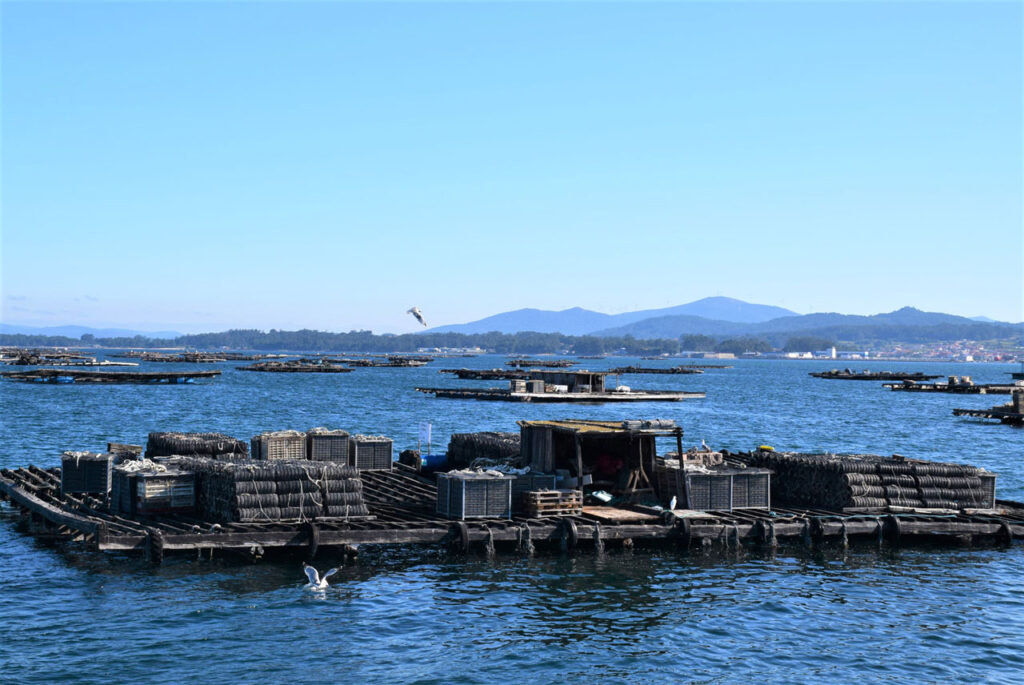
In 1945, the first mussel raft was anchored in the Arousa estuary; this prototype had a wooden cube-shaped single floater to support a framework-like, also made of wood, where they hung a few meters of raw esparto rope. The hopeful results reached by this pioneer mussel grower made them installed the following year ten rafts in the breakwater of the Vilagarcía de Arousa Port.
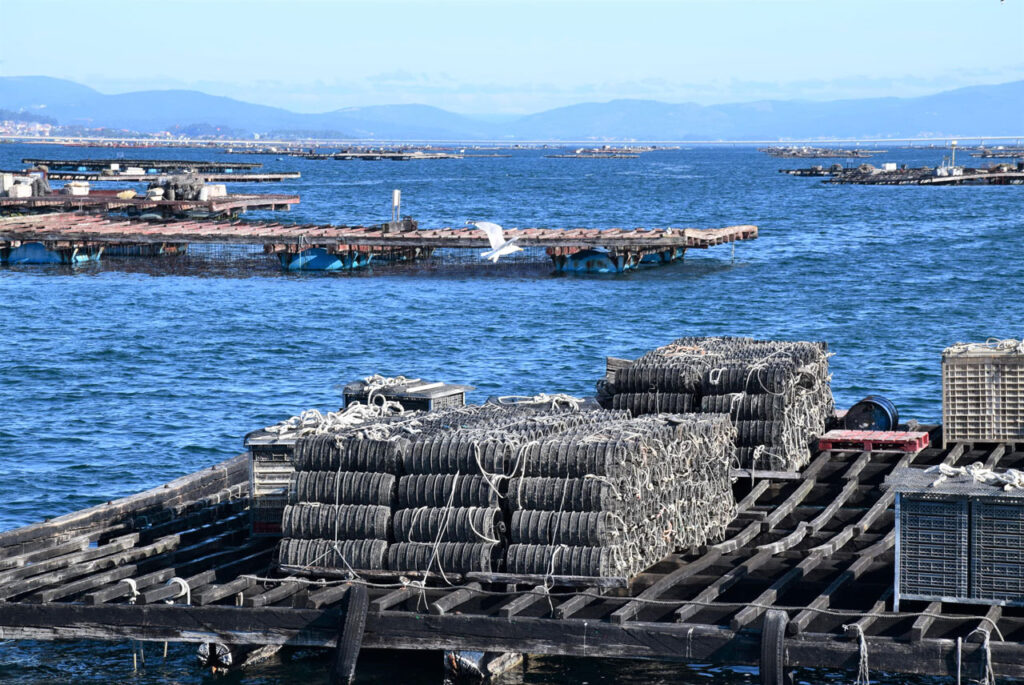
What followed was a decade of expansion, and by 1949, the anchorage had begun in the Vigo Estuary. In 1954, it spread to the towns of Cambados, O Grove, Bueu, Redondela, and Pobra do Caramiñal. In 1955, mussel rafts were installed in Sada, and finally, in 1956, they reached the Muros Estuary. These were years of continuous evolution for these mussel structures, as well as the working methods. First, they covered the wooden crates with cement to extend their life. Second, they increased the size of the framework thanks to metal cable tie rods, which helped to support the structure. Other producers adapted old boat hulls as a flotation system. Finally, they also replaced the esparto ropes for nylon ones.
Currently, in Galicia, there are more than 3,300 rafts anchored in the waters of their estuaries and dedicated to mussel culture, making our community a global power in aquaculture.
Moreover, Meloxo Port is one of the seafaring districts of O Grove, dedicated exclusively to fishing and mussel farming. In its surroundings, one can observe traditional fishing and shellfishing boats, riverside carpentries (traditional wooden boat building), and old salted fish factories. It is said that the best mussel in the world is cultivated in this area. In its waters, there are many mussel rafts, where local sailors cultivate the highly prized mollusk. In this magical place, next to a children's playground and the neighborhood's association, visitors can find the ruins of the Escuredo factory. Even though this is an industry still essential in the economic sector of this town, the Escudero old cannery closed its doors in the 70s. Its ruins belong to different neighbors and former factory workers, to whom the company "rewarded" with small fractions of the factory when at closing were not able to execute the corresponding payments.
Here, it is traditional to celebrate the magical night of Saint John (San Juan), an evening full of proposals that begin on the night of 23 and last until the early hours of the 24th. Besides bonfires, meals, and music, there are always traditional games for children and adults.
To know it better
Fishing, water sports, mussel farming, and shellfishing characterize O Grove County in the Pontevedra province.
Meloxo Port stands out as a seafaring district of O Grove within the Arousa estuary, where for many years, its inhabitants have engaged in fishing and mussel farming. Its visitors can not only stroll through this maritime area but also enjoy astonishing green landscapes. The boats in its port are dedicated to the capture and marketing of seafood and shellfish. The mussel is the most outstanding product in the area, which is considered the greatest in the world. The mussel rafts are structures placed neatly in the estuaries to culture these bivalves. In the Arousa estuary, they are large wooden platforms where thick ropes called "maromas" hang.
Gallery
Location
- Locality
- O Grove (San Martiño)
- Municipality
- O Grove
- Province
- Pontevedra
- Country
- Spain
The asset
- Type
- Port
- Eco-destination
- Ría de Arousa
- Environment
- Maritime
- Relevance
- International
How to get there
- Access
- By sea By land
- Port
- Puerto Meloxo
- Distance
- 0 km
The visit
- Accessible
- No
- Parking
- Sí
Coordinates
- Latitud
- 42.49184300
- Longitud
- -8.88753100