


The Vigo shipyards
About this heritage
Throughout its history, the city of Vigo has been integrating “metal” as a part of its identity. The birth and development of this industry during the 8th and 9th centuries, has been the foundation for what today is one of the most important cities and referral in the maritime sector, on the Iberian Peninsula.
The Roman era and its settlers, during their period of stay in this olívica (olive tree) city, left their mark through specific innovations applicable to the preserving of fish. This was the case of the salt factories, converting our city into what would be the most important source of economic activity; the sea. With the take-off of the canning industry, as well as the arrival of Citröen in the city in the 1950’s, the industrial and motor industries profile was completed.
The origin of the maritime industry in Vigo emerged with the arrival of the Catalonians in Galicia who, in the second half of the 19th century, managed to recover the Roman culture of salting (abandoned centuries earlier), integrating novel fishing arts and boats. Ideologists to changing row boats to sardine fishing boats (sardineros), the first boats built in Barreras, one of the main shipyards in the city. These vessels had steam motors imported from England, making them the pioneers of the model “Vigo type Steamboat” (Vapor tipo Vigo), which revolutionized the fishing sector of the city.
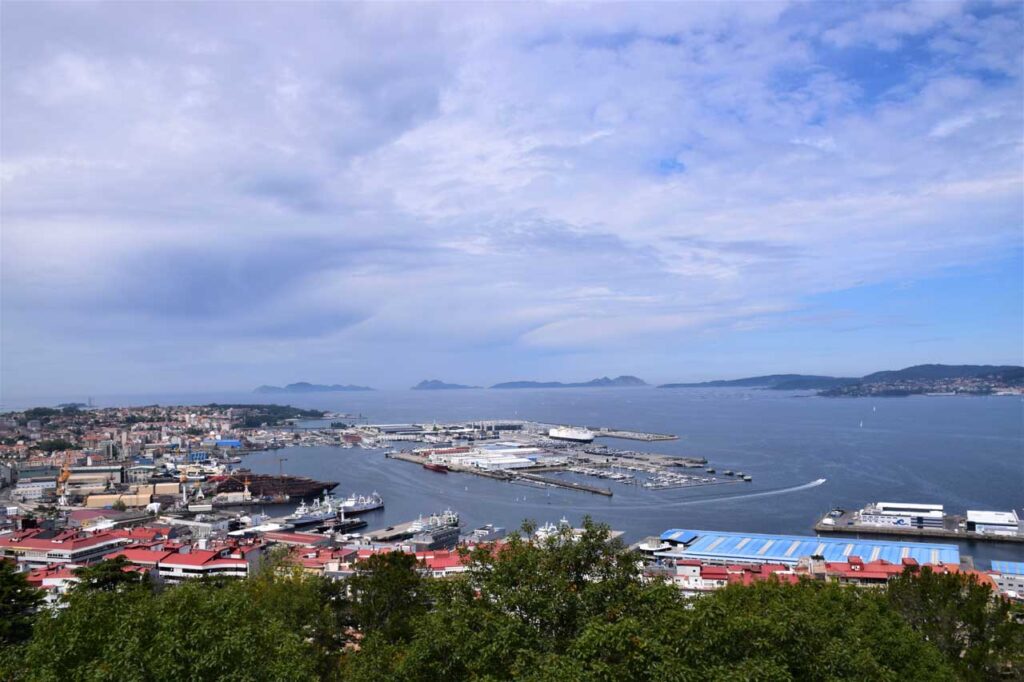
Today, Vigo stands out for its great maritime industry, which feeds from the Atlantic and its wealth. This has marked the character of the city and its people, defining them as innovative, open and hard working. The port of Vigo is an international port of commerce and transport, aspect which has favoured the development of the shipyards, fifteen of which operate in city, giving service to international accounts, as is the case of the Barreras Shipyard, which builds cruise ships for Ritz Carlton
To learn more
The industrial background of Vigo dates back to its origin in the 18th and 19th centuries, period in which the Catalonian immigrants, the majority from the Costa Brava, began their massive arrival in the Rias Baixas. These were go-getters who found the access to the Atlantic, an important beneficial source, thanks to the abundance of sardines which the Galician coast offered.
During this period, the fishing methods that the local fishermen of Vigo used, were not very efficient, nor did trading at the O Berbés market of the products they caught from the sea, provided sufficient subsistence.
The Catalonians were referred to as “encouragers” by their local fellow citizens, and they brought innovation with respect to vessels and the arts of fishing. This was the case of the “xábega”, a trawling net or Arabic origen, with a 300 to 600 metre cod-end, which needed to be towed by larger vessels than those existing in Vigo. This is the reason why they turned to oxen, carts, men and boys, to pull in the net from the shore. It was also the Catalonians who restored the art of salting, or the preservation of fish in brine; a millenary technique, evident in the archaeological remains of the Roman civilization in the city, an activity which had been abandoned centuries back. They started to install their production plants in the outer suburbs of El Arenal, later renamed the “Catalonian Suburb”.
In the later years of the 19th century, they began to substitute rowing boats or “gamelas”, for sardine boats “sardineros”; the latter boats with a steam motor imported from England, which revolutionized the era. These evolved toward a model called “Vigo type steamboat” (Vapor tipo Vigo), which were built in Barreras, with an LOA (overall length) between twenty to twenty five metres, and weighing 100 tons. The speed of these vessels registered between eight to ten miles; a maritime and fishing milestone. A new technique for capturing was introduced on these vessels. This was called “the couple” (la pareja), activity developed by the shipbuilders of the present Bouzas suburb in Vigo. This method was characterised by the required co-ordination of the vessels that carried out this activity. At the turn of the century, there were 130 of these types of ships on Bouzas’ wharf.
The “Vigo type steamboats”, built in Barreras, reached such a level of prestige that they branched out throughout the Spanish coast. Its history, however, does not end here as, thanks to their extraordinary navigability, they were acquired by the allies during the 1st World War, and used as patrol boats along the French coast, and as minesweepers in the Dardanelles Strait.
The shipyards, together with the emergence of the canning industry and arrival of the automotive sector (in the 1960’s last century, with the arrival of Citröen), made up the idiosyncrasies of the working citizen of Vigo. Vigo is the central potency of the maritime industry, which integrates fishing, transformation and preserving of sea products: “Conxemar”, as well as “Navalia”, other examples of the shipbuilding sectors. With the help of the Port of Vigo, centre of international trade and transportation, the culture and character of this innovative city has been defined, industrial motor of Galicia.
To know it better
The city of Vigo, located in the province of Pontevedra, stands out for its fishing and industrial activities. The former activity generates 6,000 jobs, just from the activities deriving from the port. The 357 fishing companies nestled in this major city, invoice more than 3,000 million euros annually. The province of Pontevedra is, in fact, the province in Spain where the most fish is unloaded.
The maritime industry has, nevertheless, always been of importance in the province of Pontevedra. The need to venture out into deeper seas and with larger boats, gave rise to the establishment of shipyards on the Vigo estuary. The maritime industry in Vigo is the leader in private ship building in Spain and part of its history can be discovered in the permanent exhibition at the Maritime Museum of Galicia “Museo del Mar de Galicia”.
Location
- Town
- Urbano
- Municipality
- Vigo
- Province
- Pontevedra
- Country
- Spain
The asset
- Type
- Shipyards
- Eco-destination
- Ría de Vigo
- Environment
- Urban
- Relevance
- International
How to get there
- Access
- By sea By land
- Distance
- 0,300 km
The visit
- Visitable
- No
- Accessible
- No
- Parking
- No
Coordinates
- Latitud
- 42.24181700
- Longitud
- -8.72539100