
Vilanova de Arousa. Pazo Baión
About this heritage
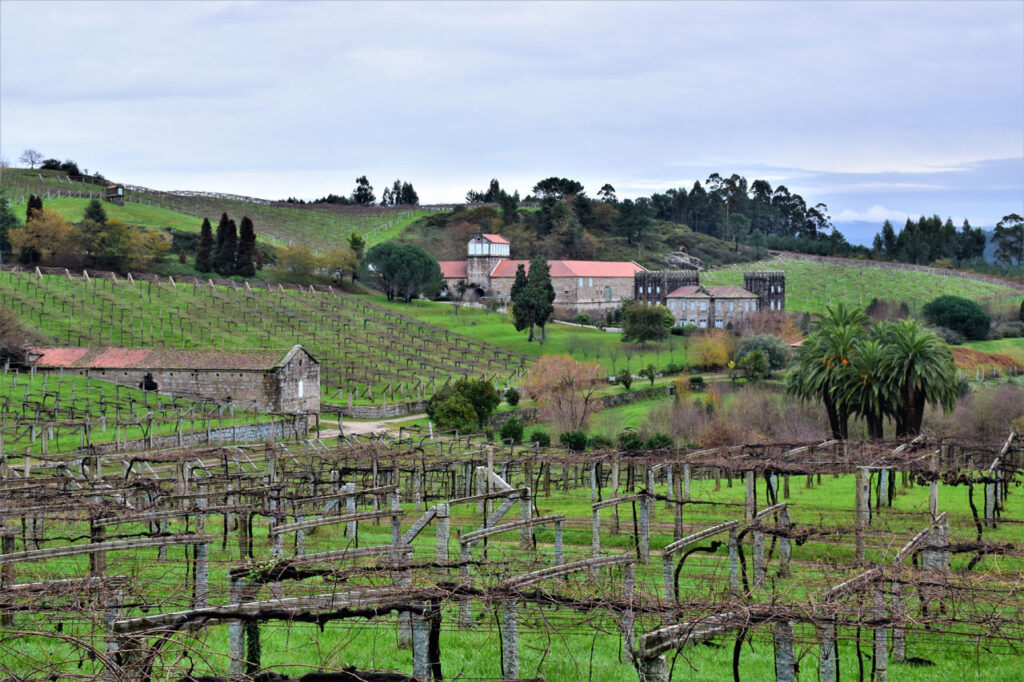
In the parish of Baión, Vilanova de Arousa, there is a rustic property with its own identity that today is dedicated to the production of Albariño wine: Pazo Baión. The 287 hectares surrounding it are dedicated to the plantations of this type of grape and the building to agricultural tasks and as a warehouse - all made of stone -. Pazo Baión gained great popularity for having been owned by the drug trafficker Laureano Oubiña and later becoming a symbol of the fight against drug trafficking. It currently belongs to Bodega Condes de Albarei.
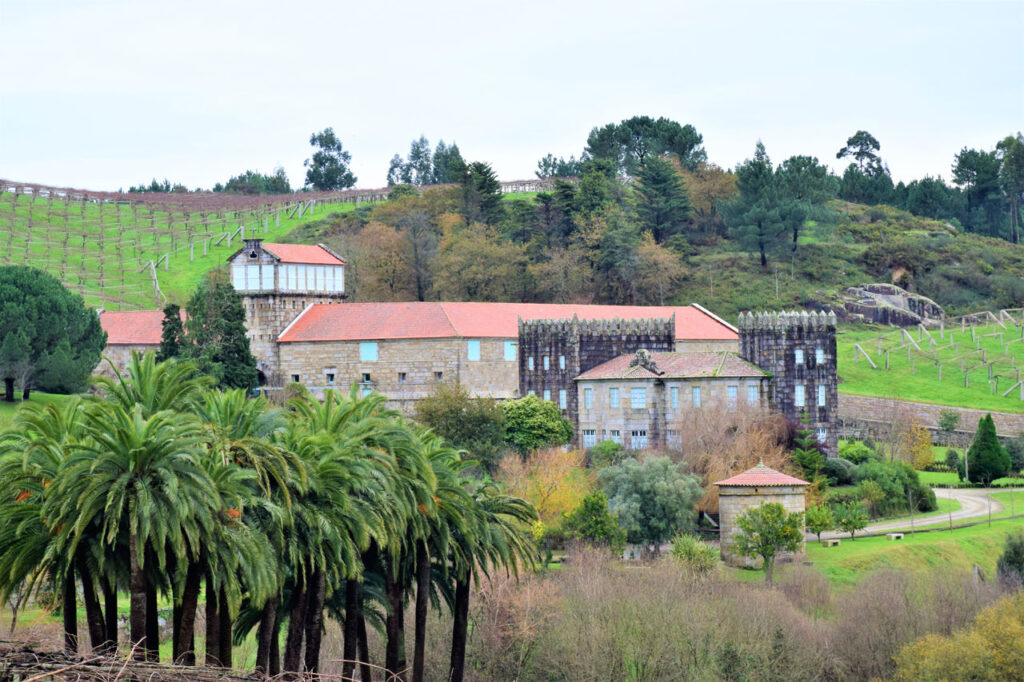
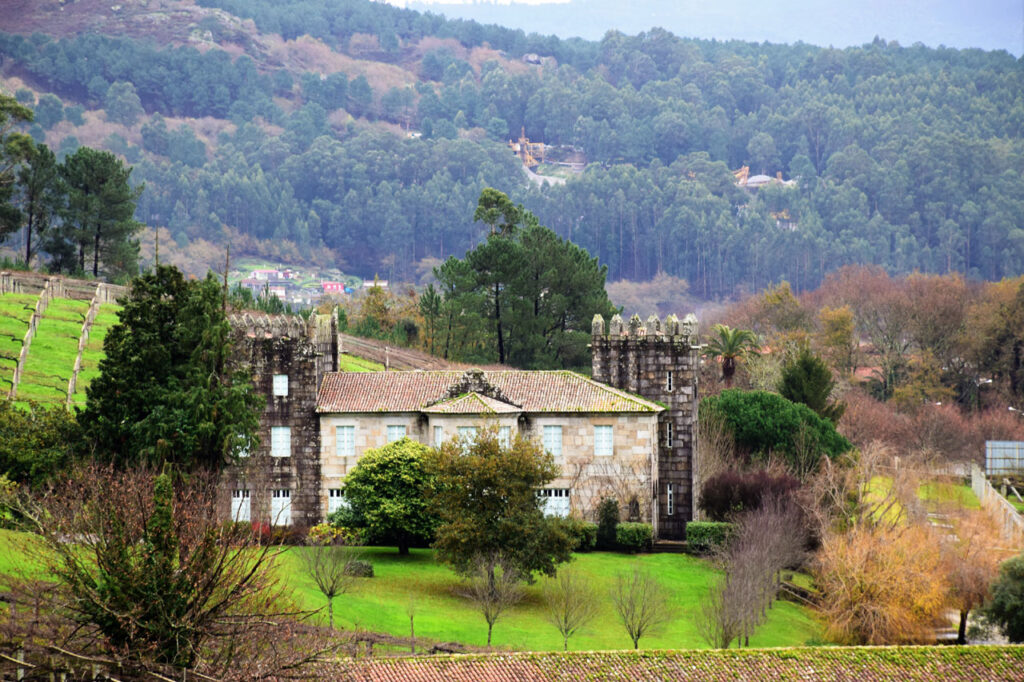
The walls of Pazo Baión hold the history of the most important noble families of Galicia. Founded in the 15th century by the Sarmiento family, Pazo Baión hosted some of the most prominent lineages of Galicia: the Figueroa, the Camba, and the Soutomaior. Among its centuries of history, there is also mention of Galician emigration; Don Adolfo Fojo, a wealthy emigrant returned from Argentina, bought the property and carried out the greatest reform of the old pazo, giving it the architectural structure it currently has with two Victorian-style towers. He also commissioned the construction of a cowshed and a winery. The last heirs of Don Adolfo Fojo sold the property in the 1970s, when the first technical plantation of Albariño Rías Baixas was carried out. This vineyard then became a reference for professionals in the sector. The sales contract included an important social project, whereby 5% of sales are allocated to programs for the prevention, treatment, and reintegration of drug addicts.
Additionally, Condes de Albarei undertakes an architectural and landscape renovation of the estate under the direction of Galician architect César Portela, National Architecture Award winner, thanks to which this jewel of our artistic and cultural heritage revives its golden era.
To learn more
Pazo Baión is part of the idiosyncrasy of O Salnés. A clear example of Galician rural architecture, with origins in the 15th century, this distinguished property of 30 hectares features one of the most spectacular vineyards in the global wine scene. Today it includes a D.O. Rías Baixas winery operated by Condes de Albarei.
The first building was a medieval tower house owned by the Priegue family. The current structure began construction in 1928 by the Fojo family, from whom it took its name during much of the century they inhabited it, known as "Finca dos Fojo." In 1987, it was acquired—for 275 million pesetas—by a company formed by three local residents: Laureano Oubiña, Sito Miñanco, and Pablo Vioque, with ownership held by Laureano Oubiña and his wife Esther Lago. They were the most notorious smugglers of the decade. Finally, the Pazo was seized in 1995 during Operation Nécora, confiscated by Judge Baltasar Garzón. In 1996, the State leased its management to Freixenet.
In 2007, the Coordination Board for allocations of the National Drug Plan finally put the Pazo up for public auction. In 2008, it became the property of the Cambados cooperative, Condes de Albarei, which offered 15,102,000 euros for the rustic property, compared to just over thirteen million from the other two bidders. In September 2008, the estate began its rehabilitation process with an investment of ten million euros to condition the land and make it more profitable.
This project includes the construction of a visitor reception center and the adaptation of the winery to optimize its wines, producing nearly 160,000 bottles of white wine per year. This new renovation includes the remaining modules of the building, with the help of architect César Portela, turning the Pazo into an enotourism center with over 50,000 visitors annually.
This renewal process includes the creation of a new corporate image and brand for the historic complex, a strategy to completely eliminate its link to drug trafficking. To this end, a contest was held with a jury composed of Isaac Díaz Pardo, César Portela, Antón Patiño, Francisco Leiro, and José Manuel Casabella. The winner was Madrid native Lucas Gil-Turner with his project "Metamorphosis."
The last sales contract established the allocation of a percentage of the income from operations. Thus, the Pazo was to provide employment during the following fifteen years to a percentage of drug addicts undergoing rehabilitation, aiming to facilitate their integration into the labor market. Another commitment made by the Galician winery, as mentioned earlier, was to allocate 5% of the Pazo's annual turnover to programs for the prevention, treatment, and reintegration of drug addicts.
To know it better
In the parish of Baión—belonging to the Pontevedra municipality of Vilanova de Arousa—there is a classic Galician property dedicated to the production of Albariño Rías Baixas. This is Pazo Baión. In this manor house lived Laureano Oubiña, a very important Galician drug trafficker, along with his wife, Esther Lago, who acquired the property in 1987. After being arrested during Operation Nécora, the pazo was put up for public auction. In 2008, it was acquired by the winery Condes de Albarei.
The company decided to remodel the estate and its 30 hectares to dedicate them to wine production and enotourism. In fact, guided tours are currently offered to explain its history, wine production, and preservation, with the possibility of tasting its wines. It is located in a natural environment with panoramic views. The town hall of Vilanova de Arousa is located in the province of Pontevedra. Integrated into the O Salnés region, it is a place with antiquity and, therefore, history.
Gallery
Location
- Town
- A Abelleira
- Municipality
- Vilanova de Arousa
- Province
- Pontevedra
- Country
- Spain
The asset
- Type
- Manor winery
- Eco-destination
- Ría de Arousa
- Environment
- Rural
- Relevance
- International
How to get there
- Access
- By land
- Distance
- 9,600KM
The visit
- Schedule
- Guided tour hours: Wednesday to Sunday from 11:00 to 14:00 and from 16:00 to 19:00
- Visitable
- Yes.
- Accessible
- Sí
- Parking
- Sí
- Signposted
- Yes
Coordinates
- Latitud
- 42.56414700
- Longitud
- -8.72128400