


Product. Cuttlefish. Fishing´s arts
About this heritage
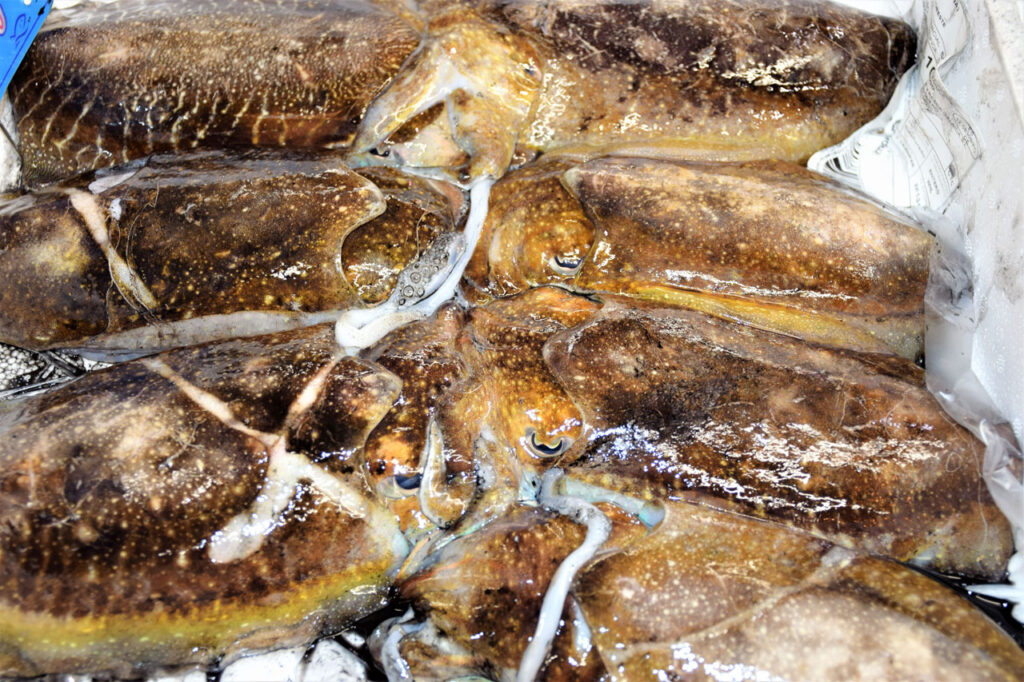
The cuttlefish is a decapod cephalopod mollusc, it has 10 tentacles and is also known as choco, sepia, jibia or cachón in Spanish language, it belongs to the sepiidae family. The arms have numerous suction cups, 2 of its tentacles are used to capture the prey, as they are entirely retractable and they end in a mace with suction cups.
Its body is flattened and oval in shape. The shell, called cuttlebone, is calcareous and is completely covered by its body.
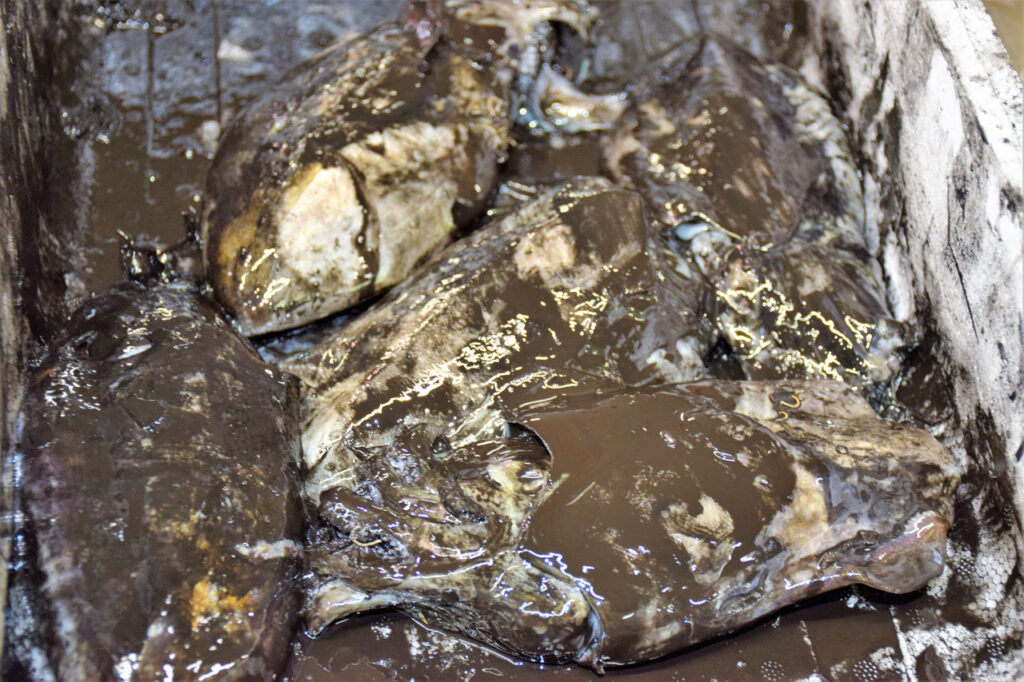
It lives in sandy seas of sea´s bottoms where it is partially buried, it also takes advantage of aquatic herbs and algae in areas near the coast. It lays its eggs on corals, algae and shells, and if it has ink, it injects it into the membrane that covers them, which remains dark and allows them to hide better.
The choco (cuttlefish) is caught all year round and its fishing is enjoyed by a large number of enthusiasts. For its fishing, different gears are used, that is to say, nasa (artisanal fishing creels) for cuttlefish, trammel nets, miño (similar to trammel nets, but longer) trawling arts like the boliche or chinchorro (different kinds of fishing nets) “poteira" (traditional fishing gear), and the curious system of the “femieiro", that consist of using a female of cuttlefish as reclamation to attract the males.
The optimum fishing season for this species is from the beginning of summer to the end of the year. In Galicia, we eat cuttlefish in its own ink with white rice, although it can be prepared in other ways.
To learn more
The choco or cuttlefish can cover small distances at high speed thanks to its ability to expel water under pressure through an opening that works like a siphon behind its head and serves to expel a jet of sepia-coloured ink with which it darkens the water and facilitates its escape by leaving its enemies behind. This escape technique is also used by the squid although in this case, the ink it expels is black.
To cook the choco is prepared empty, clean, devoid of its internal organs and head and tentacles. The juicy body, shiny and firm flesh is cut into strips, floured and fried. It has a high nutritional value, its meat is rich in protein and low in fat, it also contains important amounts of vitamins B and D, as well as phosphorus, potassium, magnesium, calcium and iron.
As it could not be otherwise, in Galicia we also have the choco festival. It is an event that takes place in May, in a town of Vigo´s estuary, the Festival of the Choco de Redondela (Cuttlefish festival in Redondela), and its main celebration reason is related to San Simón´s cove and the abundance of this species in its waters that are captured by the own fishermen of the place using traditional gears like the nasas (artisanal fishing creels), with which they get to capture specimens that can reach 2 kg.
To know it better
The choco (in Spanish language) is a cephalopod known as cuttlefish, although it also has other names such as jibia and cachón. In Galicia the name choco is more common, but in Mediterranean ports they prefer jibia and cachón.
This cephalopod can reach 30 to 40 centimetres long and it lives on the sea´s bottoms. It feeds on small molluscs, crabs, shrimps, fish and others of the same species.
In Vigo and in Pontevedra, the Xunta de Galicia (Galician government), prohibited this product´s fishing during the summer months of 2019, since the species is scarce in the waters. The following fishing gears are usually used to catch cuttlefish: pots, trammel nets and trawl nets. However, if we are in shallow waters, more traditional techniques such as lures can be used.
Gallery
Location
- Town
- Redondela
- Municipality
- Redondela
- Province
- Pontevedra
- Country
- Spain
The asset
- Type
- Fish product
- Eco-destination
- Ría de Vigo
- Environment
- Maritime
- Relevance
- Regional
How to get there
- Access
- By sea By land
- Distance
- 0 km
The visit
- Accessible
- No
- Parking
- No
Coordinates
- Latitud
- 42.29398200
- Longitud
- -8.61628800