
Cambados. Fefiñáns Manor Winery. Square, Bridge and Church
About this heritage
Cambados is a historic site, considered one of the most beautiful, admired, and interesting tourist destinations in Galicia. Located in the Ría de Arousa, it boasts numerous manor houses, noble homes, squares, cobbled streets, and museums; spread throughout the three ancient towns of Fefiñáns, Cambados, and Santo Tomé do Mar. It was declared a Site of Cultural Interest (BIC) in 2001. Birthplace of illustrious Galicians such as Ramón Cabanillas, Emilia Pardo Bazán, and Ramón María del Valle Inclán, it is part of one of the eight routes of the Camino de Santiago: the Maritime-Fluvial Route through the Ría de Arousa and the Ulla River. Cambados is also known as the "Capital of Albariño Wine." Starting point of the Wine Route that hosts 22 wineries belonging to the D.O. Rías Baixas.
To learn more
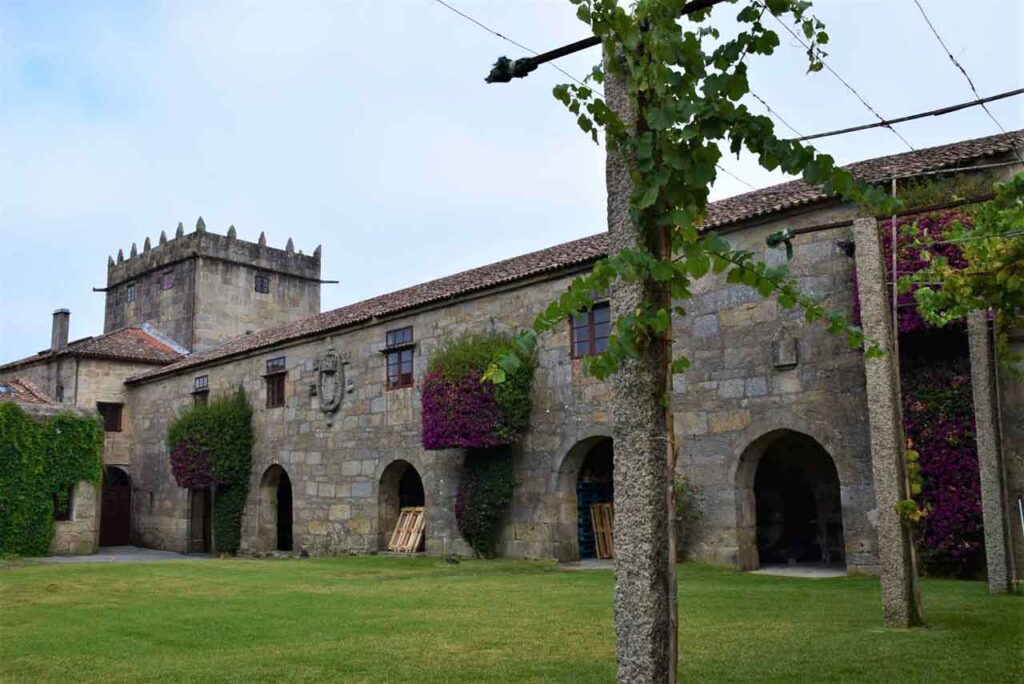
It also features the first ethnographic and wine museum in Galicia, one of the first in Spain. Within its surroundings is the Pazo de Fefiñáns, a medium-sized estate dedicated to the cultivation of Albariño. It is an "L"-shaped building, well preserved, with a ground floor and an upper floor. Built in the 16th century by order of Juan Sarmiento y Valladares, it was completed by his nephew Gonzalo de Valladares, 1st Viscount of Fefiñáns, during the following century. Of Renaissance architectural style, its exterior features two circular balconies at both ends. The manor stands out for its large tower with battlements and an arch-bridge, with clear Baroque vestiges. The cellars, from which the Albariño labeled "Pazo de Fefiñáns" is produced, are located on the ground floor. One of the most interesting spots in Galicia is the Plaza de Fefiñáns, a peculiar cobbled square of 2,500 square meters where you can admire the Pazo, the beautiful surrounding houses, and the Church of San Benito. With a rectangular nave and Romanesque style, this church dedicated to San Bieito (Benito) was rebuilt in the 17th century. The building's architecture is Neoclassical, but its two lateral bell towers are Baroque in style, between which there is an apse with a stone cross (cruceiro). Each bell tower houses a medium-sized bell. In the past, the church had four arches, of which only one remains visible today. The church interior is Gothic in style, where you can admire a large vault and two chapels containing the tombs of Don Gonzalo Valladares and Doña María Ozores, his wife. In the square, there is the only remaining arch-shaped bridge of the four that once existed. These were used by the manor's nobles to move between the different parts of the estate or to access the private area they had in the Church of San Benito.
To know it better
Don Gonzalo de Valladares, I Viscount of Fefiñáns, was the one who invested all his heritage and effort to make Cambados what it is today. One of the richest tourist spots in the Rías Baixas, both for its historical ensemble, gastronomy, and natural surroundings. The greatest example of his legacy is found in the Pazo de Fefiñáns, of Renaissance architectural style, as evidenced by its façades. Its construction began under the guidance of Juan Sarmiento y Valladares, Don Gonzalo's uncle. The west side of the pazo is dedicated to Don Gonzalo, and the south side to his son, Don Fernando de Valladares and II Viscount of Fefiñáns. It is a very beautiful building, constructed in an L-shape, with attractive circular balconies at its ends.
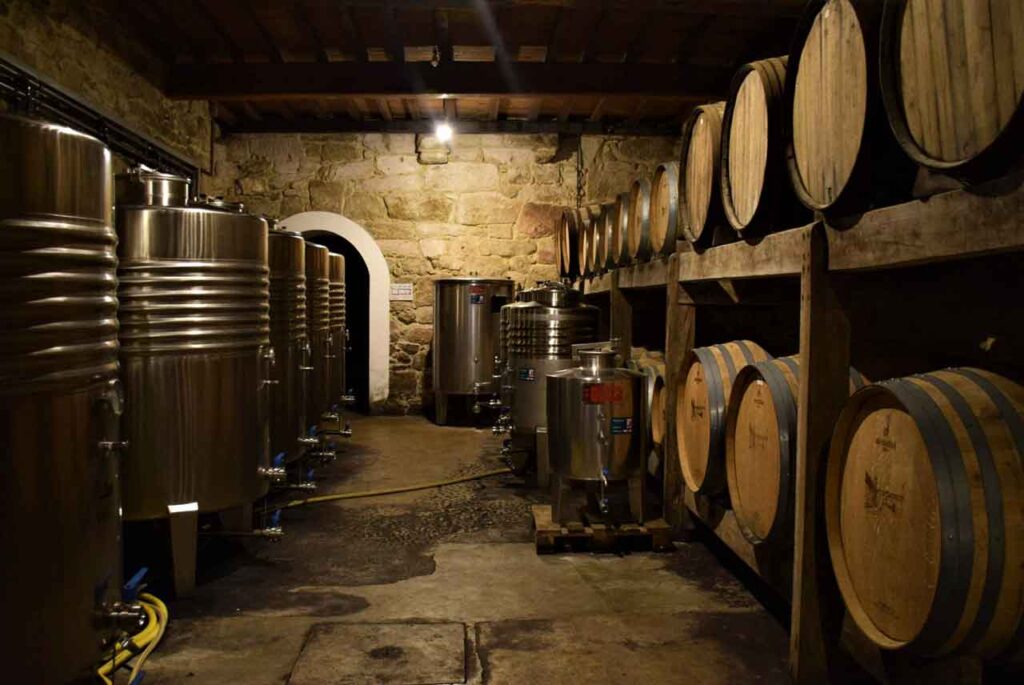
Above the two main gates of the pazo's entrance, the heraldic shields can be seen, carved with the symbols of the family lineages. Over time, the Pazo passed into the hands of the Marquises of Figueroa, whose descendants still retain ownership. Currently, on the ground floor of the pazo, there are two wineries dedicated to Albariño wine, with Denomination of Origin. One is known as the "Pazo de Fefiñáns" Winery, a registered trademark since 1928, while the other is called the "Joaquín Gil de Armada" Winery. The Pazo was where Albariño wine was bottled for the first time and is believed to be where the first Albariño vine of O Salnés was cultivated. It currently houses one of the oldest wineries in Galicia. In 2012, this majestic pazo was declared a Property of Cultural Interest.
Cambados itself was declared a Property of Cultural Interest (BIC) in 2001. Here one of Spain's oldest enogastronomic festivals is celebrated. Every first weekend of August, "La Fiesta del Albariño" takes place, declared of National Tourist Interest. The Plaza de Fefiñáns is formed by the Pazo de Fefiñáns, the arch-bridge, the watchtower Torre del Homenaje, and the church of San Benito, making it one of the most beautiful and admired architectural ensembles in Galicia. It was formerly known as the market square, as the weekly market was held there.
The Church of San Bieito (Church of San Benito) is a building dating back to Romanesque times, set within a rectangular nave. Around the 15th century, it was remodeled, and in the 17th century, it was essentially rebuilt by order of Don Gonzalo de Valladares. It was at that time that the temple was consecrated to San Benito. It is located in Plaza de Fefiñáns. Today, access is possible via stairs at the rear or others on its lateral or main face. Noteworthy are two granite figures representing warriors adorned with a shield and a mace. These figures are known as the Balboa and are said to have been placed there to protect both the church and the Plaza. Formerly, four arches could be seen in the church, of which only one remains today. In 1843, a decision was made to remove those arches, arguing they obstructed the passage of the weekly market held there, as well as people traveling on horseback or carts loaded with firewood. The person responsible for this decision was Javier de Zárate y Murga, Marquis of Montesacro. The building's architecture is neoclassical in style, but its two lateral bell towers are Baroque, including an apse with a cruceiro. Each bell tower has a medium-sized bell. The church's interior is Gothic in style, where one can admire a large vault and two chapels housing the tombs of Don Gonzalo Valladares and Doña María Ozores, his wife.
Another of Fefiñáns' most unique elements is the arch bridge that connects the Palace with part of the gardens. Originally there were two, but one was destroyed. This Baroque-style arch-bridge is located at the northern end of the pazo and was once accompanied by three others, complementing the architectural ensemble of the Pazo de Fefiñáns.
Gallery
Location
- Town
- Dispone de visitas guiadas en Castellano, Gallego, Inglés y Francés.
- Municipality
- Cambados
- Province
- Pontevedra
- Country
- Spain
The asset
- Type
- Old town
- Eco-destination
- Ría de Arousa
- Environment
- The Pazo de Fefiñáns or Palacio de Fefiñanes is located in the municipality of Cambados, in the province of Pontevedra, and gives its name to the square where this building stands, making it the most well-known site in the municipality. Additionally, the square also includes the church of San Benito, the arch-bridge, and the watchtower Torre del Homenaje. Formerly, this space was known as the market square, as the weekly market was held there. The pazo was built by Don Juan Sarmiento Valladares in the 16th century; its floor plan is L-shaped and features large circular balconies. During the 17th century, various changes were made under the direction of the Viscount of Fefiñáns, Don Gonzalo Sarmiento de Valladares. Later, the palace passed into the hands of the Marquises of Figueroa. Today, on the ground floor of the pazo are the "Bodegas del Palacio de Fefiñanes," where you can find the "Albariño de Fefiñáns" wine, a brand dating from 1928, and the Gil Armada Winery and distillery.
- Relevance
- Cambados. Pazo winery of Fefiñáns
How to get there
- Access
- By land
- Distance
- A pié a menos de 30 minutos
The visit
- Visitable
- Guided tours are available in Spanish, Galician, English, and French.
- Accessible
- No
- Parking
- No
Coordinates
- Latitud
- 42.51915600
- Longitud
- -8.81321100