


Island of Arousa. Interpretation Center of Preserved Foods
About this heritage
The Interpretation Center of Preserved Foods located in the old Goday factory is the first industrialized cannery in Galicia. It is in Palmera Steet, in the Town Hall square, on the island of Arousa province of Pontevedra.
The building was restored between 2000 and 2006 by Manuel Gallego Jorreto and is reminiscent of the Catalan modernism. It is part of the Museums of the Galician-Portuguese Cultural Tourism Network and of the work of those who work in the sea; it is a tribute to seamen, its ports, and its industry.
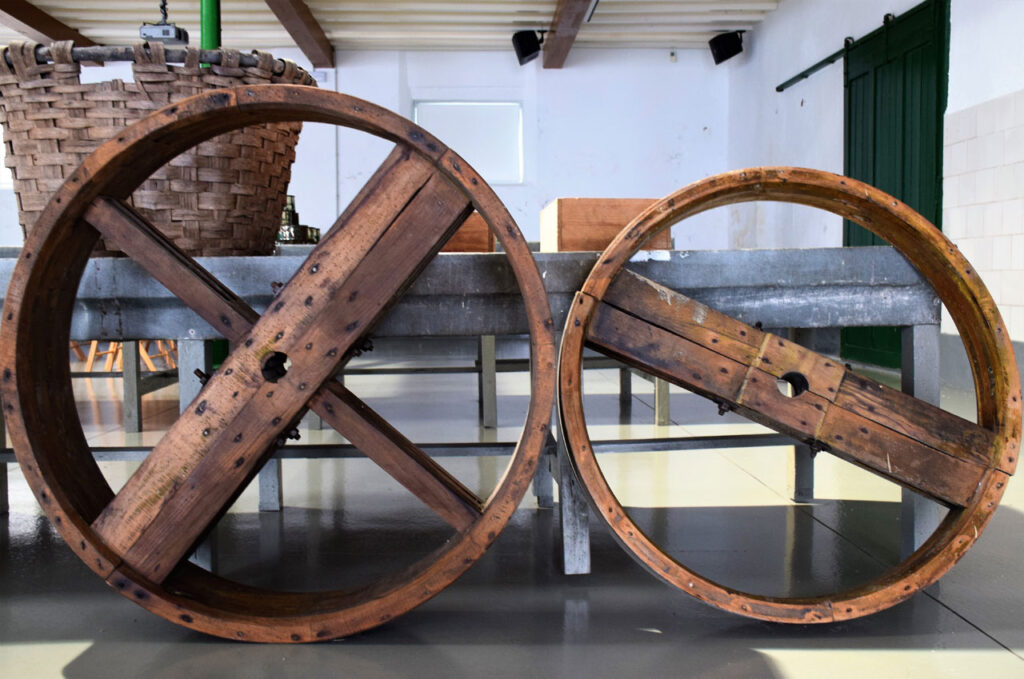
Visitors can enjoy the permanent exhibition about the production process of preserved foods in the nineteenth century and also an exhibit of old photographs. Besides, they maintained in perfect condition an original steam engine as a sample of the machinery used at that time.
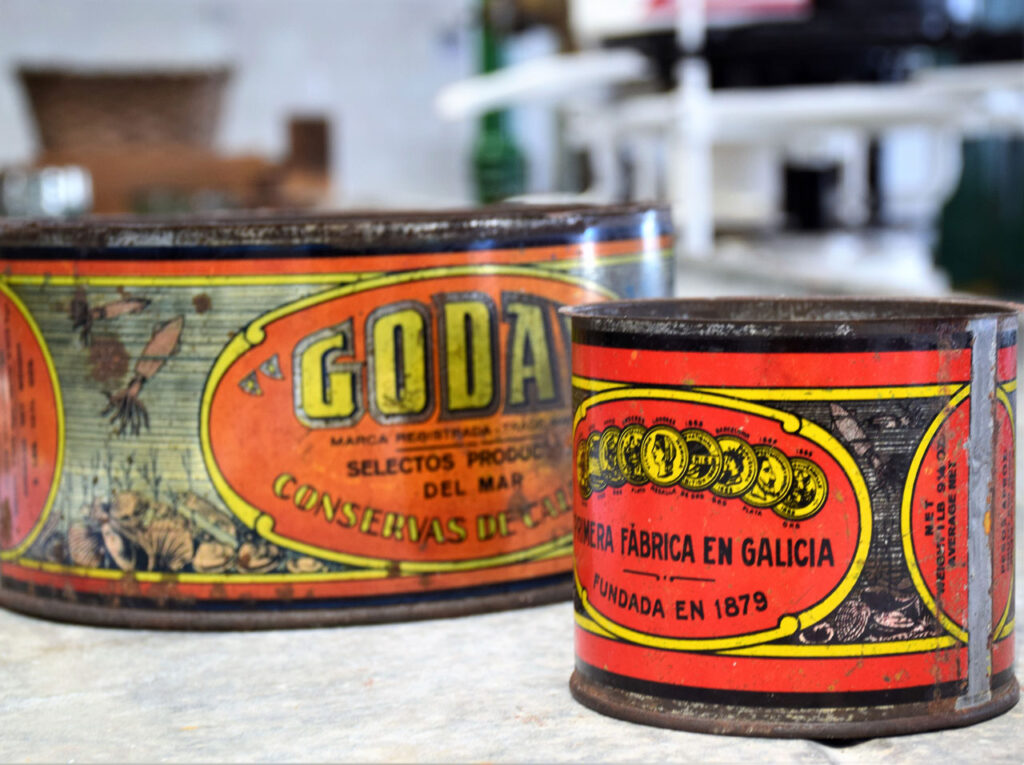
In the vicinity of the museum house is the old dock of Pau, the salting factory, and the residence of the Goday family. The Goday family is an example of Catalan emigrants settling in Galicia. Juan Goday Güal founded a salting factory in 1843, and in 1879, he started the canning factory, gaining an enormous recognition for his products.
The Interpretation Center of Preserved Foods is since 2011 a Blue Flag Center, a prestigious award given by ADEAC. It also has the Tourism Quality Distinction granted by TURESPAÑA through the Integral System of Tourism Quality in Destination, SICTED.
To learn more
Juan Goday Güal was the founder of this old canning factory and an example of Catalan emigrants, who started in the 18th century to settle in Galicia. In 1843, he started his salting factory and aware of the innovations being made, in 1879, he set up his canning factory, the first in Galicia, acquiring renowned prestige with their products on the foreign market.
In 1881, King Alfonso XII visited the factory, and in 1882, he appointed them as suppliers to the Royal House.
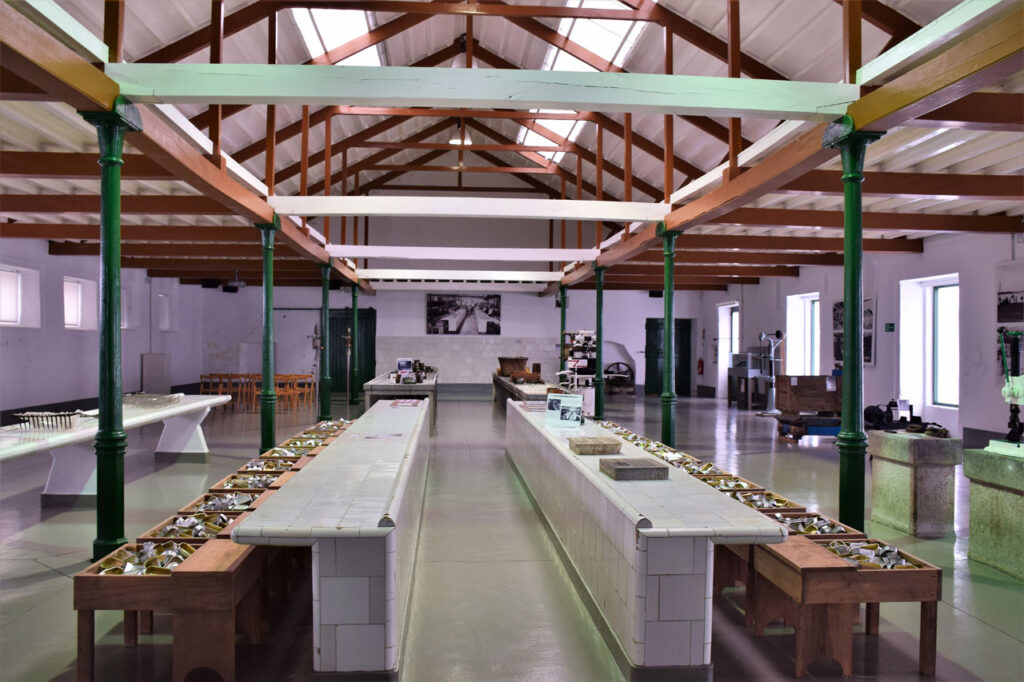
The Interpretation Center houses the initial structure of the factory with the original cleaning and oiling table of the time, as well as the steam engine that gave movement to the whole factory.
The Interpretation Center of Preserved Foods is since 2011 a Blue Flag Center, a prestigious award given by ADEAC. It also has the Tourism Quality Distinction granted by TURESPAÑA through the Integral System of Tourism Quality in Destination, SICTED.
The Center and the Pier of Palo are the relics that prove when the industrialization started in the Arousa area. The wooden dock was built to serve the factory for private use, and the boats berthed to unload the fish. Once in the Island of Arousa, to get to the Center, look for the Town Hall or the Auditorium; all are in the same area.
To know it better
From the 18th century onwards, many Catalans came to Galicia to dedicate themselves to canning. One of them was Juan Goday Güal, who founded the old canning factory of the Island of Arousa. In 1843, Goday set up a salting factory where techniques were used to preserve foods, such as fish, for longer periods. From 1879, this Catalan started the first canning factory in Galicia, well known at the time, as it became a supplier to the Royal House in the nineteenth century.
Currently, this old factory is known as the Interpretation Center of Preserved Foods, a space to learn how this sea-related job is performed as well as that of the people working in this factory. Its structure is the original one and has the machines of the time. It also has a Blue Flag for its preserves quality and is one of the museums bounded to the Galician-Portuguese Cultural Tourism Network.
The famous Island of Arosa (A Illa de Arousa) is located in the heart of the Arousa estuary, in the province of Pontevedra. It has about 7,000 inhabitants, and the main commercial activity is focused on fishing, mussel farming, and shellfish.
Gallery
Location
- Town
- A Illa de Arousa
- Municipality
- A Illa de Arousa
- Province
- Pontevedra
- Country
- Spain
The asset
- Type
- Interpretation center
- Eco-destination
- Ría de Arousa
- Environment
- Urban
- Relevance
- International
How to get there
- Access
- By sea By land
- Port
- Puerto Cabodeiro
- Distance
- 2,500 km
The visit
- Visitable
- Yes / Guided tours in Spanish, Galician, English, French
- Accessible
- Sí
- Parking
- Sí
Coordinates
- Latitud
- 42.56428900
- Longitud
- -8.87425600