


Soutomaior Castle
About this heritage
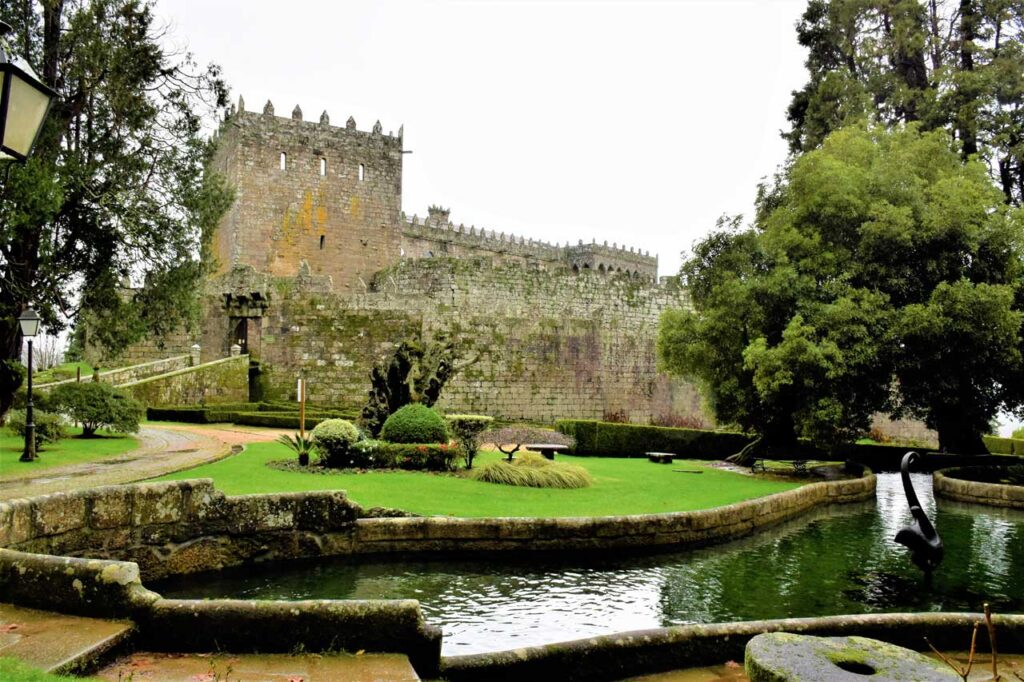
It is a medieval castle from the 12th century; however, because of the lack of documentation, the exact construction date is unknown. Its foundation is linked to Mr. Pax Méndez Sorrede, who lived in the time of Alfonso VII (1126-1157) and Mr. Fernando de León (1157-1188), who was the first to use the surname of the Soutomaior.
The castle was built and reconstructed through the years and improved as needs would arise; most transformations happened in the 15th and late 19th centuries.
The most prominent figure in the Soutomaior family was undoubtedly Pedro Alvarez de Soutomaior, known as Pedro Madruga. He was one of the most outstanding personalities of the Galician Middle Ages, currently considered the prototype of a feudal knight. During this period, the castle reached the highest level of power.
During the Modern Age, the castle remained under the ownership of the original family, until the decline began for internal disputes. At the end of the 18th century, Benito Fernando Correa took over the castle and made some changes, such as replacing the coat of arms with his own on the main door.
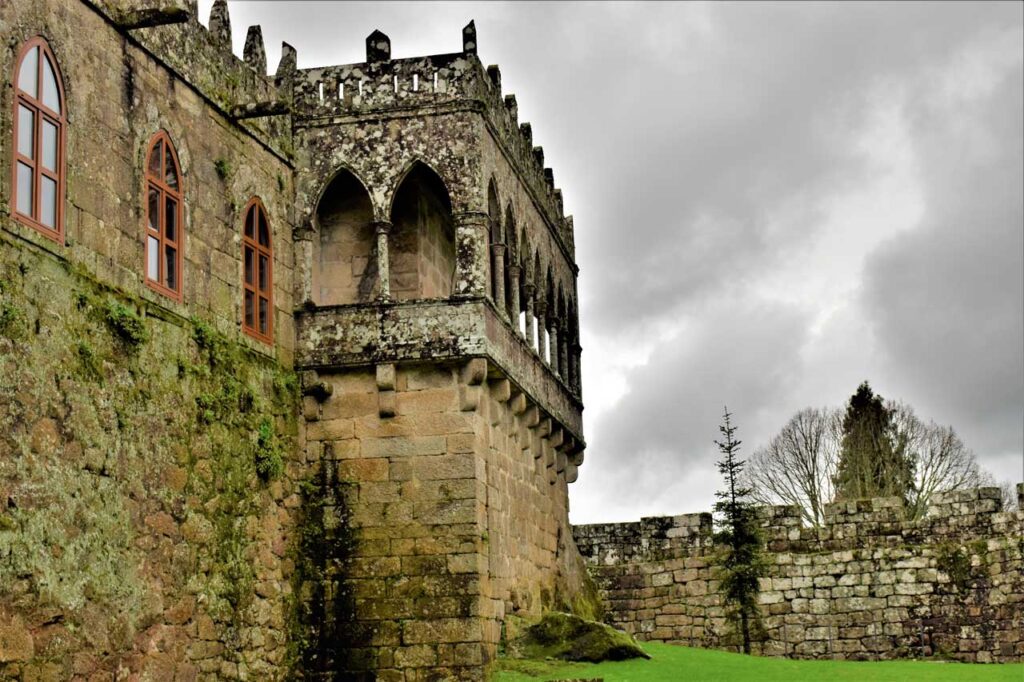
In 1870, the Marquis de la Vega de Armijo transformed it into his summer residence, where it underwent modifications, such as the addition of a ladies' gallery, a chapel, and the trees of the park, still preserved today. The Castle leaves the cold fortress behind for a cozy residential house.
Later, the owner was the Marquise of Ayerbe, and her husband, Dr. Lluria, built a sanatorium near the castle. In 1917, they lost the ownership of the castle for political reasons, and the castle was auctioned off.
Because of several sales, its installations deteriorated until 1982, when the Provincial Council of Pontevedra acquired and carried out a significant restoration.
The variant of the Portuguese Way of Saint James continues through the Soutomaior County in its third stage and passes mostly through the parish of Santiago de Arcade. The stage is 18.2 kilometers long, one of which goes through Arcade. It is an urban route, considered of low difficulty.
To learn more
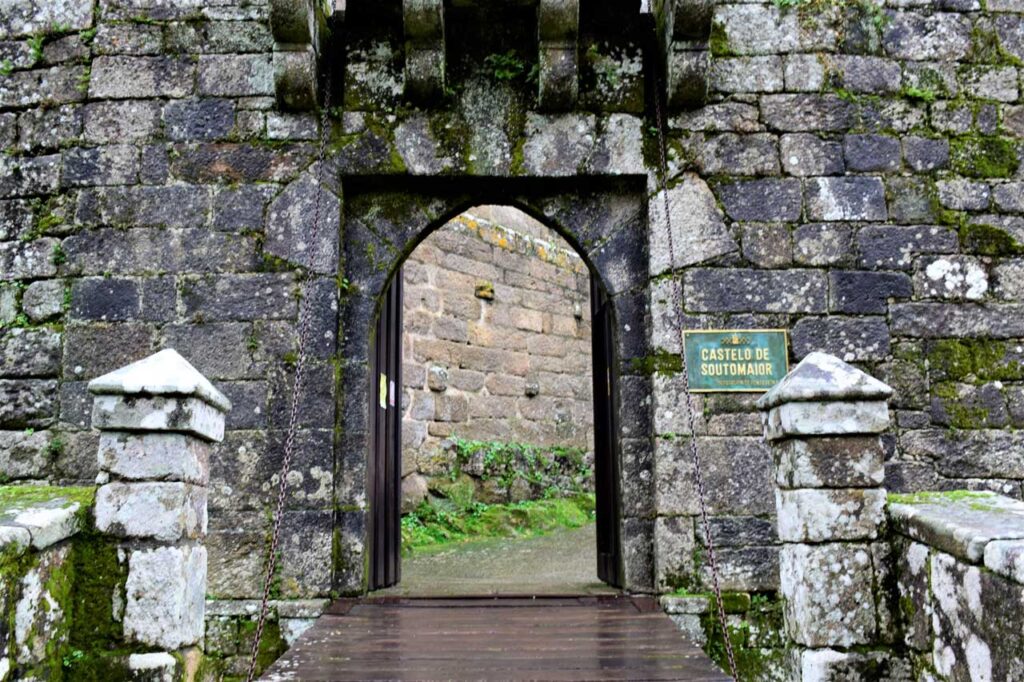
Soutomaior Castle is an architectural complex: one part of it is a medieval fortress and the other half a 19th-century neo-Gothic palace, composed of two towers joined by a habitable building and a weapons courtyard. The building consists of a double-walled perimeter, oval in shape, and two entrances, the southern used for public access and located on the opposite side, the primitive one. It also has an elevating bridge to access the entrance of the enclosure. This one was an essential element of the defense.
The strategic location of this fortress is due to the advantages offered since hides from potential invasions by sea, can dominate the lands of its fiefdom, and control the communications from south to north of the province.
Besides the fortress, it has a 25-hectare property that has changed its use throughout history.
The park and the gardens originated in the residential stage when the Marquises of Vega and Armijo decided to transform it into a summerhouse. On top of that, they have preserved from this period, the oldest examples of Japanese Camellia in Galicia.
In 1982, the Provincial Council of Pontevedra acquired the property and carried out its restoration. Involved in the development and cultivation of the camellia, this Council created its collection. The garden already had nineteen specimens, and in 1986, they added new specimens from Galician nurseries, from foreign countries, such as France, England, California, and New Zealand, and also from private donations.
Currently, it has a 500 camellias collection, 230 of which are on the castle grounds. The plants receive weekly care when they are in bloom and every fortnight the rest of the year.
In April 2012, the garden of Soutomaior Castle became the first in Spain and the seventh in Europe, recognized as an International Garden of Excellence by the International Camellia Society.
Besides the garden, this castle has an albariño grape vineyard and forestland, with shallow and less fertile soil. It corresponds to the largest and most mountainous area. Stand out the chestnut trees in the upper part, which are about 20 years old and the forest of oaks, pines, and eucalyptus on the other bank of As Afreitas little brook. Moreover, it has the remains of gallery forest, located on the banks of the Porta Cadeira and As Afreitas streams, with birches, willows, and laurels, among other species.
To know it better
Soutomaior County is the Pontevedra province, located at the mouth of the Verdugo River and the San Simón Island.
Soutomaior has a fortification in the center of the town, known as the Soutomaior Castle. Even though its construction dates back to the 12th century, it was with Pedro Álvarez de Sotomayor, known as Pedro Madruga, that it became significant, since he was crucial at the political level in southern Galicia during the 15th century.
The castle has undergone restorations and changes at different periods, using various techniques. In the 19th century, the Marquis de la Vega de Armijo made the most relevant change, when he transformed it into a summer residence.
Later, his niece, the Marquise of Ayerbe, known as the Red Marquise, became the owner of the castle, and her second husband, Doctor Lluria, built a sanatorium in the surrounding area. In 1982, the Provincial Council of Pontevedra became the owner and took charge of the restoration of the palace.
Gallery
Location
- Town
- Soutomaior
- Municipality
- Soutomaior
- Province
- Pontevedra
- Country
- Spain
The asset
- Type
- Castle
- Eco-destination
- Ría de Vigo
- Environment
- Rural
- Relevance
- International
How to get there
- Access
- By land
- Distance
- 5,800 km
The visit
- Visitable
- Yes
- Accessible
- Sí
- Parking
- No
Coordinates
- Latitud
- 42.32984300
- Longitud
- -8.56817800