
Vilagarcía de Arousa. The Lordly House of Rubianes
About this heritage
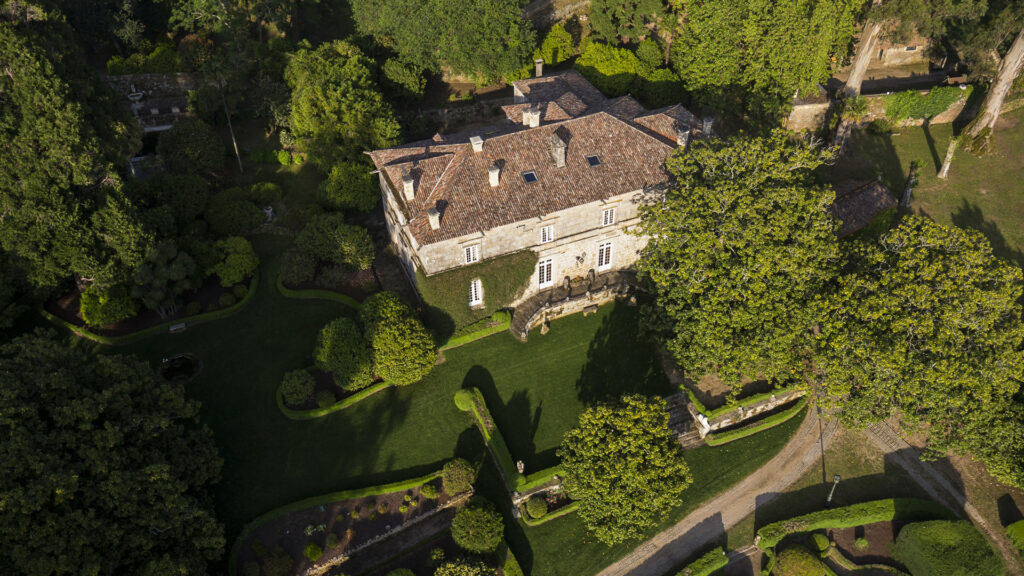
The Lordly House (Pazo) of Rubianes is six centuries old and has nearly seventy hectares. Located in the Rúa do Pazo, number 7, in Vilagarcía, it offers a Galician historical garden, where the Camellia stands out as the main protagonist. If visitors take the guided tour through this garden, conducted by the staff of the estate, everyone will end up at the most extensive vineyard of the O Salnés region, with several systems of conduction and a learning area, where they will get to know the intricacies of the cultivation of the Albariño.
The interior of the Lordly House (Pazo) offers clear examples of this kind of Galician Houses' architecture, namely distinguished halls, a dining room, a library, a chapel, and a 16th-century wine cellar, where one can taste the Albariño made in this manor house.
Its origin dates back to the 12th-century fortress tower - belonging to the Caamaño family. Mr. García Caamaño built his residence on the Rubianes estate at the beginning of the 15th century, as can be read on the stone above the entrance arch: "Mr. García Caamaño built this house in the year 1411.″ Years later, in March 1441, Mr. García Caamaño founded the García Villa, currently known as Vilagarcía de Arousa.
Mr. Josepe Caamaño y Mendoza, Lord of the Rubianes Manor, built the chapel dedicated to Saint Joseph in 1598. In its interior, visitors can contemplate a unique altarpiece of the 16th-century, as well as several images of the time.
The 15th-century winery, stables, and stables-stalls are the oldest buildings preserved from the original state. Over time, they have converted parts of these rooms to give other uses to complement the winery, such as a lounge, a shop, and other services. The estate of the Lordly House (Pazo) of Rubianes is currently a world's reference to the camellia and the wine of the South Estuaries (Rias Baixas) in Galicia. In the last decades, the property has carried out significant recovery structural works for the historical garden, the plantation, and the beginning of the wine exploitation.
To learn more
A 12th-century fortress tower, belonging to the Caamaño family, is the origin of the Lordly House (Pazo) of Rubianes. Mr. García Caamaño built his residence in the Rubianes estate at the beginning of the 15th century, as detailed in the stone over the entrance arch: "Mr. García Caamaño built this house in the year 1411." Years later, in March 1441, Mr. García Caamaño founded the García Villa, currently known as Vilagarcía de Arousa. The interior of the Pazo shows the characteristics of this traditional Galician Lordly Houses architecture, in this case, the distinguished halls, the dining room, the library, the chapel, which ends in the 16th-century cellar. In it, visitors can taste the Albariño grown and made in this Manor, accompanied by the organic cheese also made by the family in the "Casa Grande Xanceda."
Built-in 1598 and dedicated to Saint Joseph, the chapel is part of the architectural complex. Inside, everyone can appreciate a unique 16th-century altarpiece and several images of the time.
In the 18th century, King Charles IV exiled to France the Lord of the House of Rubianes, Mr. Jacobo Ozores. On his return, the property had severely deteriorated, and he decided to rebuild it, relying on the services of a French architect, who would give the current French appearance to the building. Currently, it is more reminiscent of a French Chateau than a Galician Lordly House (Pazo) with six centuries of antiquity. The 15th-century wine cellar, stables, and horse-stalls are the oldest constructions preserved from their original state. Over the years, they have converted parts of these premises for other uses to complement the winery, such as a lounge, a shop, and other services.
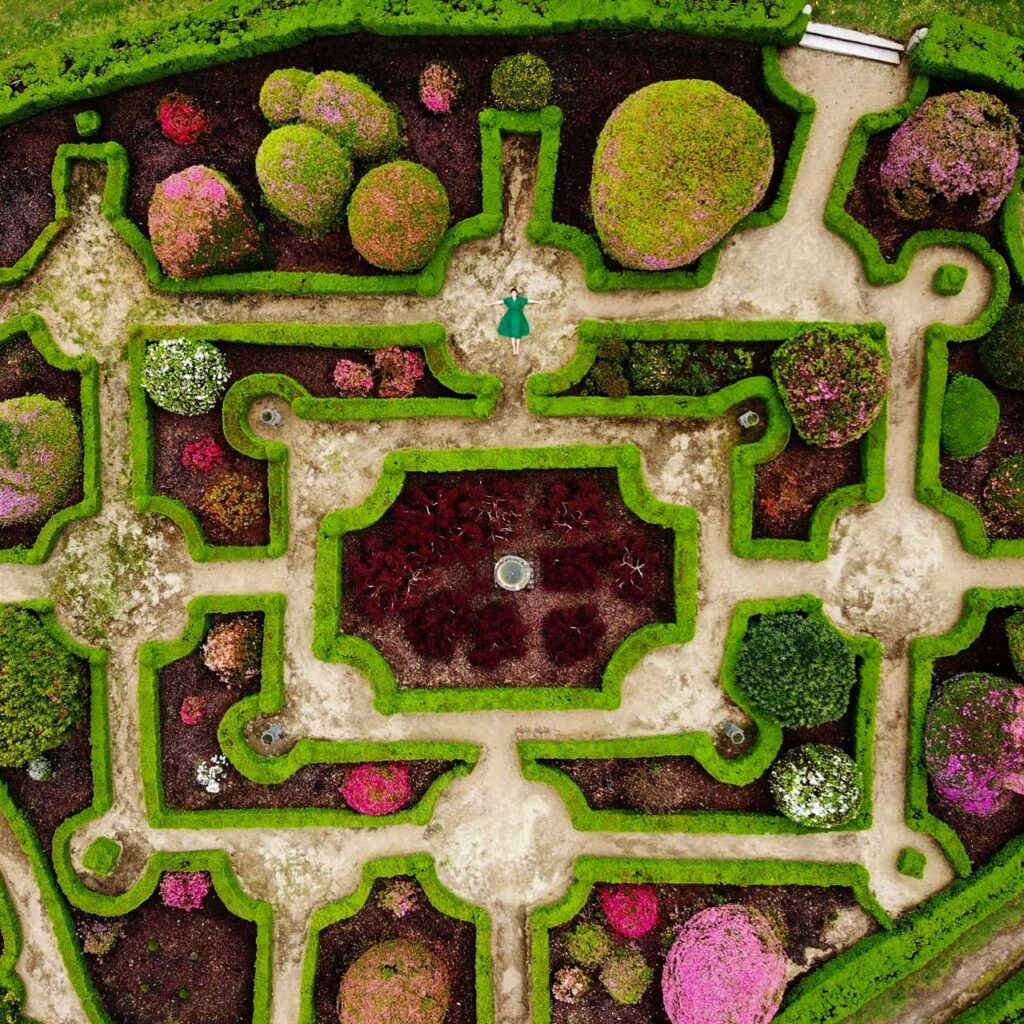
From the Lordly House (Pazo) of Rubianes, visitors have the opportunity to tour the historical garden of Galicia, where the Camellia stands out as its main protagonist. However, it is not the only significant flower in this garden, since it holds other unique specimens of botanical species. Among others, the giant eucalyptus, the magnolia Grandiflora, the elegant Japanese cryptomeria, and the first camphor trees in Spain, as well as the magnificent Araucaria, belonging to the catalog of significant-importance ("Senlleiras") trees in Galicia. Visitors of this Lordly House (Pazo) can complement this unique experience with the herbarium, which has the false pepper tree with eucalyptus leaves (Schinus molle), the American oak forest, a hundred-year-old European oak, and centenary cork oak trees. On top of that, there are other corners to discover, such as the hundred-year-old boxwood borders, the French garden with its labyrinth, and the frog pond. The Botanical Park of the Lordly House (Pazo) of Rubianes is considered the International of Excellence Garden of the Camellia with more than 4500 specimens.
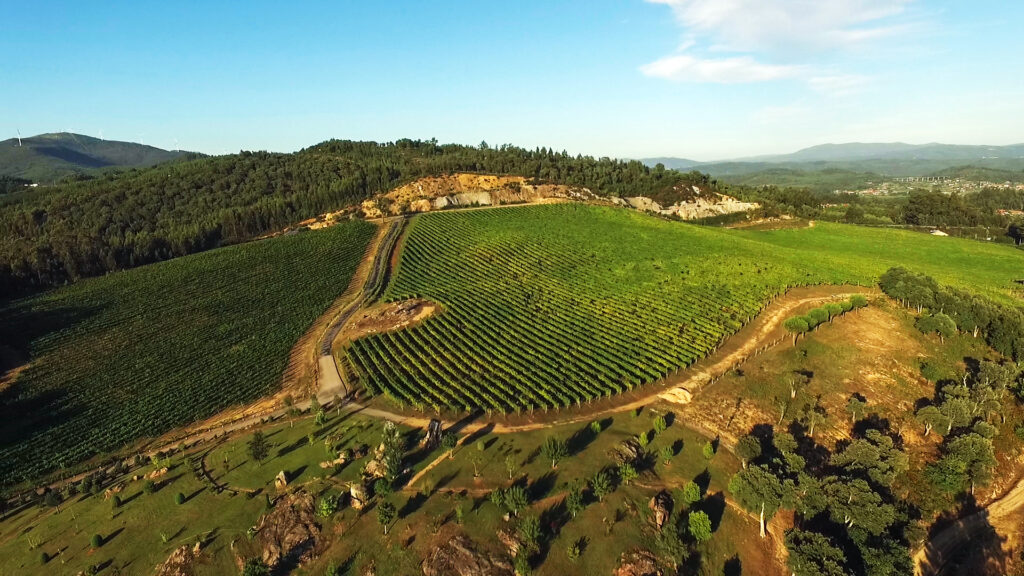
The Pazo de Rubianes has the largest vineyard in the O Salnés region, a piece of the 70 hectares of land of this property. To its credit, it has several conduction systems and an educational area to learn more about the cultivation of the Albariño.
In the last decades, the property has carried out significant recovery structural works for the historical garden, the plantation, and the beginning of the wine exploitation. The gardening of this Lordly House began at the end of the 17th century with a garden project covering the area closest to the palace, known as the frog pond. During the 18th century, they carried out the most significant actions in terms of crop planning and increasing the number of garden areas. Throughout the 18th and 19th centuries, since the passion for gardening passed on from father to son, new gardening projects occurred with the introduction of species that, currently, have become authentic centenary plant monuments that have populated the botanical park of this Rubianes Estate. This Rubianes garden is, without a doubt, the camellias one, a winter garden, the season in which more than 800 varieties of camellias in flower shine, making this garden unique in Europe.
The recent history of the garden of the Pazo de Rubianes has two protagonists: Mrs. Dolores Urcola Zuloaga and Mrs. Paloma Rey Fernández-Latorre.
Mrs. Dolores "The Marquise" has lived on the estate for almost eighty years and has been in charge of the garden's conservation for much of the 20th century. Excellent equestrian and botanist with a devotion to the camellia, she is an example of love and sacrifice for this centenary garden. On the other hand, Mrs. Paloma, current Lady of Rubianes, Marquise of Aranda, and widow of Don Gonzalo Ozores de Urcola, is today the soul of the estate. She is the model of commitment and responsibility when it comes to her entrusted heritage to care for and guard this estate.For more than thirty years and along with her husband, Don Gonzalo, she has been working in the preservation and recovery of the property. After the horrifying fires of 2006, she became the heroine of the estate's rehabilitation. Her dedication to the historical garden and her passion for this heritage have made the property an example and a reference in Galicia in the botanical, architectural, and winegrowing fields.
The vineyard, which has been present in the Lordly House (Pazo) of Rubianes since its origins, has a 15th-century cellar press on its winery. The grapes were crushed and pressed; thus, to later begin the complete-handcrafted production of its wines. After the phylloxera, the vineyard gradually disappeared from the estate until the eighteenth Lord of the House of Rubianes, Don Gonzalo Ozores de Urcola, recovered the old vineyard exploitation of the estate with the plantation of six hectares in the 1990s, which after a few years reached the current twenty-five hectares. The locals of Rubianes have a saying referring to this vineyard: "the Marquis' vineyards get the sun even at night" ("Ós viñedos do Marqués dalle o sol ata de noite"). This estate's aptitude for winegrowing is so exceptional that it has never gone unnoticed. With a soil of shallow granitic origin, arranged in slopes of a medium steep and magnificent southwest orientation, make this place an exceptional environment for the cultivation of Albariño.
To know it better
Vilagarcía de Arosa is a small coastal town in the Salnés region in the Pontevedra province. It borders to the North, with the Arousa Estuary and the Catoira Town Hall, and to the South, with the Vilanova de Arousa Town Hall. These Lordly houses (Pazos) have always stood out as the properties of significant personalities in the Galian society.
In Vilagarcía, everyone can appreciate these properties, Pazos, which came from the nobility or the military personalities, and currently, many of them have become gorgeous hotels or celebration venues. Galicia has in this county, six significant Lordly Houses (Pazos), but the focus here is on the Lordly House (Pazo) of Rubianes.
It is a French-style Galician Lordly House (Pazo), dating back to the 18th century. Remarkably well preserved, it has gardens of several styles. It was where the García Caamaño family lived, known for belonging to the nobility and being military. The building has a regular floor plan with gargoyles on the cornices and several coats of arms. It also has a 15th-century tower, but the garden is what stands out.
The garden of the Lordly House (Pazo) of Rubianes stands out for its camellias, magnolias, and the excellent care of their variety of trees. Worth noticing is one of the oldest eucalyptus trees in Galicia. On top of that, this space belongs to the Camellia Route, named International Garden of Excellence in 2014.
Gallery
Location
- Town
- Rural
- Municipality
- Vilagarcía de Arousa
- Province
- Pontevedra
- Country
- Spain
The asset
- Type
- Palace
- Eco-destination
- Ría de Arousa
- Environment
- Rural
- Relevance
- International
How to get there
- Access
- By sea
- Distance
- 4,6 km / 10 minutos en coche
The visit
- Schedule
- Summer: Monday to Friday from 09:00 to 14:00. Rest of the year: Monday to Friday from 09:00 to 18:00. Guided visits
- Visitable
- Yes
- Accessible
- No
- Parking
- No
Coordinates
- Latitud
- 36.597495
- Longitud
- -6.234975